
Many buyers ask for a TCT saw blade by size first: 7 inch, 60T, 25.4mm bore, YG8 carbide.
That is useful information, but for MDF and laminated board it is only the beginning. These materials can be hard on blades because they combine wood fiber, glue, surface coating and fine dust. A blade that works on softwood may leave chips, burn marks or fuzzy edges on furniture panels.
MDF and laminated boards look simple, but they are not easy materials for a saw blade.
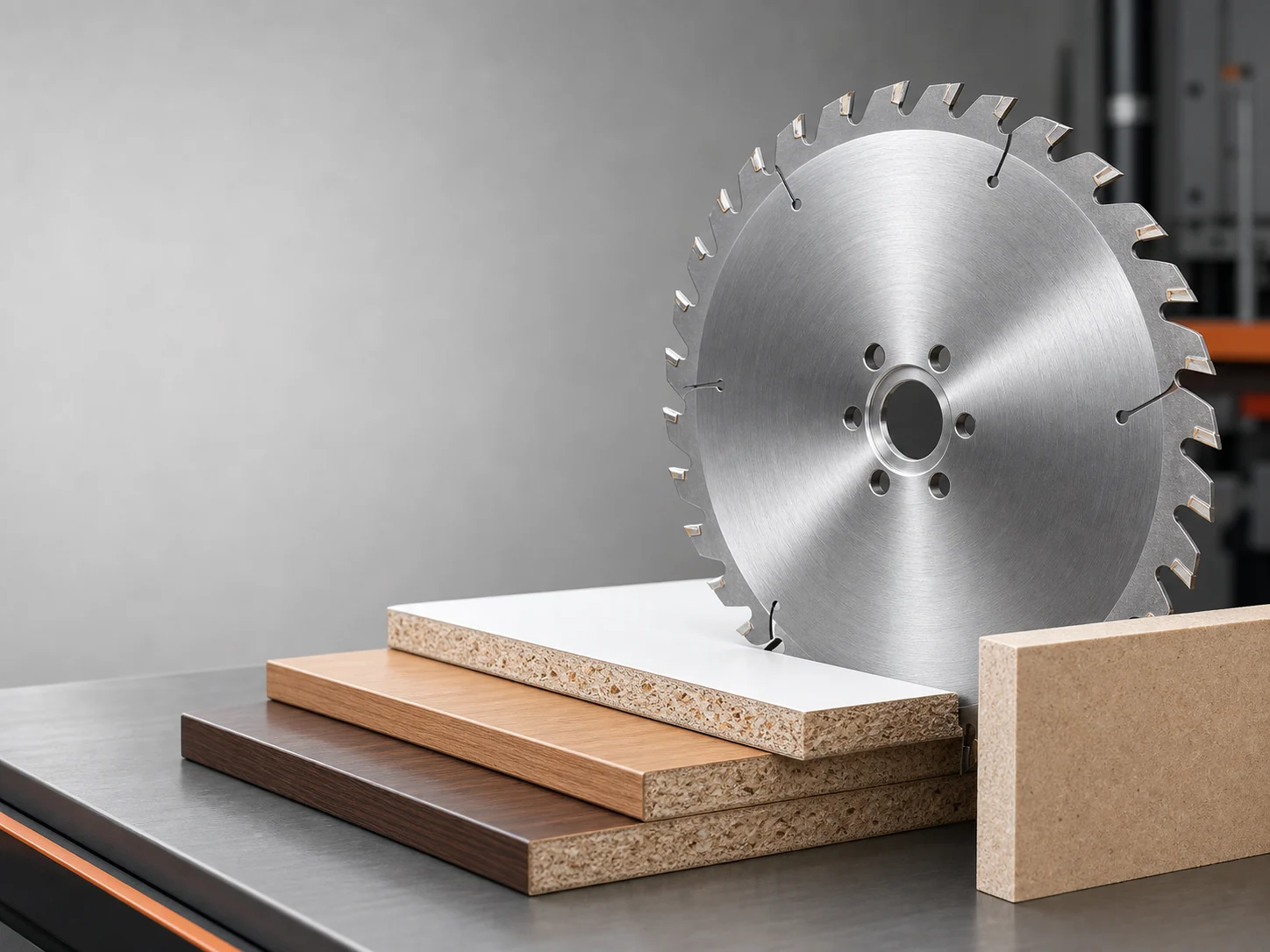
Why MDF and Lamination Board Are Different
MDF is dense and abrasive. It produces very fine dust, and the resin content can create heat. Laminated board adds another problem: the surface layer can chip before the blade finishes the cut.
The customer does not judge the blade by the specification sheet. He judges it by the cut edge.
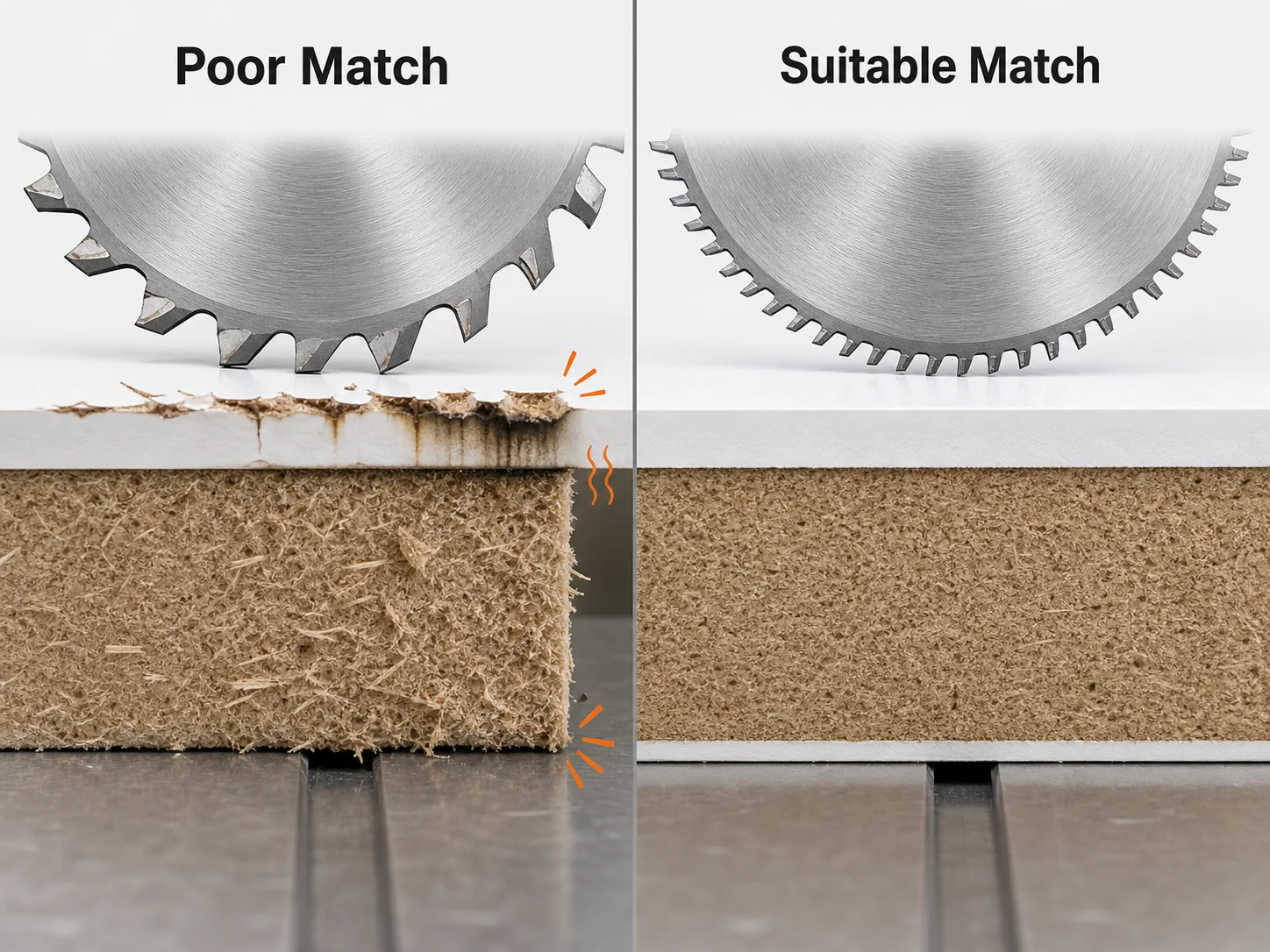
If the edge chips, burns or becomes rough, the blade may still look sharp, but the buyer will not be happy.
Tooth Count: Useful, But Not Everything
For 7 inch furniture-board blades, 60T and 80T are common choices. A 60T blade is often a practical balance for MDF and general furniture board. An 80T blade can give a cleaner finish when the machine is stable and the feed is controlled.
But higher tooth count also means smaller chip space. If the board is thick, dusty or resin-heavy, the blade can heat up. The result may be burning, noise, or shorter blade life.
Tooth Geometry Matters
For laminated boards, tooth geometry is often more important than simply adding more teeth.
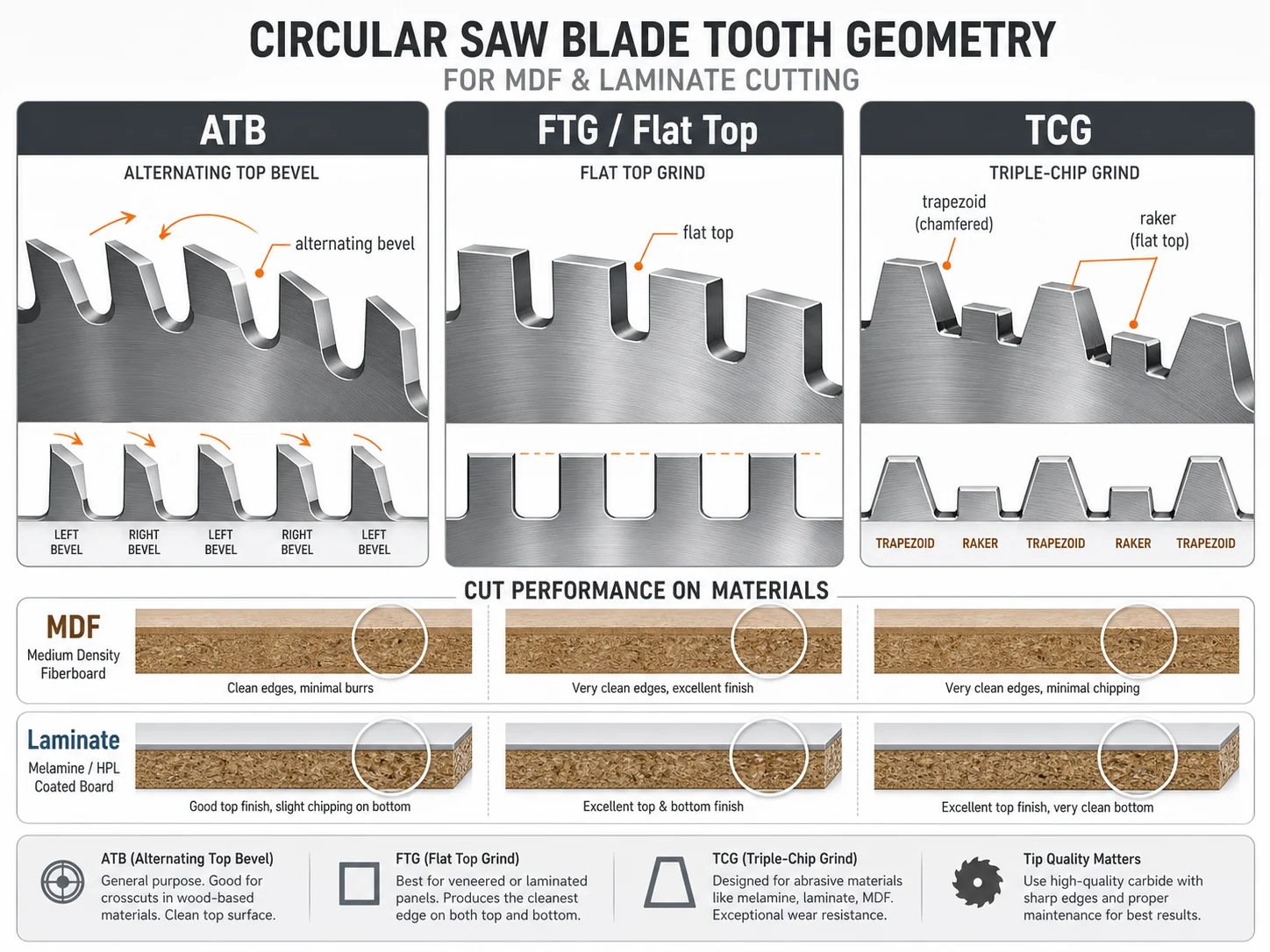
ATB teeth are a good general choice for plywood and many furniture boards because they slice the surface fibers. TCG teeth can be better for harder surface layers, laminate and abrasive materials because they distribute cutting load more evenly.
If the buyer wants a clean visible edge, do not only quote a cheaper blade. Ask what surface finish they need.
Carbide Grade and Grinding Quality
YG8 can be used for many woodworking blades, especially when the buyer needs a practical price level. But MDF and laminated boards can wear the edge faster than softwood.
The carbide grade, tip size and grinding accuracy affect service life. A cheaper blade may cut well for a short time, then lose edge quality quickly. For wholesalers, this becomes a repeat-order problem: the first order is price, the second order is trust.
What Buyers Should Confirm
- Board type: MDF, plywood, melamine, laminated board or mixed material
- Board thickness and whether the edge is visible after cutting
- Machine type, RPM and feed condition
- Blade diameter, kerf, plate thickness and bore size
- Tooth count and tooth form: ATB, TCG or other design
- Target market: economy resale or stable workshop use
Practical Recommendation
For MDF and lamination board, start with the material and finish requirement. If the buyer wants a clean furniture edge, a stable 60T or 80T ATB/TCG design is usually safer than a low-cost general blade.
If the market is price-sensitive, an economy line can work. But if the buyer sells to furniture workshops, choose a blade that gives fewer complaints, not only the lowest unit price.
For broader material matching, see our TCT saw blade material and RPM guide.