
Many saw blade quotations look confusing because the same size can have very different prices.
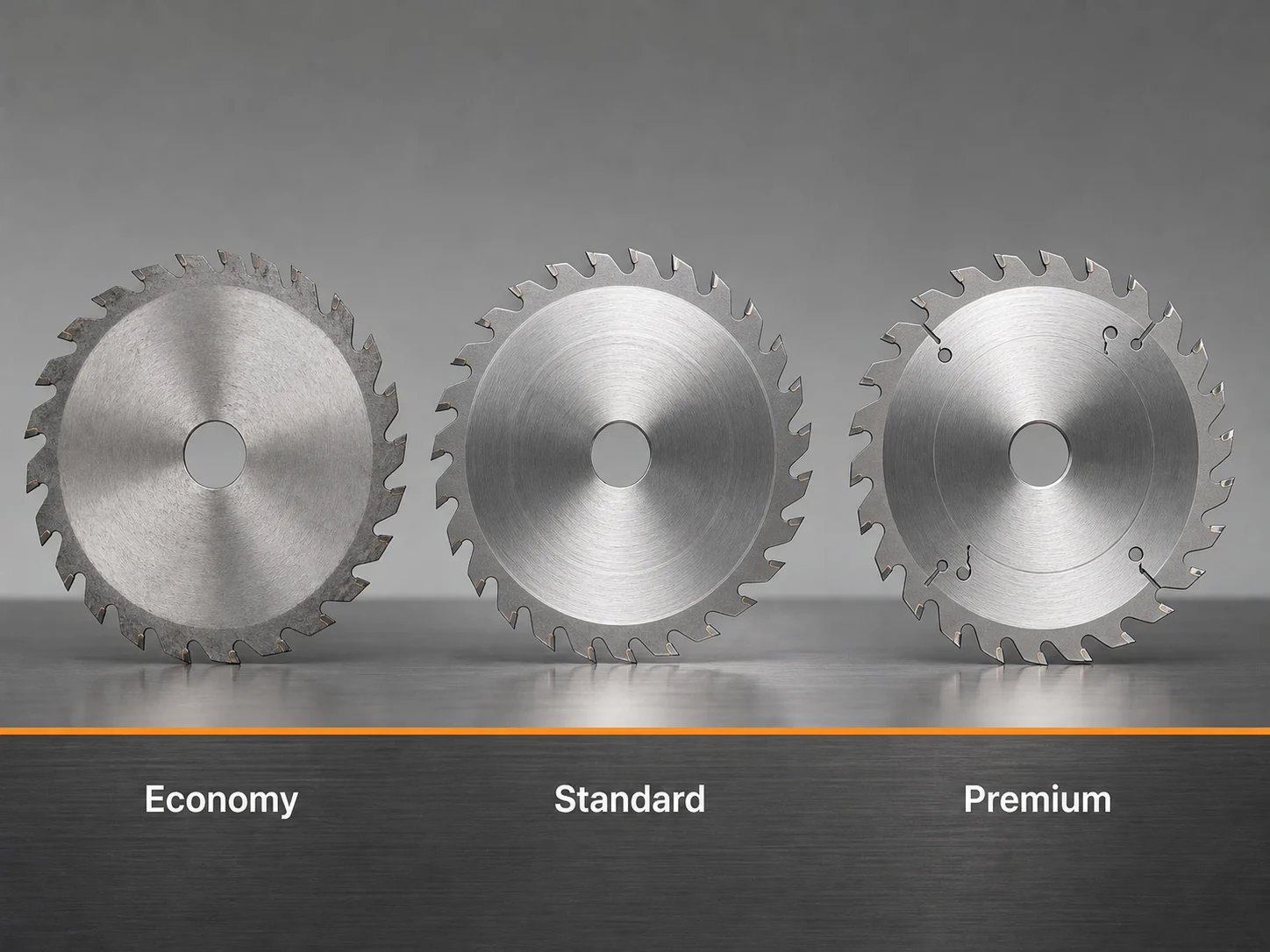
A buyer may see three blades with the same diameter, bore and tooth count, but one price is much lower than the other. The professional way to explain this is not to say “ours is better” only. It is to explain the quality level.
Economy Grade
Economy blades are made for price-sensitive markets and light-duty use. They can be useful when the buyer needs fast turnover, retail distribution or a low entry price.
The tradeoff is usually shorter life, looser tolerance, simpler steel plate or basic carbide. For occasional use, that may be acceptable. For demanding users, it may create complaints.
Standard Grade
Standard grade is often the best starting point for wholesalers and workshops. It balances cost and stability.
The blade plate, carbide, grinding and runout control are usually better than economy grade. It may not be the highest specification, but it should give more consistent daily performance.
Premium Grade
Premium blades are for buyers who care about cleaner cutting, longer life and fewer production issues.
The difference is not only profit margin.
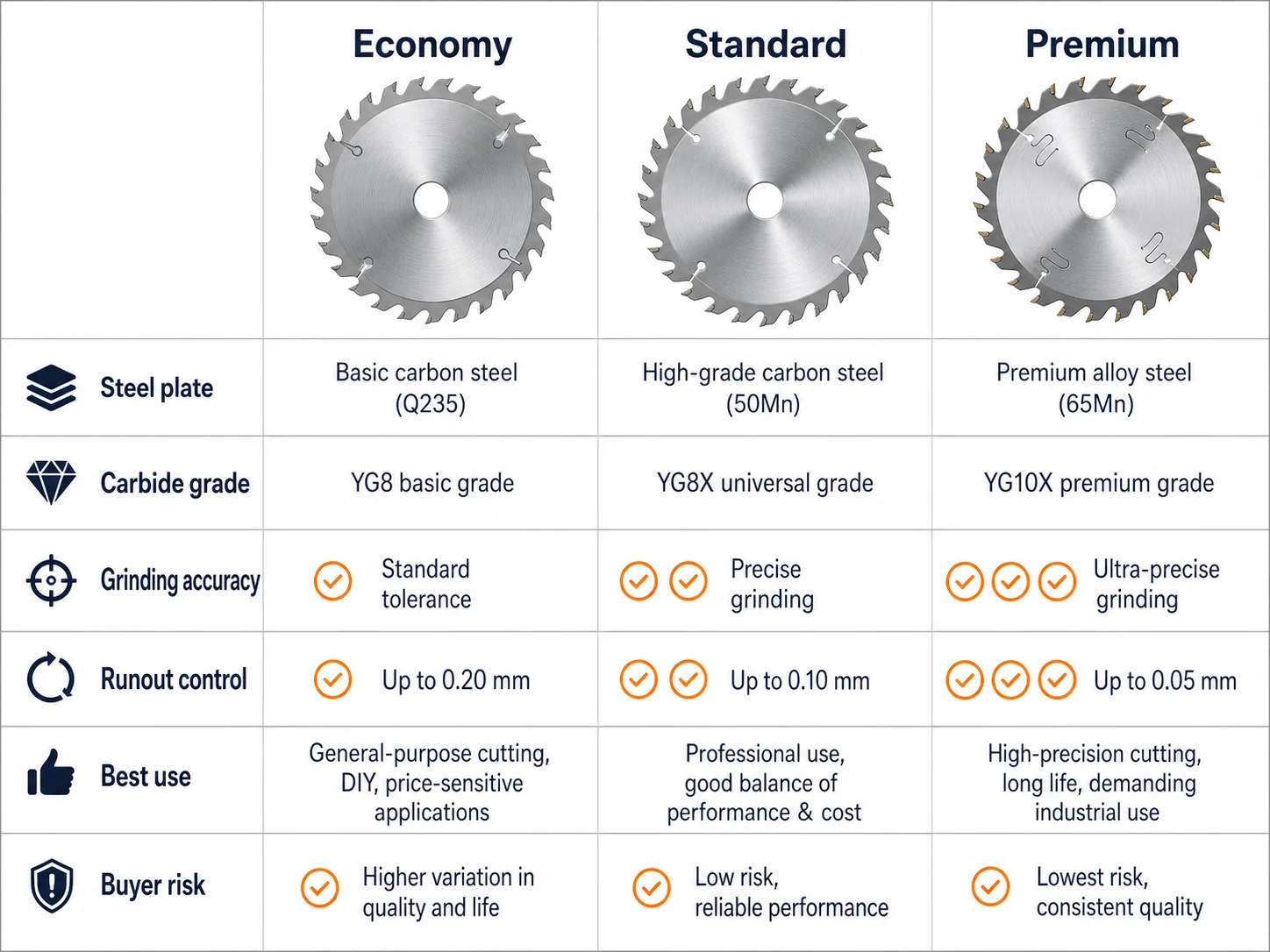
Premium blades may use better steel plate, better carbide, tighter grinding accuracy, stronger tension control, better heat treatment and more careful inspection. These details cost more, but they reduce risk for serious users.
Unit Price vs Cost Per Cut
The lowest unit price is not always the lowest cost.
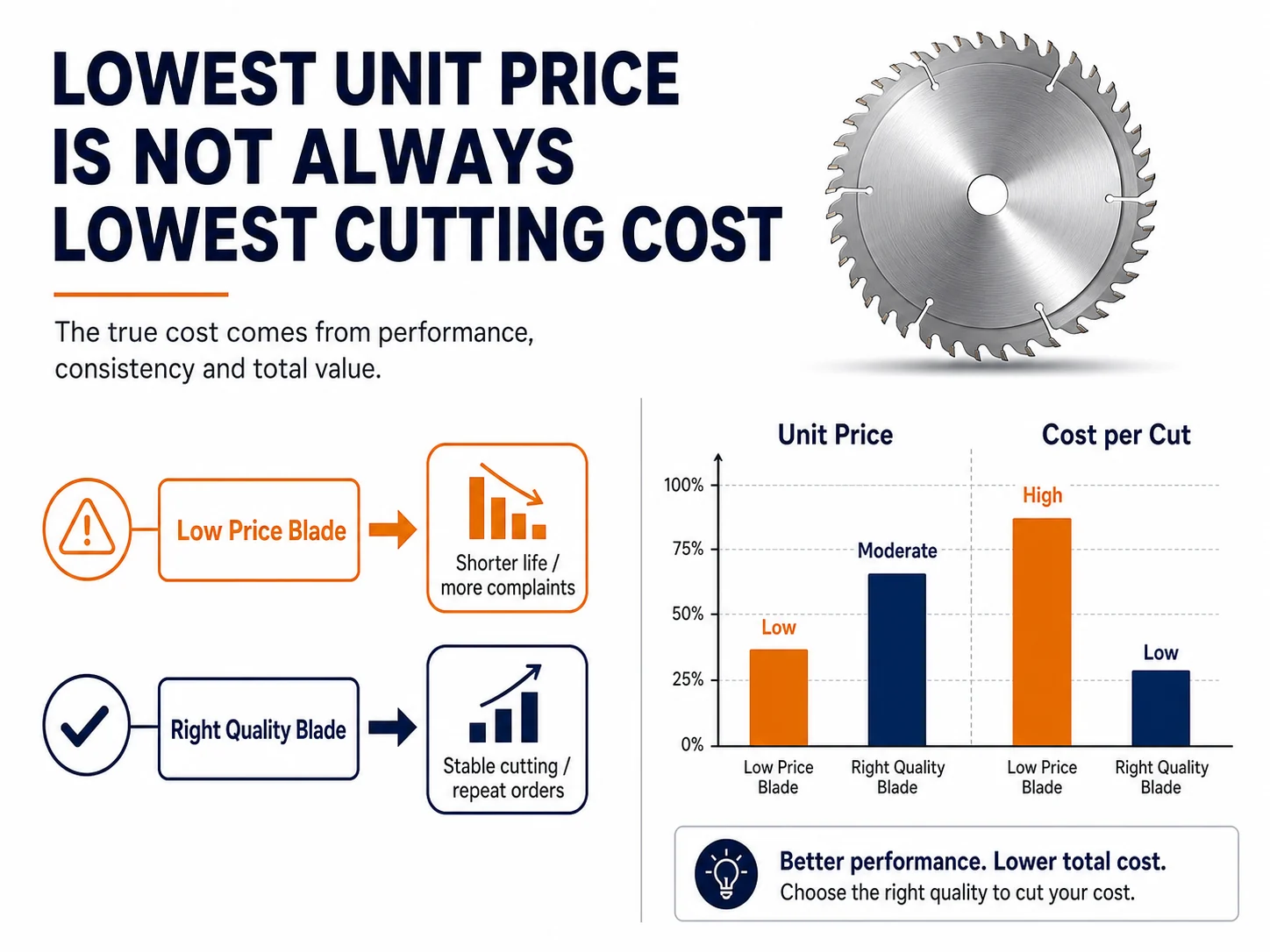
If a blade is cheap but wears quickly, burns the board, chips the edge or causes customer complaints, the real cost becomes higher. For resellers, the hidden cost is even bigger: the customer may not come back.
A right-quality blade helps the buyer keep customers. That is often more valuable than saving a small amount on the first order.
How to Choose the Right Grade
- Choose Economy for light use, DIY retail and very price-sensitive markets.
- Choose Standard for general workshops, daily cutting and balanced resale.
- Choose Premium for clean finish, demanding material, repeat industrial use and higher customer expectations.
What Buyers Should Ask
Before accepting a quotation, ask what grade you are receiving. Confirm the steel plate, carbide grade, tooth geometry, runout control, packaging and expected application.
If you only compare size and price, you may compare two very different products as if they were the same.
Buyer Takeaway
Economy, standard and premium blades all have a place. The key is to match the blade to the buyer’s market.
A useful supplier should be able to provide different price levels and explain what changes behind the price. That helps you choose a product that your customers will trust after they use it.
For price-factor details, read our material, RPM and saw blade price factor guide.