
For wholesalers, the question is not only which blade can cut.
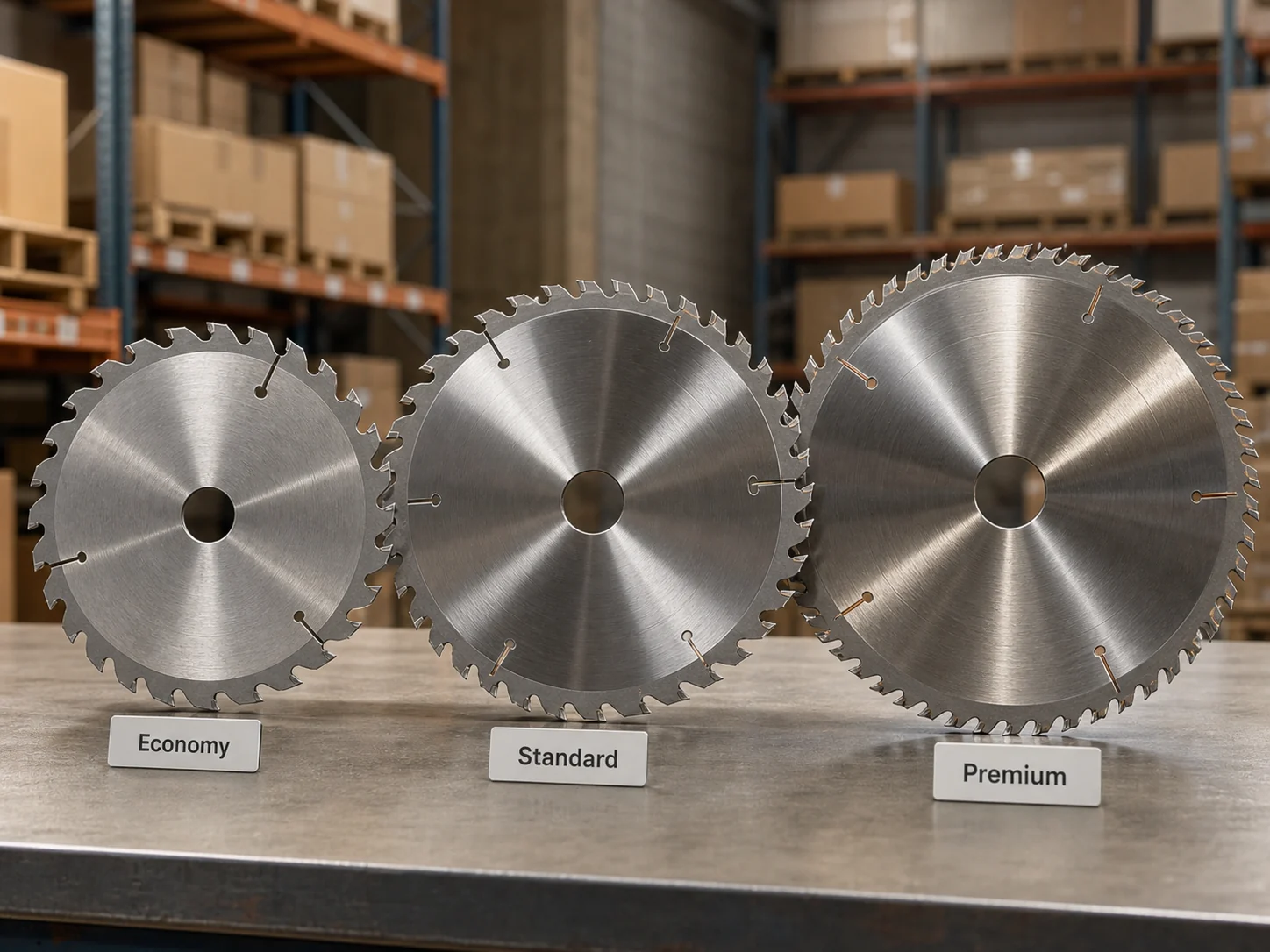
The more important question is: which blade can fit your market, your customers and your price level?
If every customer receives the same blade, some will think it is too expensive, and some will think it is not good enough. That is why wholesale saw blade selection should be structured.
Start From Your Target Customer
A good wholesale product line should match different customer groups.
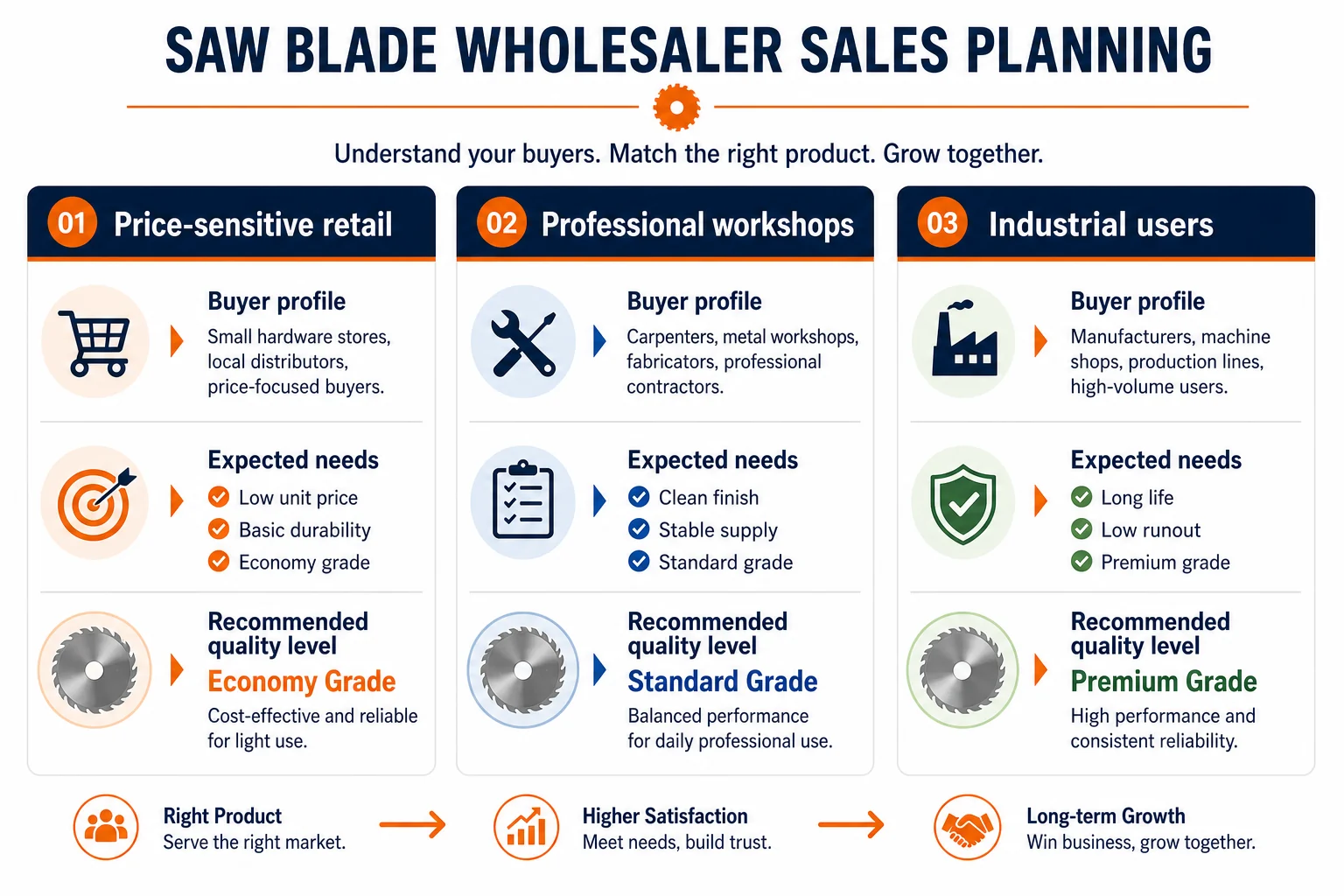
Price-sensitive retail buyers need an affordable product that sells easily. Professional workshops need stable cutting and fewer complaints. Industrial users care more about life, repeatability and downtime.
These three customers may all ask for “7 inch saw blade,” but they are not buying the same value.
Build Two or Three Quality Levels
For a new wholesale market, two or three levels are usually easier to manage than too many models.
- Economy: suitable for price-sensitive retail and light use.
- Standard: suitable for common workshops and repeat daily use.
- Premium: suitable for buyers who need cleaner cutting, longer life and fewer complaints.
This structure also helps you explain price differences. You are not saying one price is “good” and another is “bad.” You are matching quality to market.
Confirm the Main Application
Before confirming an order, use a simple decision flow.
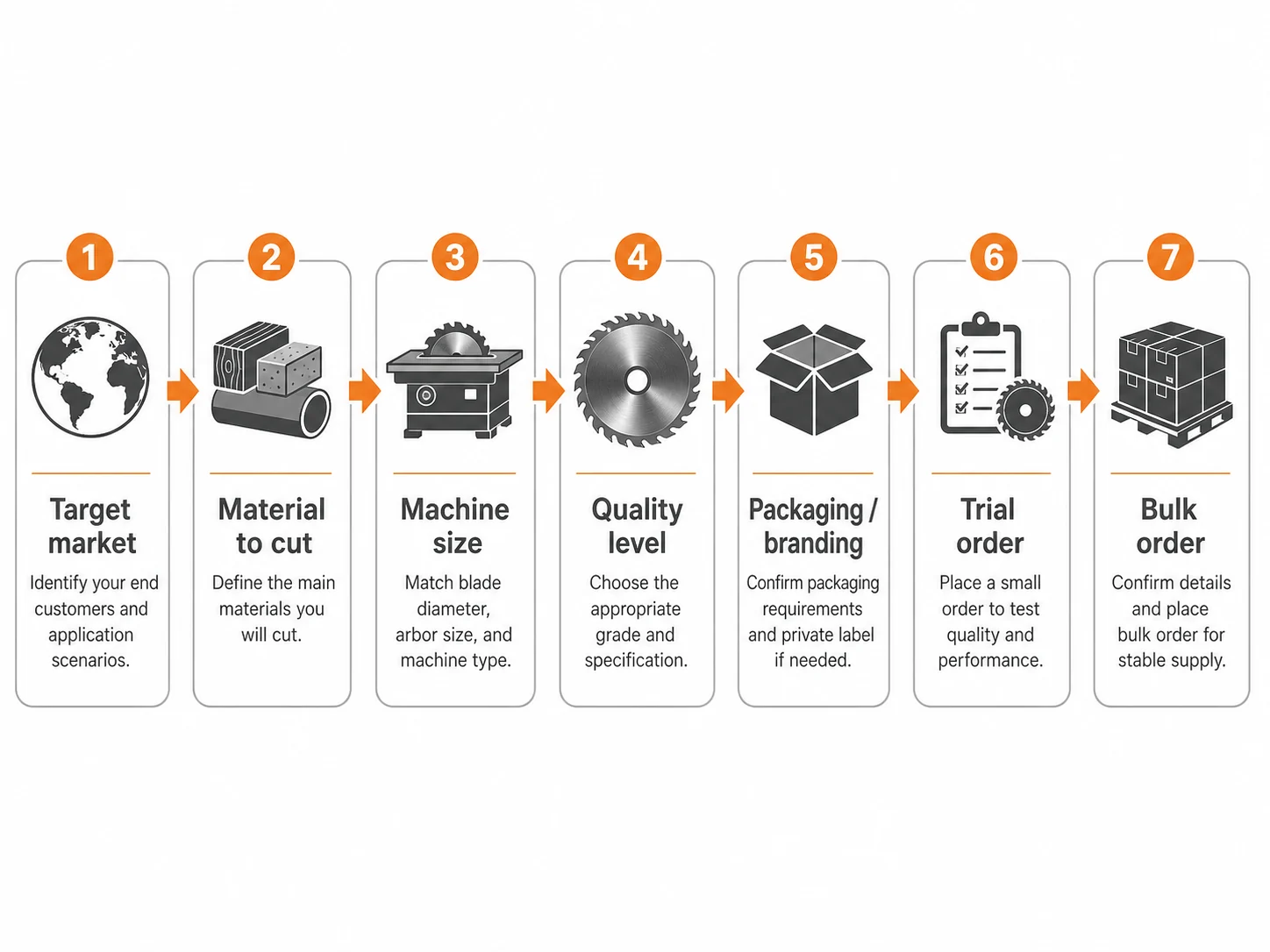
Ask what the blade will cut: plywood, MDF, laminate, softwood, aluminum, PVC or something else. Then confirm machine size, bore, tooth count, tooth form and required finish.
For example, MDF and lamination board may need better edge quality than rough softwood cutting. Aluminum needs a different tooth design again.
Do Not Ignore Packaging and Brand Printing
Wholesale buyers often care about packaging, label design and local brand impression. These details do not change cutting performance, but they affect selling.
However, packaging should not be used to hide weak product quality. If the blade life is poor, good packaging only helps once.
Use Trial Orders Wisely
A trial order should not only test price. It should test whether the selected quality level matches the market.
Ask customers for feedback on cutting material, edge quality, life, burning, noise and complaints. This feedback helps decide whether the next order should stay at the same level, move cheaper or move higher.
Buyer Takeaway
For wholesale saw blades, the best product is not always the cheapest product. It is the product that gives your customer the right value for their market.
If you sell to different users, prepare different quality levels. That makes pricing easier, communication clearer and repeat orders more likely.
For quality level details, see our economy, standard and premium saw blade guide.