
Many buyers compare circular saw blades by diameter and tooth count. A 7 inch 40T blade, a 7 inch 60T blade and a 7 inch 80T blade may look like the same product family.
But on the factory side, they are not always equally easy to produce.
This becomes very clear when a buyer asks for a higher-tooth-count model that is not commonly stocked. The supplier may say the blade needs specially prepared material and tooling. To a buyer, that can sound strange: why should 80T be so different from 60T?
The reason is simple. More teeth do not only change the number printed on the blade. They change the tooth pitch, gullet space, blade body design, tooling setup and sometimes the production batch itself.
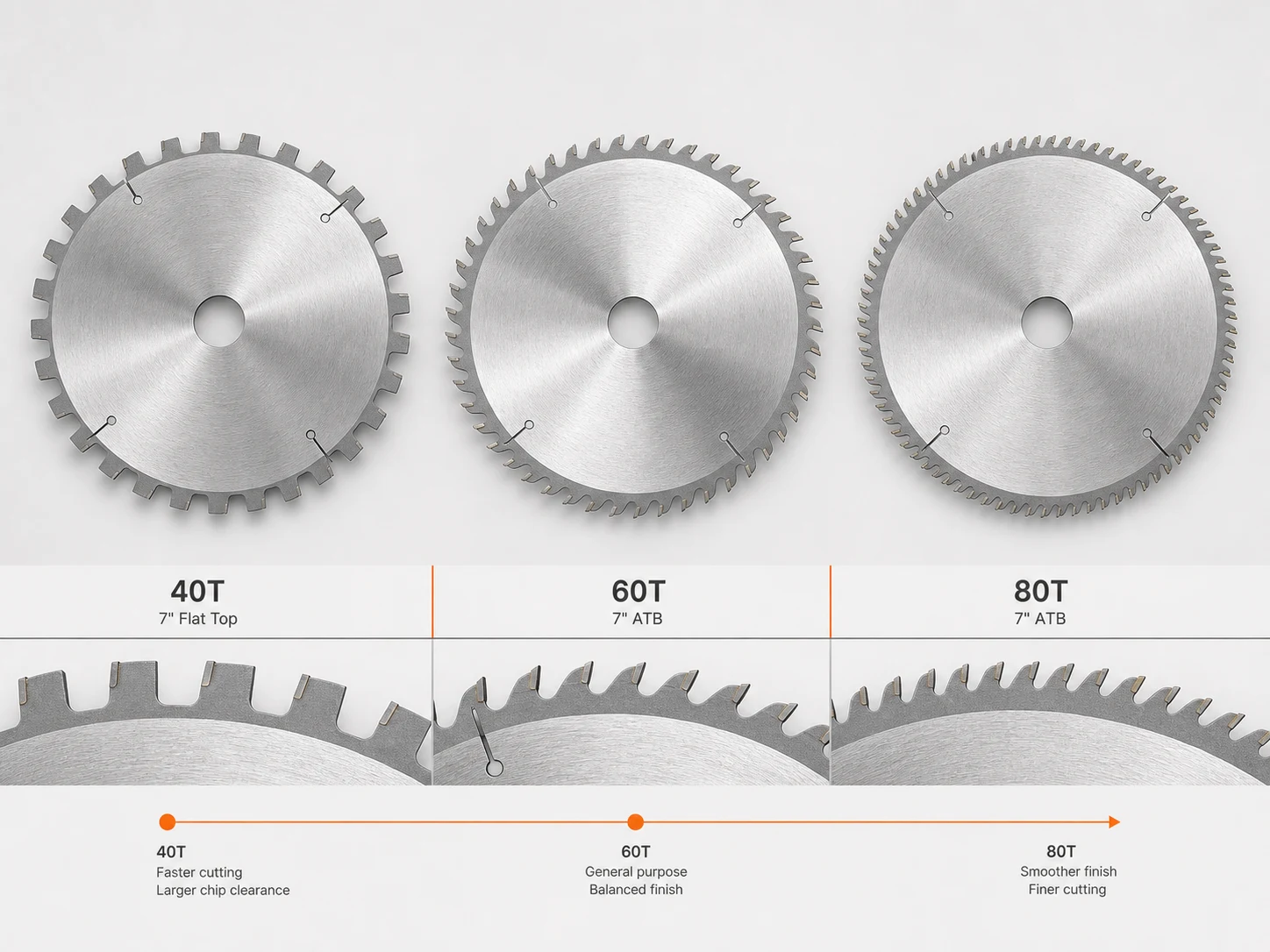
Tooth Count Changes Tooth Pitch
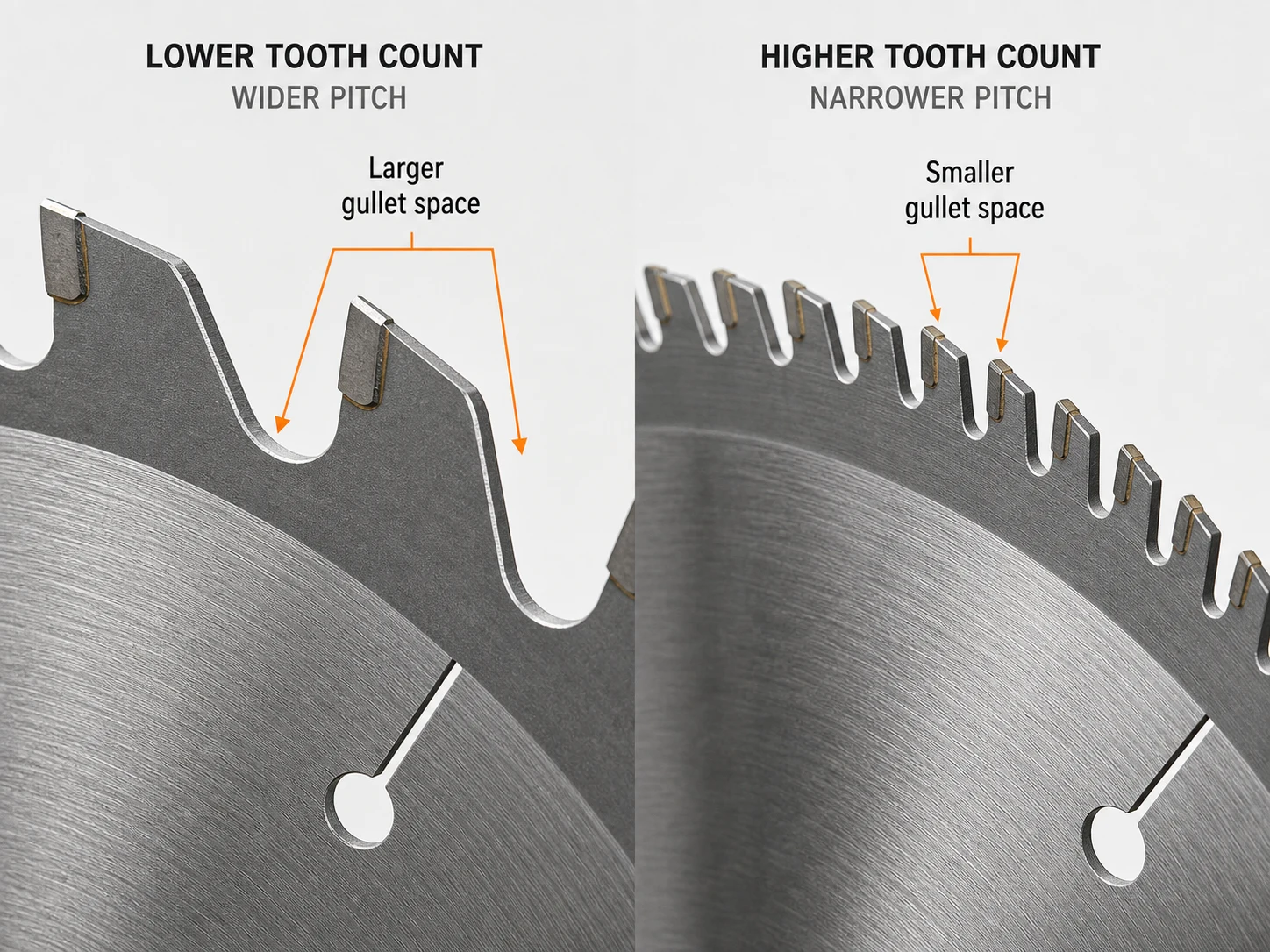
When the outside diameter stays the same, adding more teeth makes the tooth pitch smaller.
On a 7 inch blade:
- 40T has larger tooth spacing and more chip room.
- 60T is often a balanced choice for many wood and board applications.
- 80T has smaller tooth spacing and smaller gullets.
This smaller spacing can help create a finer cut, but it also makes the blade more sensitive to heat, chip evacuation and production accuracy.
That is why a factory may treat 80T, 100T or 120T as a different production item, not just a simple variation.
Why Material May Need to Be Prepared Separately
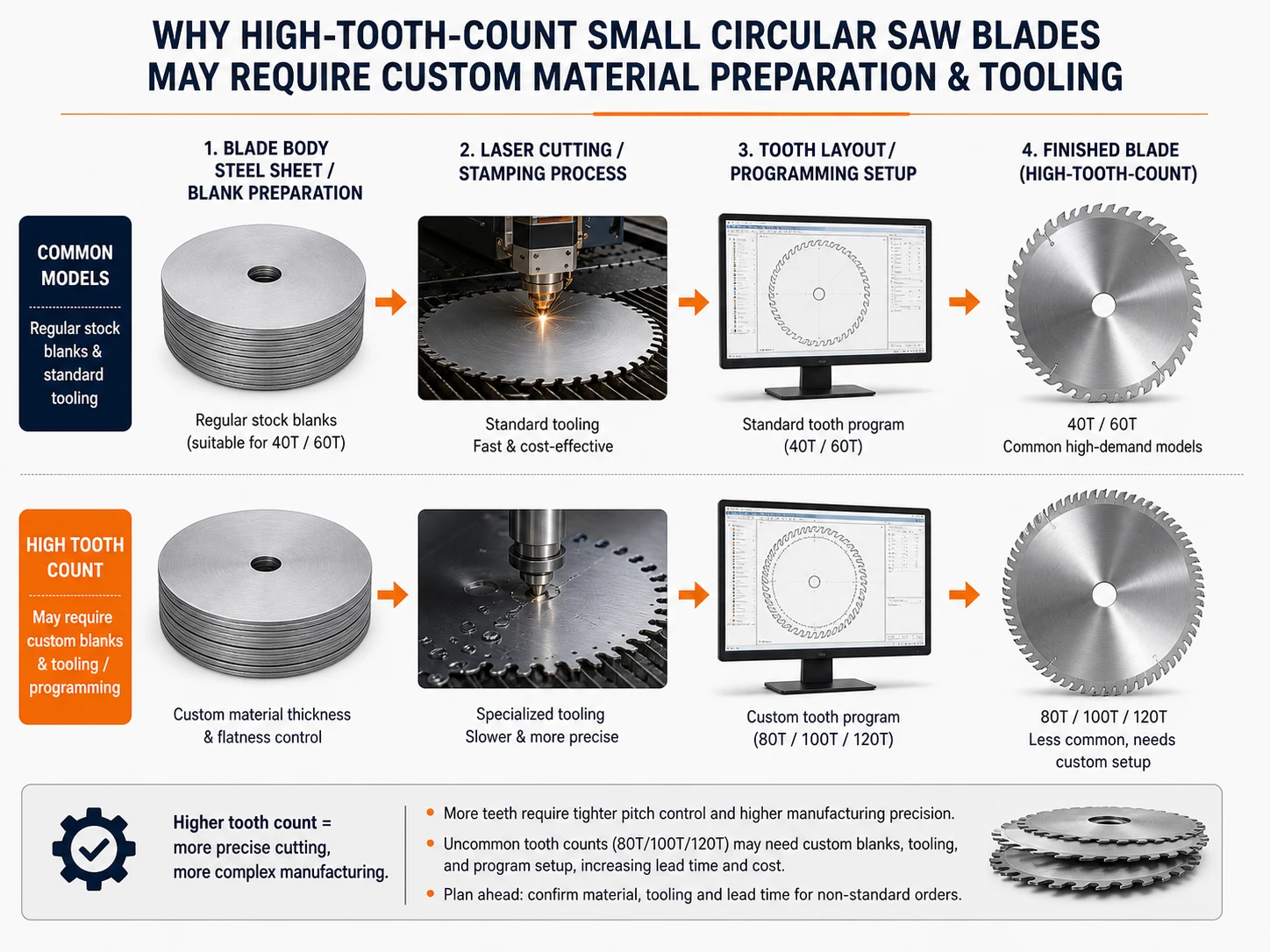
When a supplier says the material needs to be customized, it does not always mean the steel grade must be completely different.
Often it means the factory does not have ready blade body blanks for that exact tooth count, thickness and layout. They may need to arrange separate steel cutting, flatness control, heat treatment or body preparation for that model.
For a common 40T or 60T blade, the factory may already have semi-finished bodies or regular production batches. For an uncommon 80T model, the body layout may need to be prepared from the beginning.
This adds setup cost and lead time.
Why Tooling or Programs May Be Different
High-tooth-count blades also need a different tooth layout.
If the factory uses stamping, forming or tooth-slot tooling, a 40T tool cannot simply make an 80T body. The tooth pitch, gullet shape and tooth back structure are different.
Even if the blade body is laser cut or CNC processed, the factory still needs the correct drawing, cutting program and process control. The smaller the tooth space, the less room there is for error.
This is especially true for small-diameter blades with many teeth.
More Teeth Can Increase MOQ
MOQ is not only about whether a supplier wants to sell more pieces.
For a non-standard tooth count, the factory may need to spread setup cost over the order quantity. If the order is small, the cost per blade becomes high. That is why a high-tooth-count special model may require a higher MOQ than a common model.
For buyers, this is important. A price difference is not always because the supplier is trying to charge more. Sometimes the model itself has a different production reality.
More Teeth Are Not Always Better
Buyers often assume more teeth mean a better blade. That is only partly true.
More teeth can improve edge finish, especially for plywood, MDF, lamination board or visible furniture parts. But more teeth also reduce chip space.
If the material is thick, resin-heavy or cut too fast, a high-tooth-count blade can generate heat, burn the material or lose cutting efficiency. In some cases, a 60T blade can perform better than an 80T blade because it clears chips more easily.
The right choice depends on material, machine and finish requirement.
Practical Buyer Advice
Before requesting 80T, 100T or 120T, confirm these details:
- cutting material
- material thickness
- required edge quality
- machine type and RPM
- feed condition
- bore size
- expected quantity
- whether a stock model or custom model is acceptable
If the buyer only compares tooth count, the quotation can become misleading. If the buyer shares the real cutting condition, the supplier can recommend a model that is easier to produce and more suitable to use.
Buyer Takeaway
More teeth can be useful, but they can also mean smaller tooth pitch, tighter production control, custom material preparation, dedicated tooling and higher MOQ.
For common work, a regular 40T or 60T model may be enough. For fine finish on MDF or laminated board, 80T may be worth considering, but buyers should understand the cost and production logic behind it.
A professional supplier should not simply push the highest tooth count. The better answer is to match tooth count to material, machine and market.
For related selection details, read our TCT saw blade selection guide, Flat Top vs ATB tooth guide and material and RPM guide.