
One common complaint sounds like this:
“The blade did not run for long, both sides of the board became black, but the cutting edge still looks fine.”
This is a real problem in woodworking and panel cutting. It happens with MDF, plywood, laminated board, furniture board and even some softwood. The blade may still look sharp, but it starts cutting slowly. The board edge becomes dark. Sometimes the blade plate also becomes sticky and black.
At that point, many users think the carbide is poor. Sometimes it is. But burning is not only an edge problem.
Burning is a heat problem.
Sharp Teeth Do Not Guarantee Low Heat
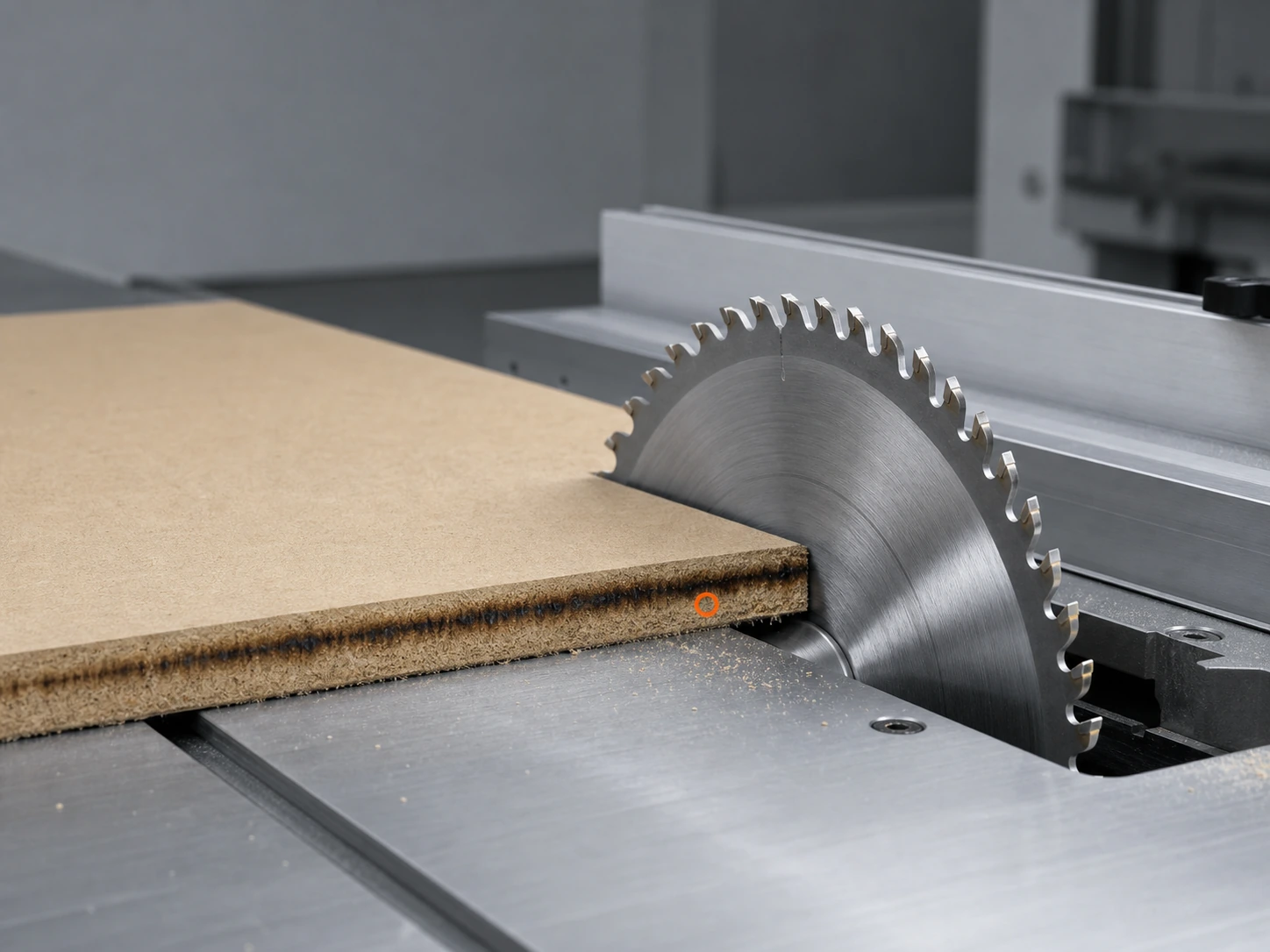
A saw blade cuts by removing chips. If the chips cannot leave the cut smoothly, heat builds up quickly.
The teeth may still have an edge, but the cutting system is already struggling. The blade rubs more than it cuts. The plate heats up. Resin, glue dust or fine powder starts sticking to the side of the blade. Once that happens, friction increases again.
This is why burn marks can appear even before the teeth look obviously dull.
Blade Design Factors That Cause Burning
The first place to check is the blade itself.
Plate Too Thick
A thick plate is more stable, but it also needs more machine power. If the machine is light or the motor is weak, a heavy plate can create extra resistance.
This does not mean thick blades are bad. It means plate thickness should match machine power and cutting duty.
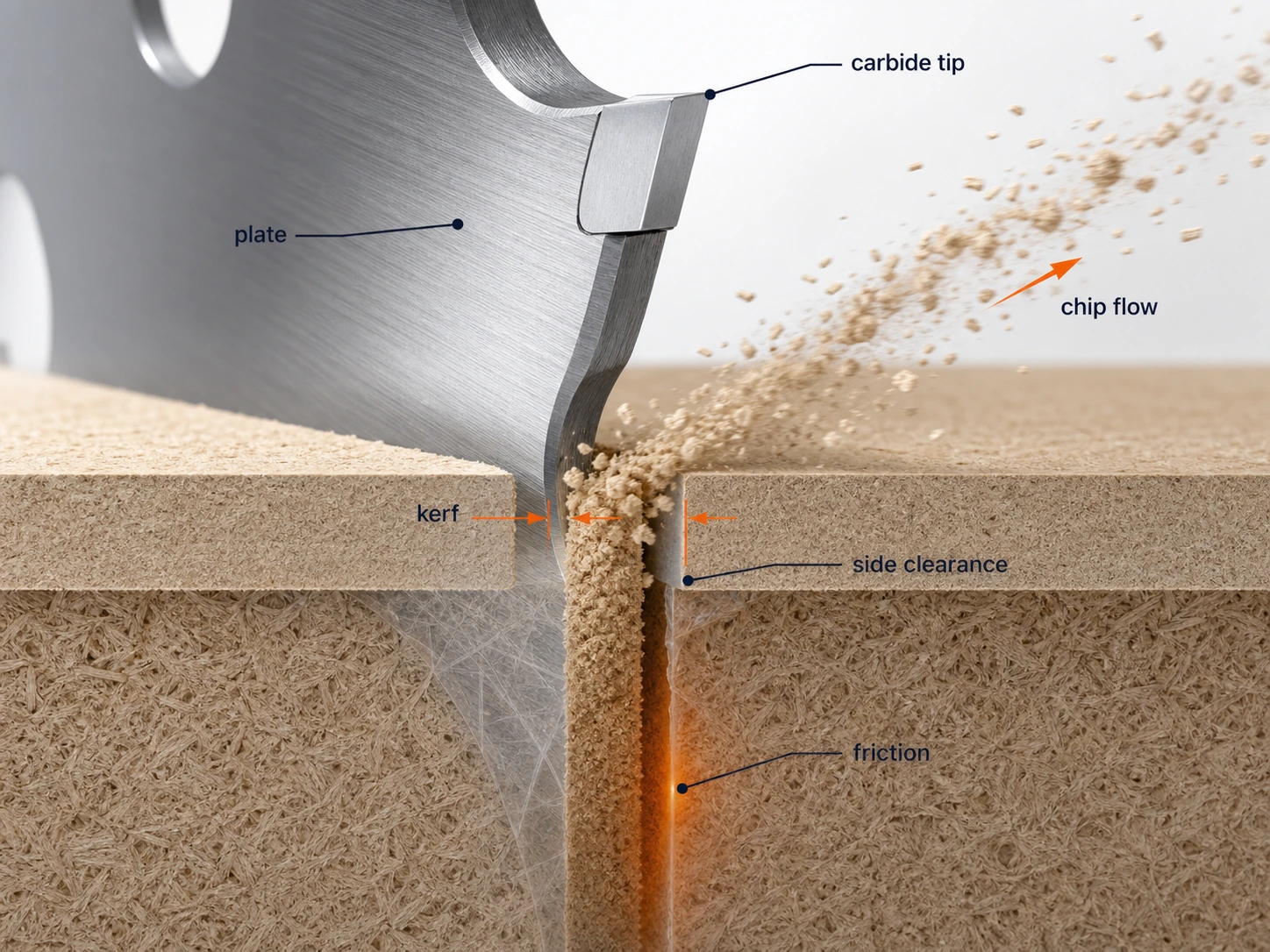
Side Clearance Too Small
The carbide tips should create enough clearance so the plate does not rub heavily against the material.
If side clearance is too small, the cutting slot becomes tight. Dust and chips stay in the kerf. The blade body rubs the board. Heat rises quickly.
For sticky materials, this is a common cause of black marks on both sides.
Too Many Teeth for the Cut
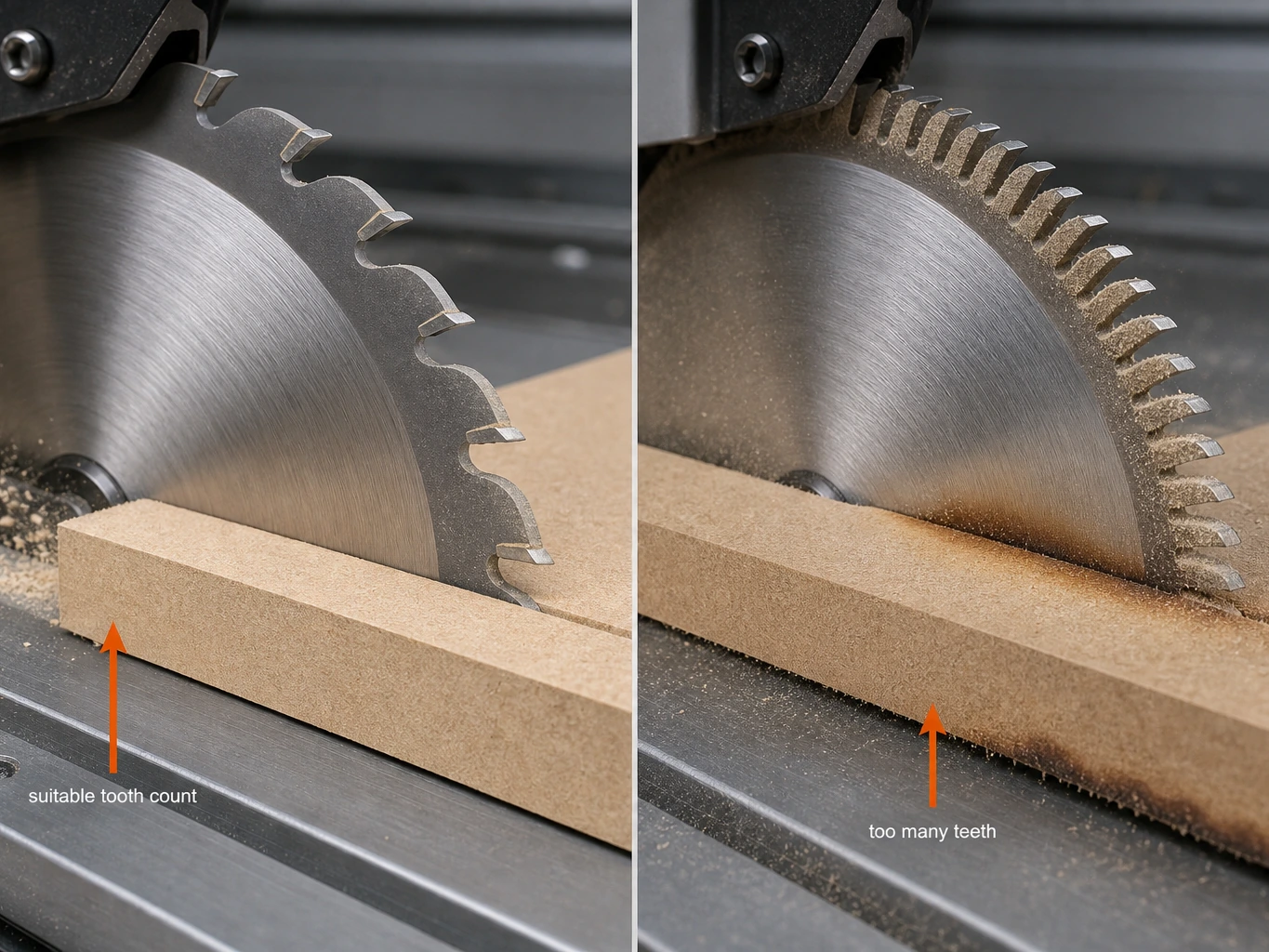
More teeth can give a smoother finish, but not always.
If the material is thick or chip volume is large, too many teeth may reduce gullet space. The blade cannot carry chips out efficiently. The cut becomes hot and slow.
For thick boards, rough cutting or lower-power machines, a slightly lower tooth count may cut cooler and faster.
Wrong Tooth Geometry
ATB, TCG and flat top teeth behave differently.
For laminated board, edge quality matters. For ripping, chip evacuation matters. For abrasive panels, wear resistance matters. If the tooth geometry is wrong, the blade may still cut, but it will run hotter than it should.
Material Factors That Cause Burning
Some materials naturally make burning more likely.
High Glue Content
MDF, particle board and laminated board often contain glue and resin. During cutting, heat softens these materials. Fine dust can stick to the blade side and form a dark layer.
This layer is not just dirt. It changes the way the blade moves through the cut.
Internal Stress
Some boards close slightly after cutting. When the kerf closes, the blade is pinched. This creates side friction and heat.
Users often describe this as “the blade cuts for a while, then suddenly becomes heavy.”
Cutting Thickness Too High
A thicker cut produces more chips. If the blade is not designed for that chip volume, heat builds up. The problem becomes worse when feed speed is too slow, because the blade stays in the cut longer.
Machine and Operation Factors
Burning may also come from the machine.
Check:
- Is the fence aligned?
- Is the arbor running true?
- Is the blade mounted cleanly?
- Is the feed speed too slow?
- Is the workpiece being pushed against the blade side?
- Is dust extraction poor?
If the machine forces the blade to rub, even a good blade will burn.
What Buyers Should Ask Before Reordering
If a customer reports burn marks, do not only ask for a new blade size.
Ask:
- 1. What material is being cut?
- 2. What is the board thickness?
- 3. What machine is used?
- 4. What is the current blade size and tooth count?
- 5. Does the burn appear on one side or both sides?
- 6. Does the blade body have sticky resin buildup?
- 7. Is the cut slow from the beginning or only after some use?
These questions help separate blade selection problems from machine or material problems.
Practical Recommendations
For glue-heavy boards, choose a blade with good side clearance, suitable tooth count and clean plate finish.
For furniture-grade laminate, do not only chase more teeth. The tooth geometry and grinding quality matter more.
For thick boards or weaker machines, avoid over-dense tooth counts. A blade that clears chips well may produce a better real-world result than a blade that only looks “finer” on paper.
And if the blade is already covered with resin, clean it before judging edge life.
Final Thought
Burn marks are not always caused by a dull blade.
They are often the result of heat, chip evacuation, friction and material behavior working together. Once you understand this, the solution becomes more practical.
Instead of asking “Why is this blade bad?”, ask:
“Where is the heat coming from?”
That question usually leads to the correct blade choice.