
Short videos are useful, but they can also be misleading.
A buyer sees a saw blade burning MDF, vibrating on a table saw, chipping laminate, or losing teeth during metal cutting. The first reaction is usually simple: the blade must be bad.
Sometimes that is true. But very often, the video only shows the final symptom. It does not show the material, machine condition, spindle runout, feed speed, flange condition, tooth geometry, or whether the blade was even selected for that job.
For importers, wholesalers and factory buyers, this matters. If you judge only from a short clip, it is easy to buy the wrong blade, blame the wrong supplier, or compare prices between products that are not actually the same.
This guide turns common saw blade problem videos into a practical buying checklist.
If the Board Burns, Do Not Only Look at Sharpness
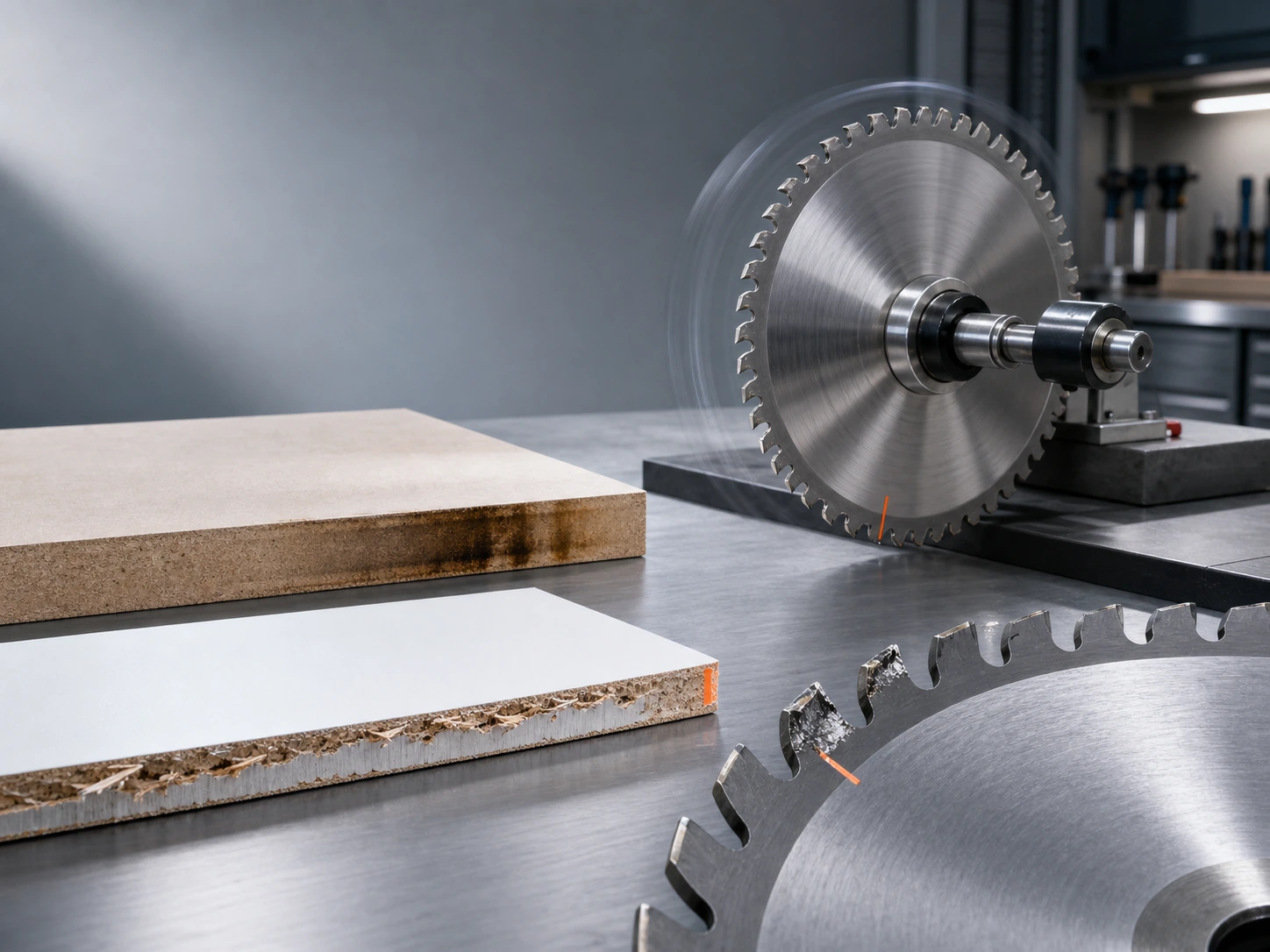
A blade can look sharp and still burn the board.
Burning usually comes from heat. Heat may come from a dull edge, but it can also come from poor chip clearance, too many teeth, wrong kerf, resin buildup, slow feed, or material stress closing behind the cut.
For MDF, plywood, laminated board and glue-heavy panels, burning is especially common because dust and resin can stick to the plate. Once the plate gets dirty, friction rises, the blade gets hotter, and the problem becomes worse.
Before changing suppliers, check:
- Is the blade plate too thick for the machine power?
- Is the kerf too narrow for the material?
- Is the side clearance enough?
- Are the teeth too dense for the cutting thickness?
- Is resin or dust already stuck to the blade body?
For a buyer, the better question is not “Is this blade sharp?” It is: “Is this blade geometry suitable for this material and machine?”
If the Blade Vibrates, Check the System
Vibration videos are common. The blade shakes, the cut surface becomes rough, noise increases, and users assume the blade is unbalanced.
Dynamic balance can be a cause, especially for high RPM machines. But it is not the only one.
Vibration can come from:
- Dirty or uneven flange
- Spindle runout
- Incorrect bore fit
- Poor clamping
- Thin blade body used in a heavy cut
- Workpiece moving during cutting
- Tooth count too high for the material thickness
- Feed speed too slow or too aggressive
This is why a serious supplier should ask for machine photos, arbor size and current blade marking. Without that information, a quotation is only a guess.
If Laminate Chips, Tooth Geometry Matters
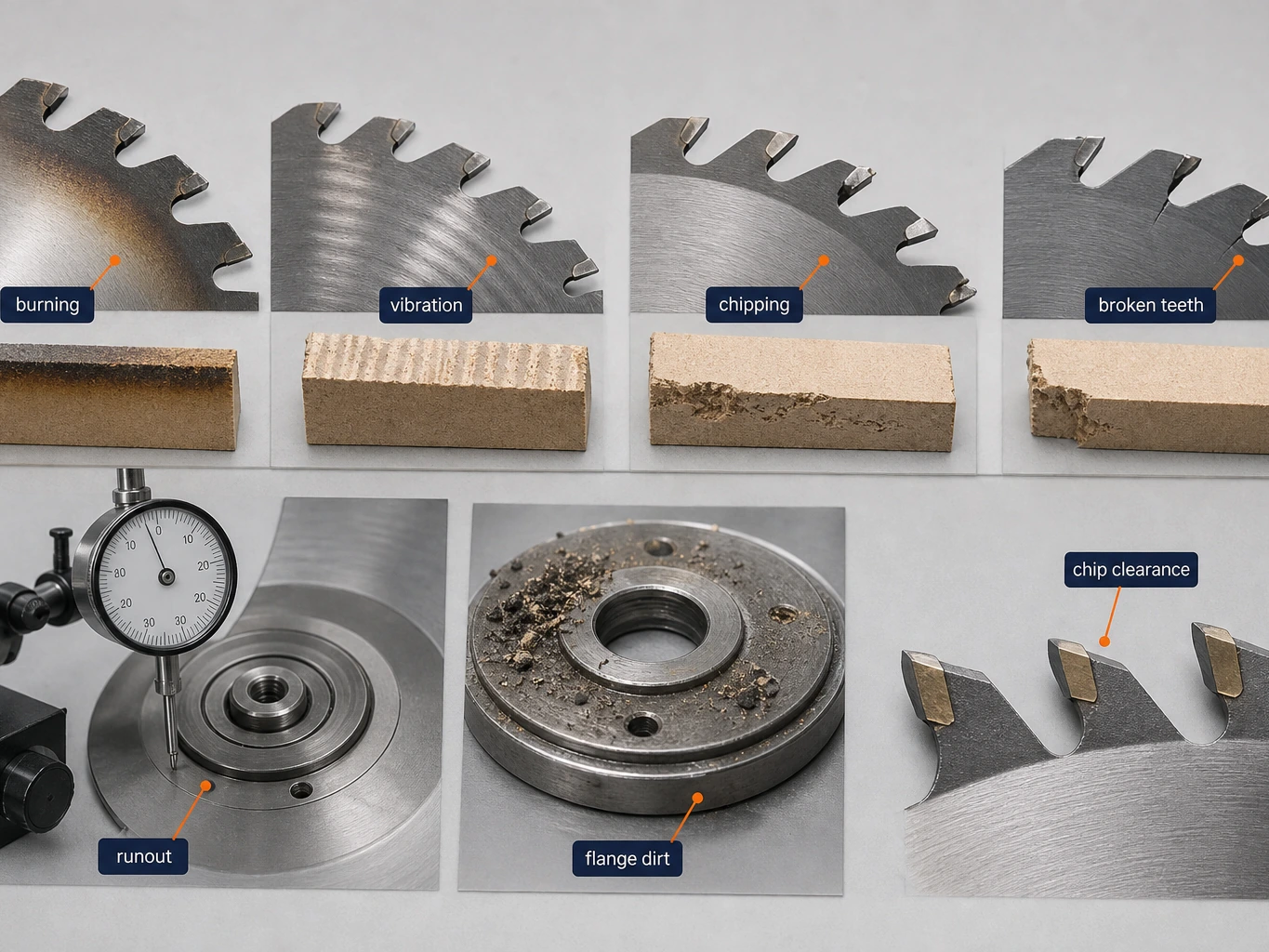
Chipping on laminated board is not always a quality defect.
For visible furniture surfaces, the tooth geometry needs to control both entry and exit damage. ATB teeth can work for many woodworking jobs, while TCG or special scoring solutions may be needed for harder laminate or panel saw applications.
The common mistake is choosing by diameter and tooth count only.
For example, two blades may both be 7 inch 80T. One may be a basic ATB blade for fine wood cutting. Another may be designed with better plate stability, tooth grinding and side clearance for laminated board. They look similar in a photo, but they do not perform the same.
When the job is MDF, laminated board or furniture panel cutting, buyers should confirm:
- Material surface: raw MDF, melamine, veneer, laminate or film-faced board
- Machine type: table saw, sliding table saw, panel saw or hand saw
- Cut direction: ripping, crosscutting or sizing
- Required edge quality: rough cut, furniture grade, visible edge
- Current blade problem: chipping, burning, noise, short life
If Teeth Break, Load and Impact Matter
Broken teeth look dramatic on video. They also create real safety concerns.
But a broken tooth does not have one single cause. It can come from wrong material, wrong tooth form, excessive feed, unstable workpiece, hard inclusions, poor carbide grade, weak brazing, or impact at entry.
For metal cutting, the situation is more sensitive. Solid bar, tube, stainless steel and mild steel do not load the tooth in the same way. Tooth pitch, chip space and grade selection become much more important.
If a customer sends only “same model please,” we still need to ask what it cuts.
Why Social Videos Are Good Starting Points, Not Final Specifications
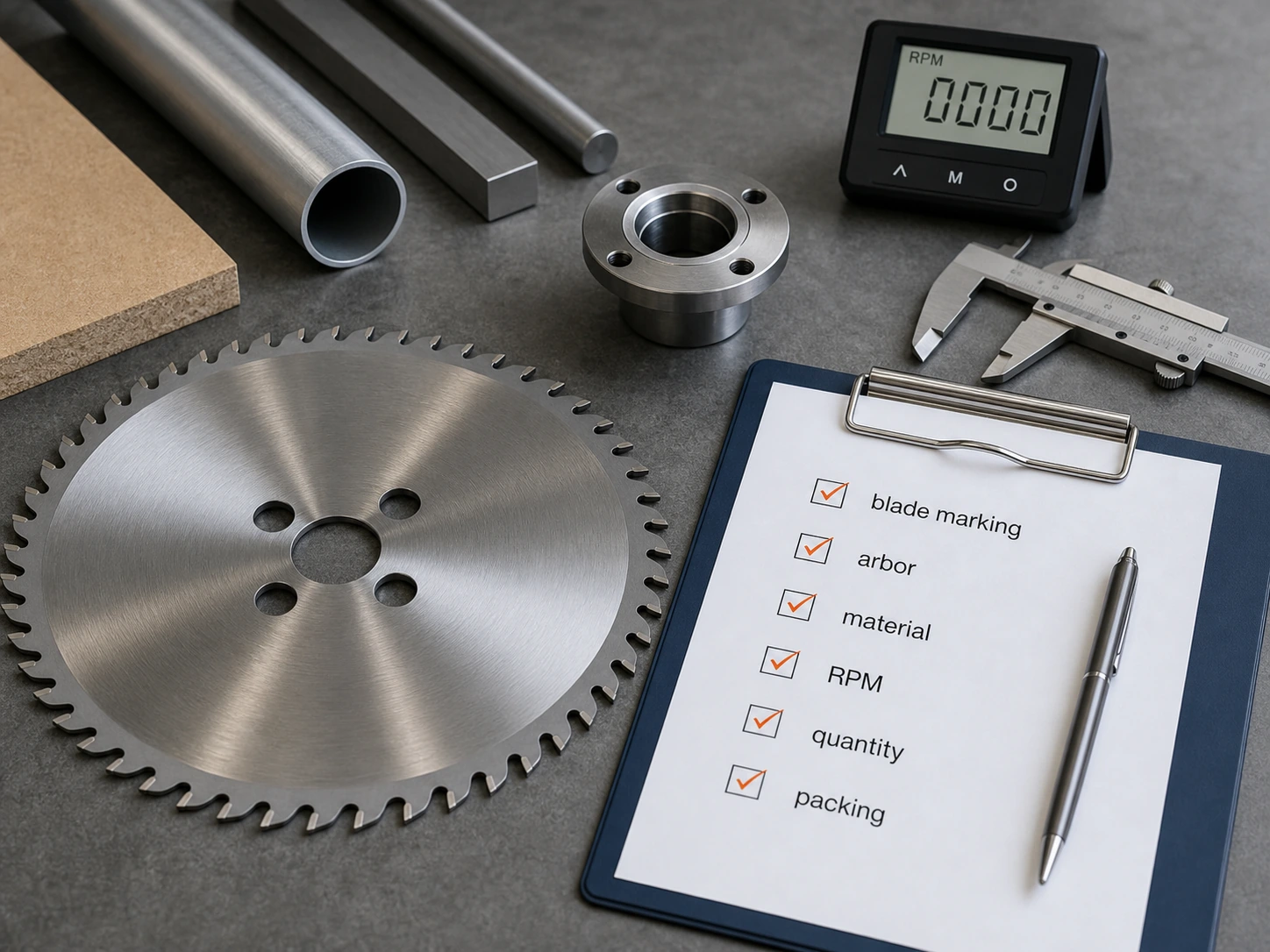
Videos show the problem better than words. A 10-second clip of burning, vibration or chipping can save a long email chain.
But the buying decision still needs real parameters:
- Outside diameter
- Kerf
- Plate thickness
- Bore
- Tooth count
- Tooth geometry
- Material to cut
- Machine type and RPM
- Quantity
- Current blade photo or marking
For custom or export orders, this is the difference between selling a blade and solving a cutting problem.
Buyer Checklist Before Sending an Inquiry
If you are not sure what blade to buy, send these details first:
- 1. Photo of the current blade marking
- 2. Photo of the machine arbor or flange
- 3. Material photo or video
- 4. Cutting problem video, if available
- 5. Target quantity and market level
- 6. Whether the order needs private label or neutral packing
With this information, a supplier can recommend a safer starting model instead of guessing from a single picture.
Final Thought
Saw blade problem videos are valuable because they show real working conditions. But they should not be used as simple proof that a blade is good or bad.
For buyers, the real value is learning what to ask next.
If a supplier only says “we have cheap price,” that is not enough. A better supplier should help you connect the visible problem to the blade design, material, machine and cutting method.
That is how you avoid repeat complaints after the goods arrive.