
Kerf is easy to ignore until a cutting problem appears.
Two blades may have the same diameter, bore and tooth count. One has a thinner kerf. The other has a wider kerf and thicker plate. In a catalog, the difference may look small. In real cutting, it can change power demand, material waste, blade stability, heat and edge quality.
So which one should buyers choose?
The answer depends on the machine, material and cutting target.
What Is Kerf?
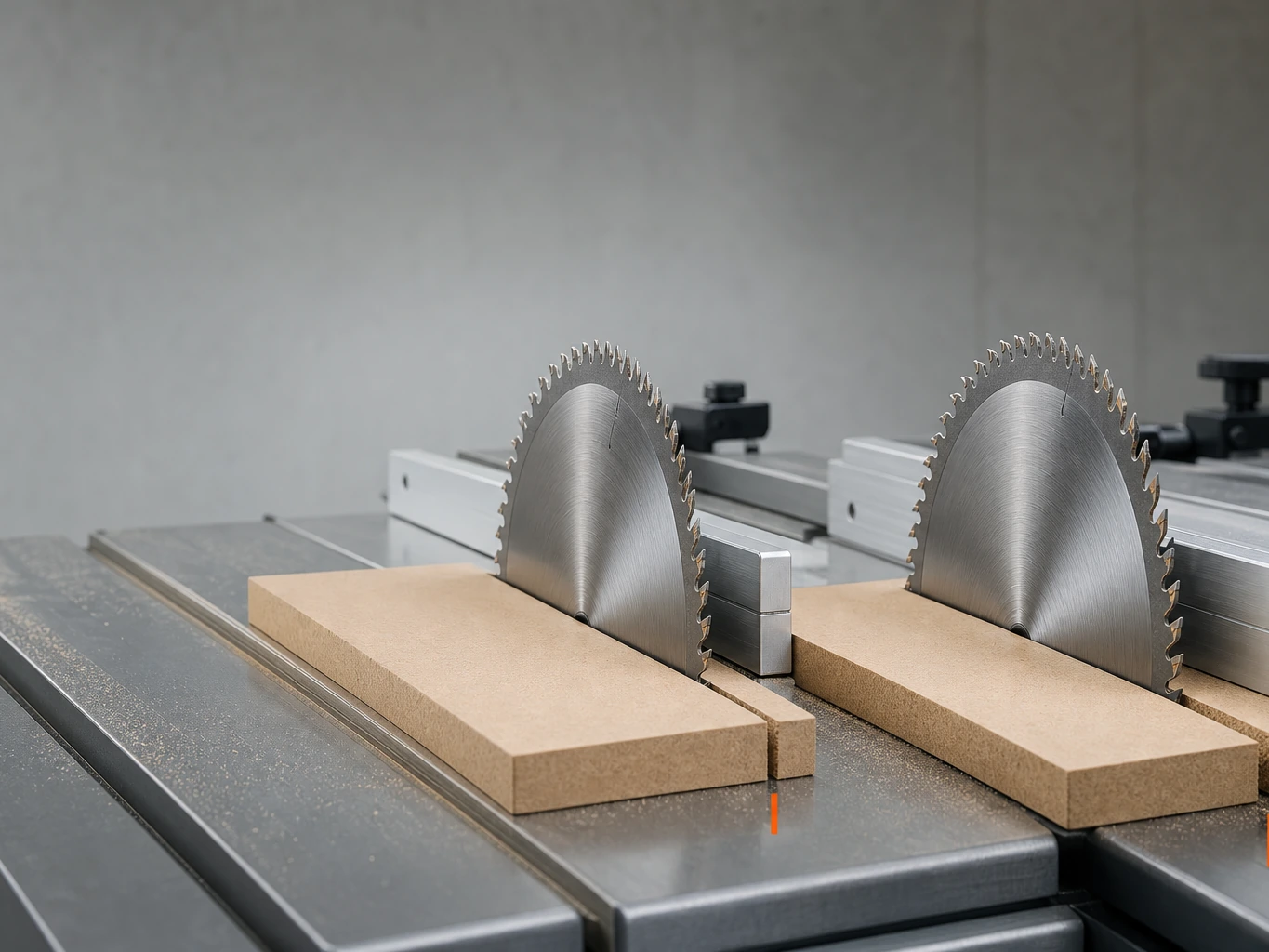
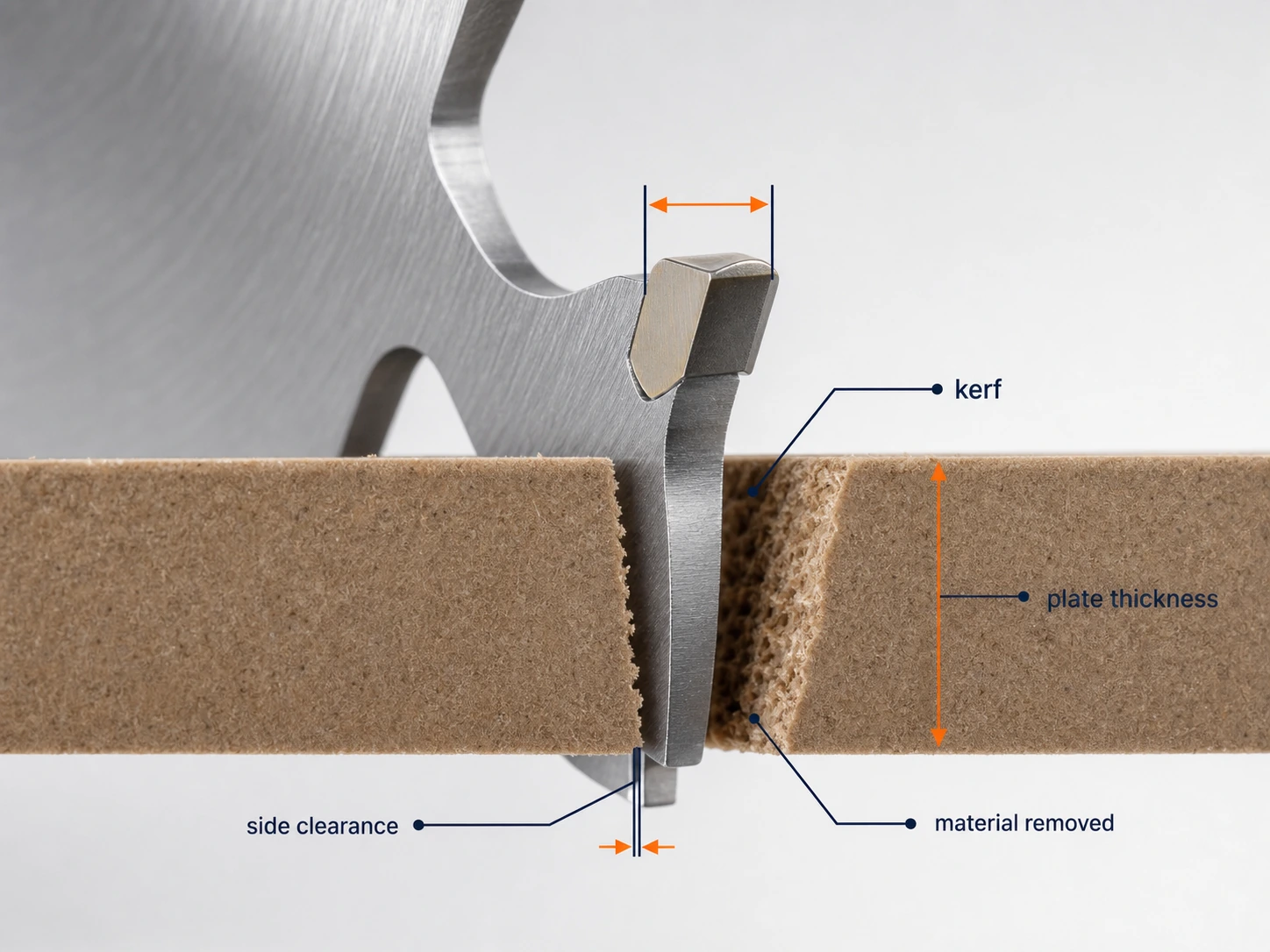
Kerf is the width of the cut made by the saw blade.
It is usually controlled by the carbide tip width. The blade plate is thinner than the tip so the plate can pass through the cut without heavy rubbing.
For example, a blade may be written as:
250 x 3.0 x 2.0 x 25.4 x 80T
This often means:
- 250mm outside diameter
- 3.0mm kerf
- 2.0mm plate thickness
- 25.4mm bore
- 80 teeth
The kerf and plate thickness work together. You cannot judge one without the other.
Why Buyers Choose Thin Kerf
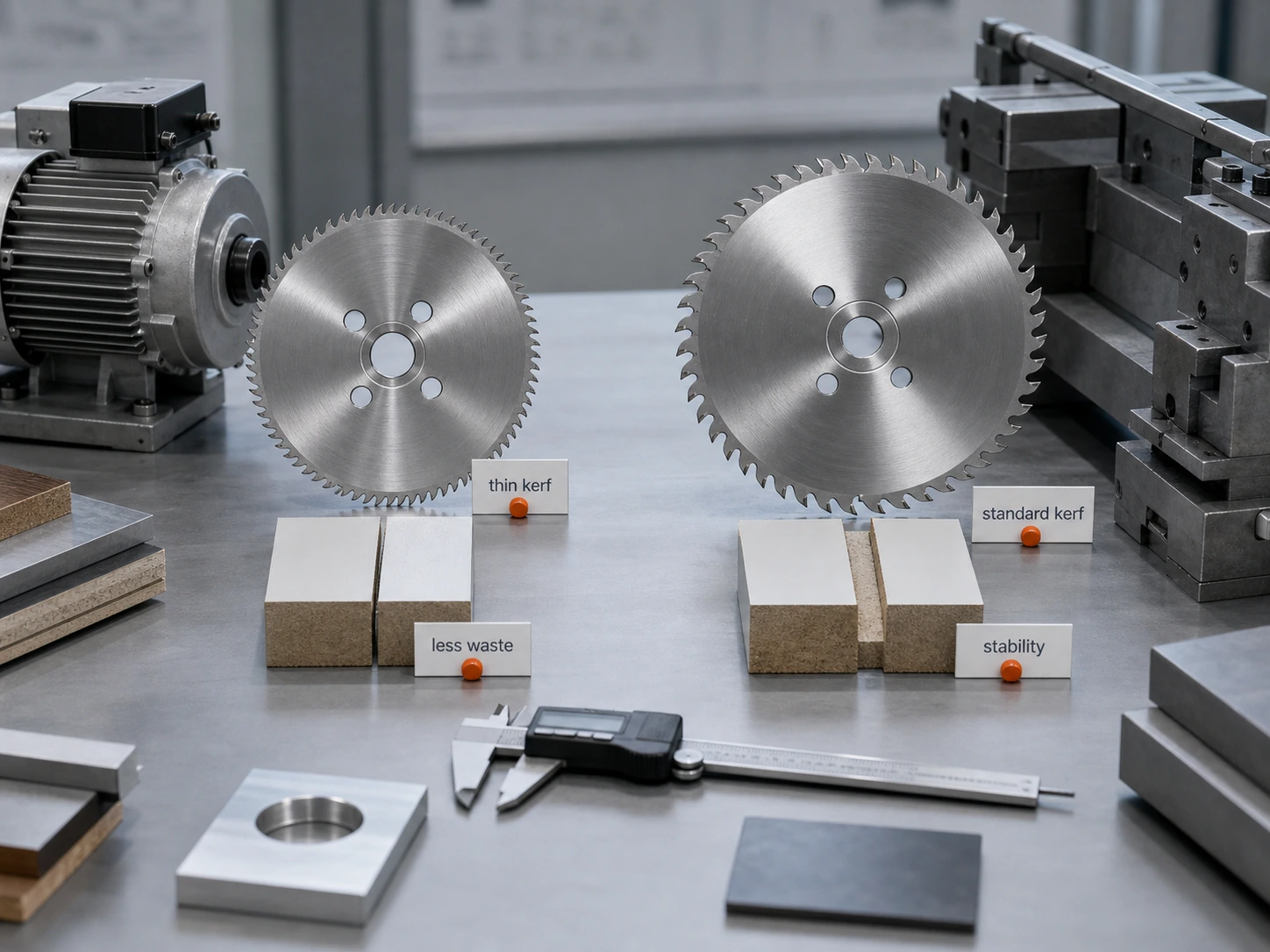
Thin kerf blades remove less material.
That brings three advantages:
- 1. Less cutting resistance
- 2. Less waste
- 3. Faster cutting on lower-power machines
For cordless tools, small circular saws and light-duty machines, thin kerf can make a real difference. The motor does not need to remove as much material. The blade cuts easier. Battery runtime may improve.
Thin kerf also helps when cutting expensive materials where waste matters.
Where Thin Kerf Can Cause Problems
Thin kerf is not always better.
A thinner blade body is usually less rigid. In heavy-duty cutting, thick material, high feed pressure or unstable workholding, the blade may deflect more easily.
Possible problems include:
- Wavy cut line
- More vibration
- Higher risk of plate deformation
- More sensitivity to machine runout
- Shorter life in rough use
This is why a very cheap thin kerf blade may look attractive but fail quickly in production use.
Why Buyers Choose Standard Kerf
Standard kerf blades are often more stable.
They remove more material, so they need more power. But the plate can be stronger. In industrial cutting, table saws, panel saws and heavy-duty applications, stability is often more important than saving a small amount of material.
Standard kerf is usually safer when:
- Machine power is sufficient
- Cutting is continuous
- Material is thick
- Feed pressure is high
- Straight cut quality is important
- The buyer wants longer stable service life
For factories, the cheapest cut is not always the narrowest cut. The cheapest cut is the one that finishes the job without rework, complaints or downtime.
Material Matters
For softwood and general board cutting, thin kerf may work well if the machine is light.
For MDF and laminated board, the answer depends on finish requirement and chip evacuation. Too narrow a kerf may increase friction if dust and resin cannot clear well.
For aluminum, kerf, tooth geometry and chip space need careful matching. Chip welding and heat can become a problem if the blade is selected only by thickness.
For metal and cold saw applications, kerf is tied to rigidity, tooth pitch, grade and machine clamping. It should not be simplified into “thin is better.”
How to Decide
Buyers can use a simple rule:
Choose thin kerf when machine power is limited, material waste matters, and the cut is not extremely heavy.
Choose standard kerf when stability, durability and industrial consistency matter more than material saving.
If the customer is unsure, ask about:
- Machine type and power
- Material type and thickness
- Cutting volume
- Required edge finish
- Current blade problem
- Whether the cut must be very straight
Price Difference Is Not Only Steel Weight
Some buyers think a thinner blade should always be cheaper because it uses less steel.
Not always.
A good thin kerf blade may need better plate material, better tension control, better heat treatment and more accurate grinding to stay stable. If the process is poor, the blade may vibrate or deform.
For export buyers, this is important. Thin kerf should not be bought only as a low-price option.
Final Thought
Planning production yield? Use our saw blade kerf loss and cost-per-cut calculation guide to convert cutting width into material and purchasing cost.
Thin kerf and standard kerf are not quality levels. They are different design choices.
The right choice depends on whether the buyer needs lower resistance or stronger stability.
When quoting a saw blade, kerf should be discussed together with plate thickness, tooth count, material and machine type. That is how buyers avoid ordering a blade that looks correct but performs badly in real cutting.