
Drill speed is one of the easiest settings to get wrong. Too fast, and the drill bit burns. Too slow, and productivity drops. Too little feed, and the bit rubs instead of cutting.
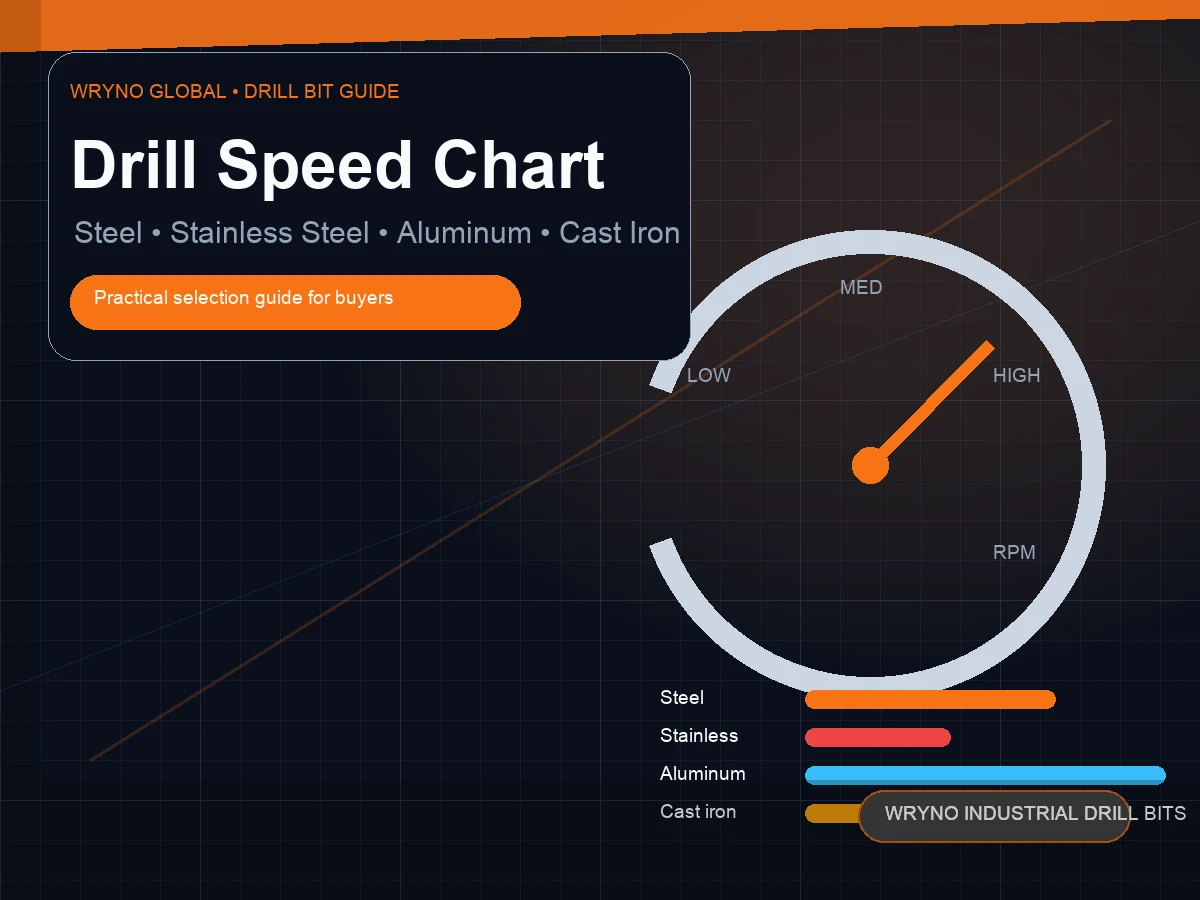
The chart below is a practical starting point for common metal drilling. Real conditions still depend on bit material, machine rigidity, coolant and hole depth.
Practical RPM Starting Chart
| Drill diameter | Mild steel with HSS | Stainless steel with cobalt | Aluminum with HSS | Cast iron with carbide/HSS |
|---|---|---|---|---|
| 3 mm | 2,000–3,000 RPM | 800–1,500 RPM | 4,000–6,000 RPM | 1,500–2,500 RPM |
| 6 mm | 1,000–1,500 RPM | 400–800 RPM | 2,000–3,500 RPM | 700–1,200 RPM |
| 10 mm | 600–900 RPM | 250–500 RPM | 1,200–2,000 RPM | 400–800 RPM |
| 13 mm | 400–700 RPM | 180–350 RPM | 900–1,500 RPM | 300–600 RPM |
| 20 mm | 250–450 RPM | 120–250 RPM | 500–900 RPM | 180–350 RPM |
Why Larger Bits Need Lower RPM
The outside edge of a large drill bit travels farther per revolution than a small bit. At the same RPM, a 20mm drill has much higher cutting speed at the edge than a 3mm drill. That is why bigger bits need lower RPM.
Mild Steel
Mild steel is relatively forgiving. Standard HSS works for many jobs if the speed is reasonable and the bit is sharp. Use cutting fluid for cleaner holes and longer tool life, especially above 6mm.
Stainless Steel
Stainless steel is the material where speed mistakes are most expensive. It conducts heat poorly and can work-harden when the bit rubs. Use lower speed, steady feed and cutting fluid. M35 cobalt is a good starting point for many workshop users.
Related reading: what drill bit should I use for stainless steel?
Aluminum
Aluminum can be drilled faster than steel, but it can stick to the cutting edge. Use sharp geometry, good chip clearance and lubrication. If chips weld onto the bit, the hole finish gets worse and the bit may grab.
Cast Iron
Cast iron is abrasive and creates powder-like chips. Coolant is often not used in the same way as steel drilling, but dust control and tool material matter. Carbide can perform well in rigid machines.
For heat-treated tool steel and hard alloy components, compare M35/M42 cobalt with solid carbide in our drill bit guide for hardened steel.
Compare entry behavior and edge support in our 118° vs 135° drill bit point-angle guide.
Match finish and PVD chemistry to the application with our drill bit coatings guide.
See how point, web, flute and margin design interact in our twist drill bit geometry guide.
For holes beyond normal flute evacuation limits, use our peck drilling and deep-hole coolant guide.
Related guide: Aluminum Drilling Problems: Chip Welding, Oversized Holes and Burrs covers practical checks for aluminum drilling chip welding.
Buyer Takeaway
When customers say a drill bit burns, ask for RPM and drill diameter. Many failures are not caused by the bit itself; they happen because a large bit is run like a small bit, or stainless steel is drilled like wood.