
Bore size is a small detail, but it can stop a saw blade from being used.
The bore is the center hole of the saw blade. It must match the machine arbor. If the bore is wrong, the blade may not fit, may need a reducer, or may run with poor accuracy.
For buyers, bore size should be confirmed before ordering, especially for custom blades or imported replacement blades.
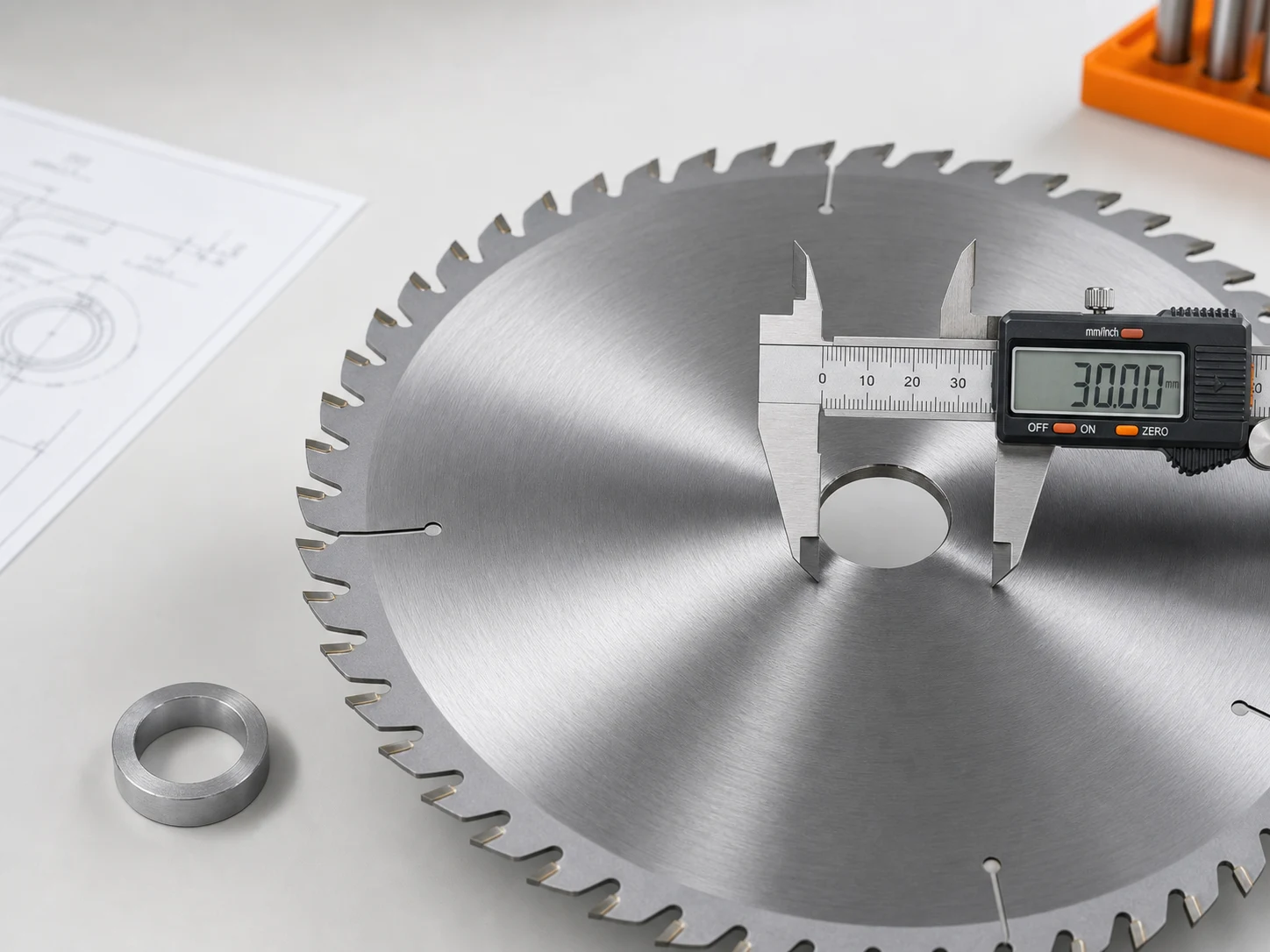
What Is Saw Blade Bore Size?
Saw blade bore size means the diameter of the center hole.
It is usually written in millimeters or inches.
For example:
180 x 2.3 x 1.5 x 25.4 x 60T
In this specification, 25.4 is the bore size.
25.4mm is equal to 1 inch.
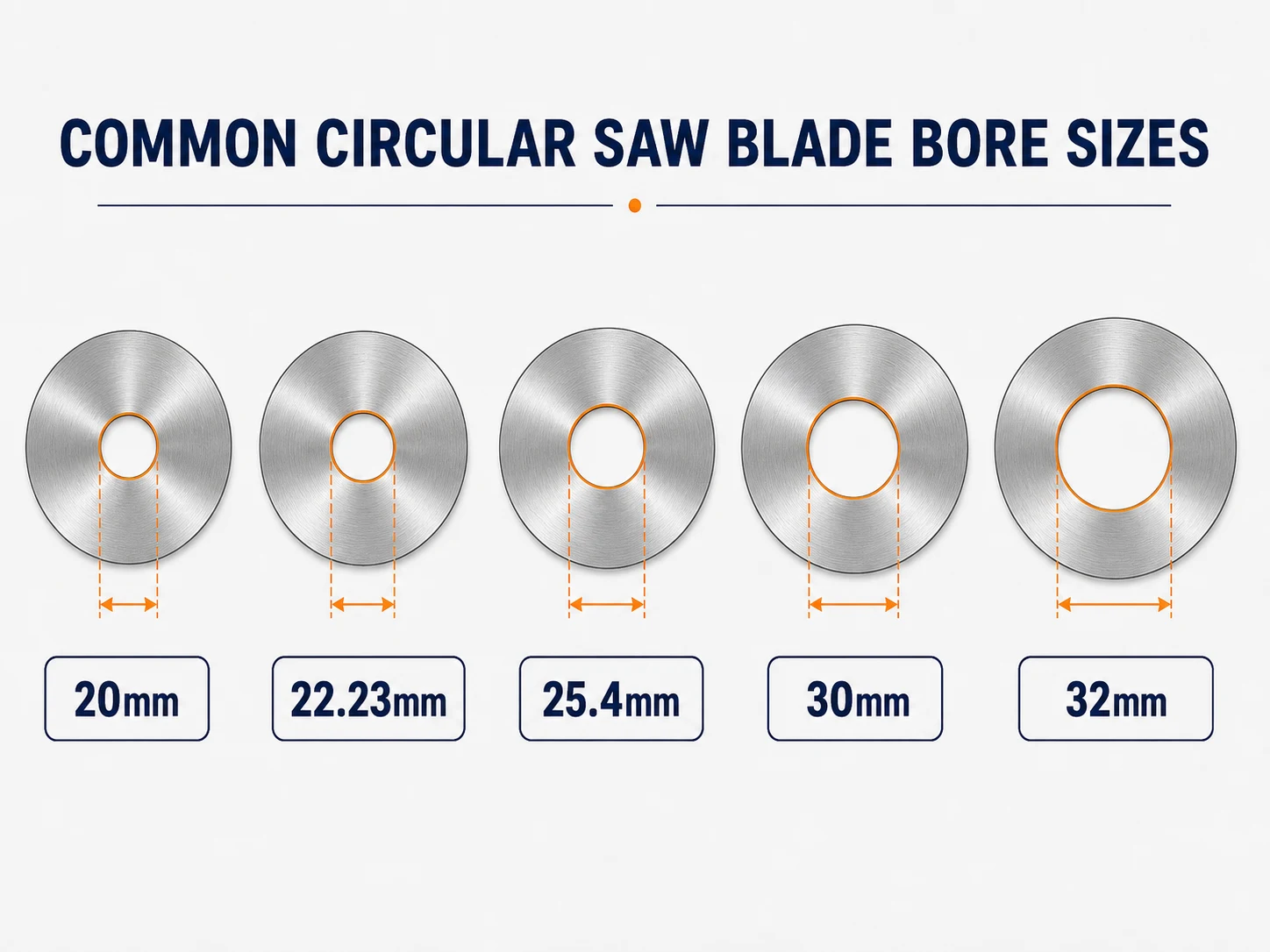
Common Bore Sizes
Common bore sizes depend on blade diameter, machine type and market.
Examples include:
| Bore Size | Common Use |
|---|---|
| 16mm | small blades, some compact tools |
| 20mm | small circular saw blades, some 4 inch / 5 inch blades |
| 22.23mm / 7/8 inch | angle grinder blades, diamond blades |
| 25.4mm / 1 inch | many 7 inch and woodworking blades |
| 30mm | European-style table saws, miter saws and larger blades |
| 32mm | some metal cutting and cold saw applications |
| 128mm | special segmental HSS or industrial saws |
This table is only a guide. The safest answer is always the machine arbor or current blade marking.
Why Bore Size Matters
A blade must sit correctly on the machine arbor.
If the bore is too small, the blade cannot be installed. If the bore is too large, it may need a reducer ring. If the reducer is poor quality or not centered well, the blade may run out of true.
Poor bore fit can cause:
- vibration
- noise
- inaccurate cutting
- rough edge
- safety risk
- shorter blade life
This is why a serious quotation should always confirm bore size.
Can a Reducer Ring Be Used?
Sometimes yes.
A reducer ring can reduce a larger bore to a smaller arbor size. For example, a blade with 30mm bore may be reduced to 25.4mm.
But reducers are not always ideal. For high precision cutting, high RPM, metal cutting or heavy industrial use, it is safer to order the correct bore size directly.
Reducers should fit tightly and stay flat. A loose reducer can create runout.
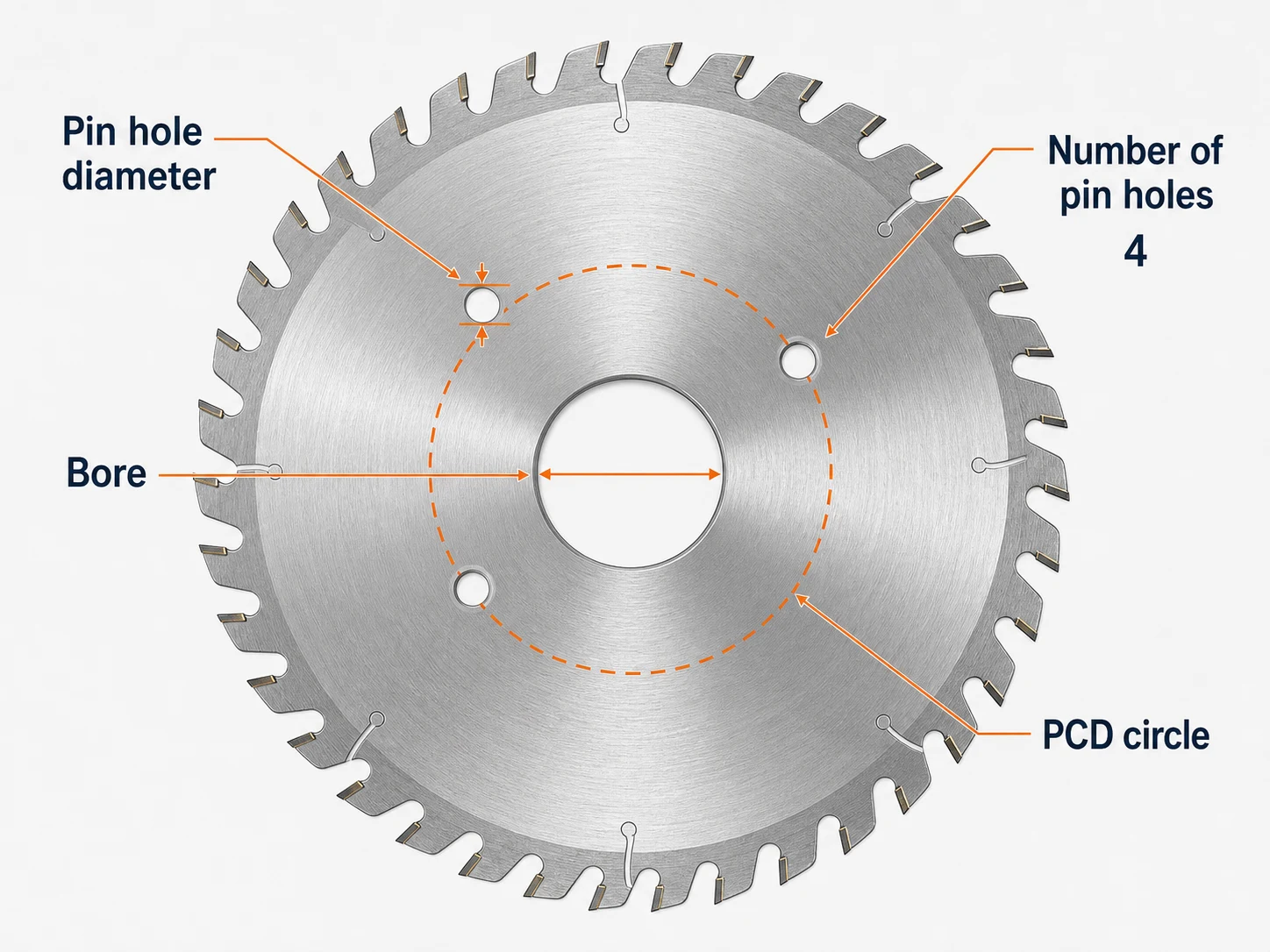
What About Pin Holes and PCD?
Some saw blades have extra small holes around the center bore.
These may be pin holes or drive holes. They help locate the blade on certain machines.
When these holes are required, the buyer should confirm:
- number of pin holes
- pin hole diameter
- PCD, which means pitch circle diameter
- hole position
- whether the holes are countersunk or straight
A photo of the current blade is helpful, but measurements are still better.
How Buyers Can Confirm Bore Size
The easiest ways are:
- 1. Read the marking on the existing blade.
- 2. Measure the center hole directly.
- 3. Check the machine manual.
- 4. Send a photo of the arbor and blade marking.
- 5. Confirm whether pin holes are required.
If the buyer is unsure, it is better to say so before ordering.
Common Mistake: Guessing From Blade Diameter
Some buyers assume the bore size from blade diameter. This can be risky.
For example, many 7 inch blades may use 25.4mm bore, but not all of them. Some markets or machines may use 20mm, 30mm or other sizes.
The same outside diameter does not guarantee the same bore.
Before blaming a blade for vibration or poor finish, follow our saw blade runout measurement guide to isolate the blade, arbor and flange with a dial indicator.
Buyer Takeaway
Bore size is not a detail to leave until the end.
It decides whether the blade fits the machine and runs safely. Before confirming a saw blade order, check the center hole, pin holes and machine arbor.
If you are not sure, send the current blade marking or a clear machine photo. A good supplier should help confirm the bore before quoting.
Related reading: confirm saw blade specifications before quote. saw blade tooth count kerf plate thickness. match tct saw blade to material rpm. product catalog.