
Many buyers compare saw blades by outside diameter and tooth count. But two blades with the same diameter and tooth count can still cut very differently.
One reason is kerf and plate thickness.
Tooth count tells you how many teeth are on the blade. Kerf tells you how wide the blade cuts. Plate thickness tells you how thick the blade body is. These three details work together.
If they do not match the material and machine, the blade may heat up, burn the material, vibrate, or feel like it cannot cut smoothly.
What Is Kerf?
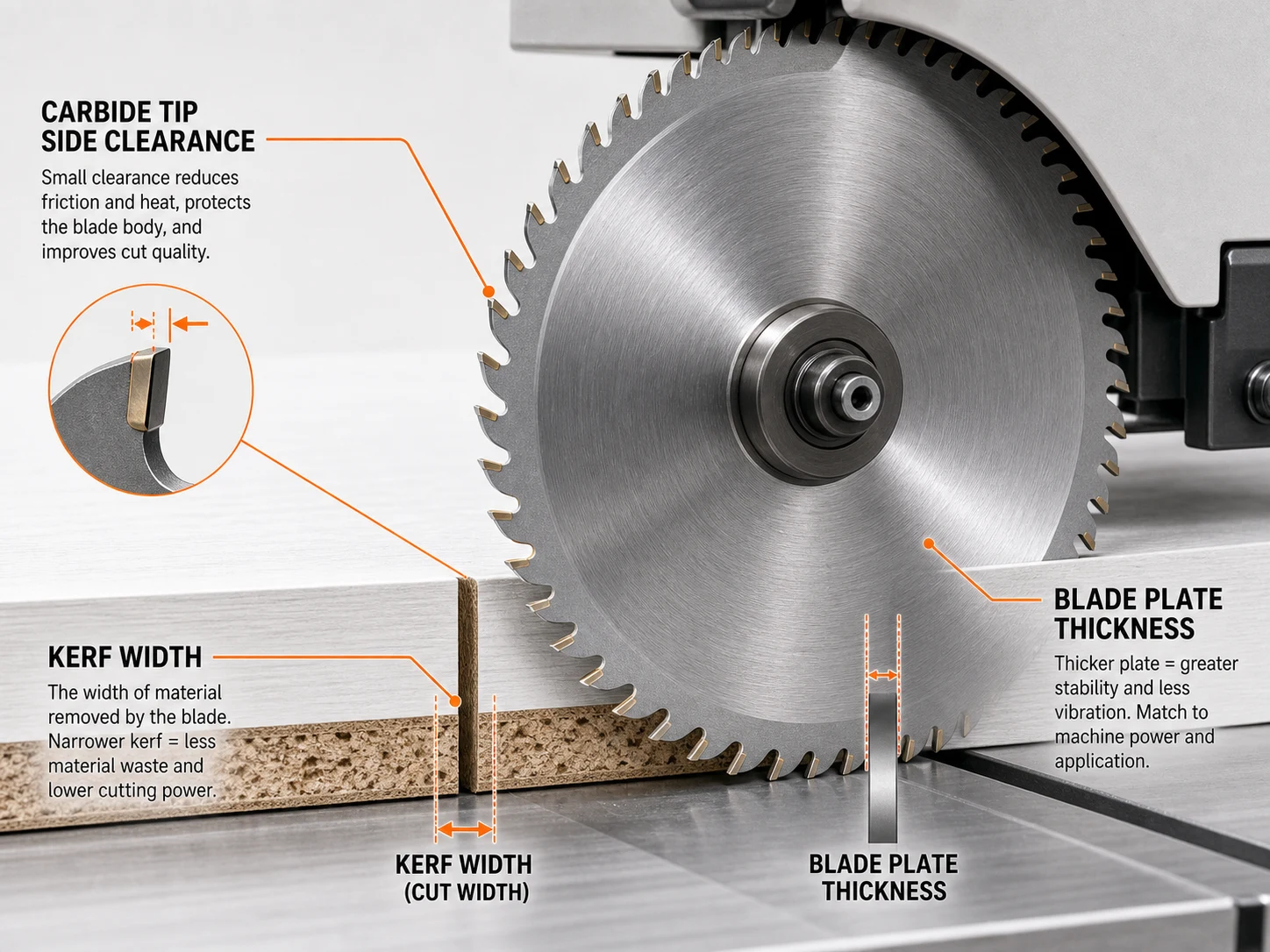
Kerf is the width of the cut made by the saw blade.
It is usually wider than the blade plate because the carbide tips extend slightly beyond the blade body. This side clearance prevents the plate from rubbing against the material.
If the kerf is too narrow for the application, the blade can rub, heat up and leave burn marks. If the kerf is too wide, the blade removes more material and needs more machine power.
What Is Plate Thickness?
Plate thickness is the thickness of the steel body of the blade.
A thicker plate can give more stability, especially in larger blades or heavier cutting. But it also increases resistance and material removal if the kerf is wide.
A thinner plate can cut with less resistance and save material, but it may be more sensitive to vibration, heat and poor machine condition.
This is why thin kerf blades are useful in some applications, but not always the best answer for every buyer.
How Tooth Count Affects Chip Space
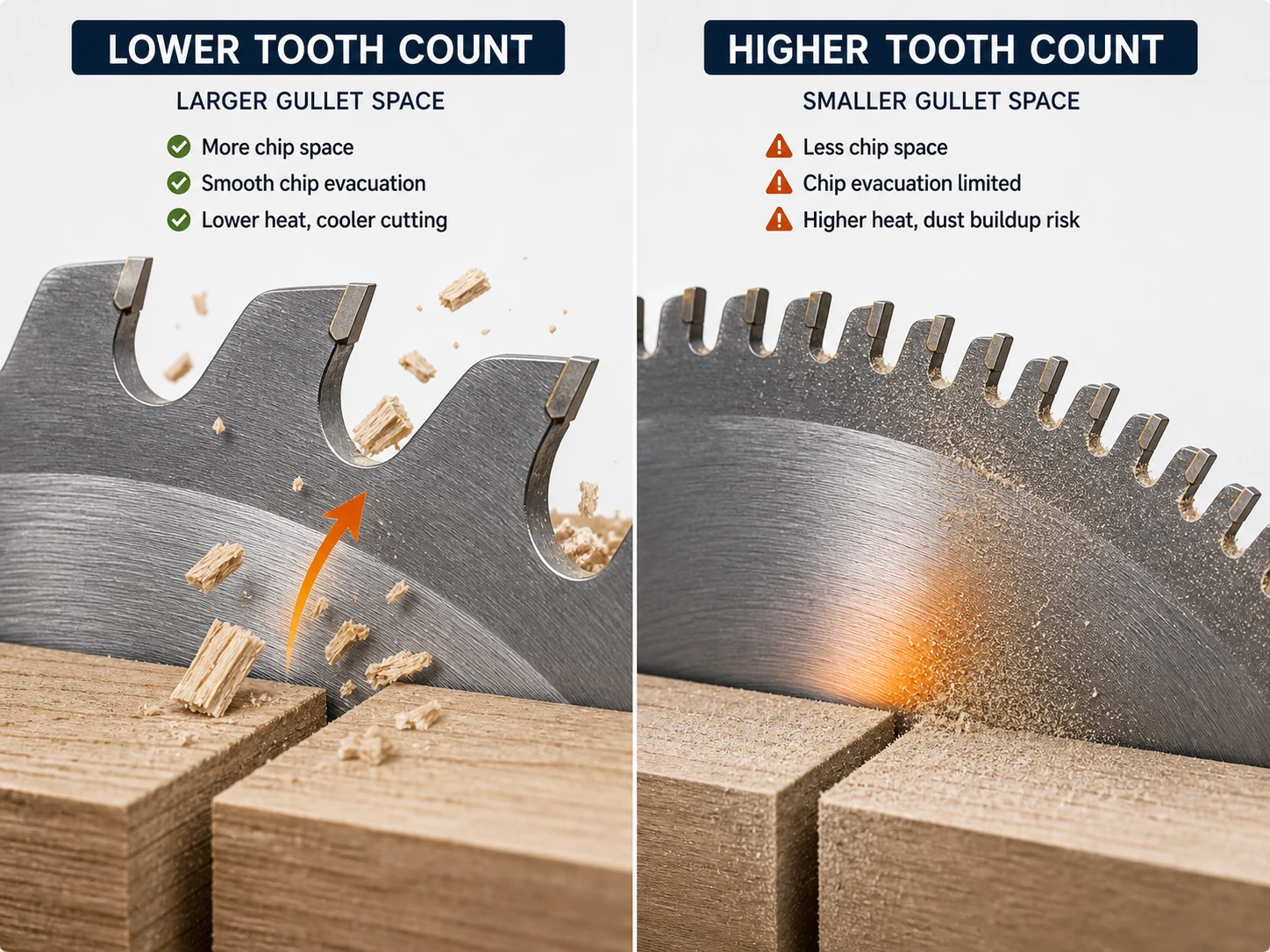
When tooth count increases, the space between teeth becomes smaller.
That means each gullet has less room to carry chips out of the cut. For thin sheet or fine finish work, this can be acceptable. For thick material, resin-heavy board or fast feed speed, it can become a problem.
If chip evacuation is poor, heat increases. Heat can cause burning, gumming, noise, vibration and shorter blade life.
This is why an 80T blade may cut cleaner than a 40T blade in some jobs, but perform worse in others.
Why Kerf and Tooth Count Must Match
A high-tooth-count blade with small gullets must still have enough side clearance and a suitable kerf.
If the kerf is too tight and the material produces a lot of dust or chips, the blade can rub against the cut wall. This is common in MDF, laminated board, plastic and resin-heavy materials.
On the other hand, if the kerf is too wide, the blade may need more power, and a small machine may struggle.
The goal is not the thinnest kerf or the highest tooth count. The goal is stable cutting.
Material Thickness Changes the Answer
The thicker the material, the more chip volume the blade must remove.
For thin laminated board, a higher tooth count can help improve edge finish. For thick softwood or heavy board cutting, a lower or medium tooth count may be more practical because the blade needs chip space.
If the buyer cuts thick material with a very fine tooth blade, the blade may heat up even if the carbide is still sharp.
This is not always a blade quality issue. It may be a selection issue.
Machine Power and Stability Matter
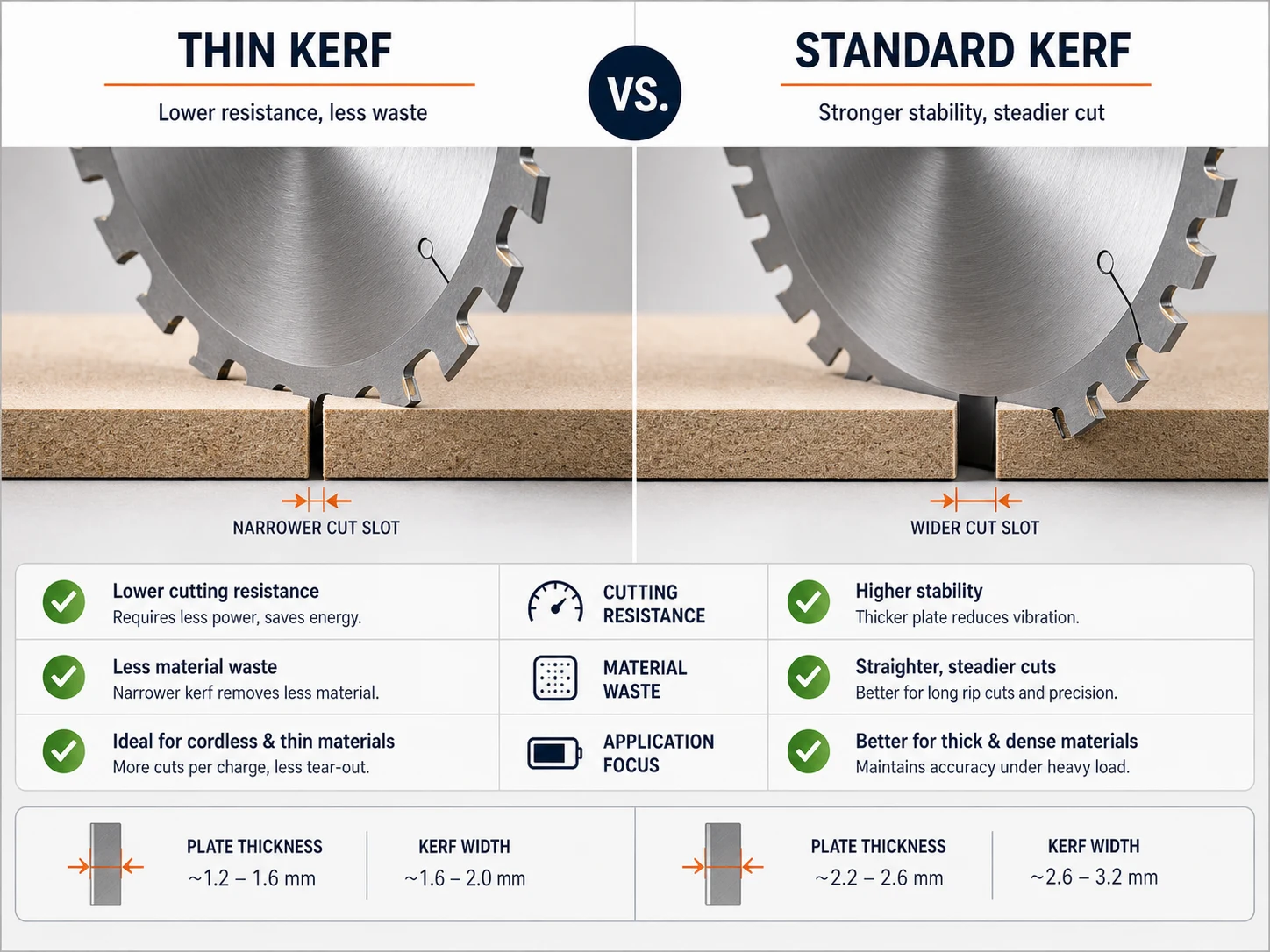
Thin kerf blades can reduce cutting resistance, which helps small machines and cordless tools.
But thin plates can also be more sensitive to runout, poor clamping and unstable feed. If the machine is not rigid, the blade may vibrate or wander.
For industrial machines, a standard or thicker plate may be better when stability matters more than material saving.
Practical Buyer Checklist
Before confirming a saw blade, ask:
- What material will it cut?
- How thick is the material?
- Is the edge visible after cutting?
- What is the machine RPM?
- Is the machine light-duty or industrial?
- Is low resistance more important, or stability?
- Does the blade need faster cutting or cleaner finish?
These questions help decide tooth count, kerf and plate thickness together.
Buyer Takeaway
Tooth count, kerf and plate thickness should not be selected separately.
More teeth can improve finish, but they reduce chip space. A thin kerf can reduce resistance, but it may need better machine stability. A thicker plate can improve stability, but it may increase cutting load.
The right blade is the one that matches material, machine and cutting purpose.
For buyers, this is also why two saw blades with the same size can have different prices. The difference may be hidden in the steel plate, carbide, kerf design, grinding accuracy and production control.
Related reading: saw blade tooth count for different materials. why saw blades make noise and vibrate. why saw blades gum up and burn. match tct saw blade to material rpm.