
Many buyers search a drill bit size chart because they need one simple answer: “What size hole should I drill?”
The problem is that there are two common answers. One is the tap drill size. The other is the clearance hole size. They are not the same hole.
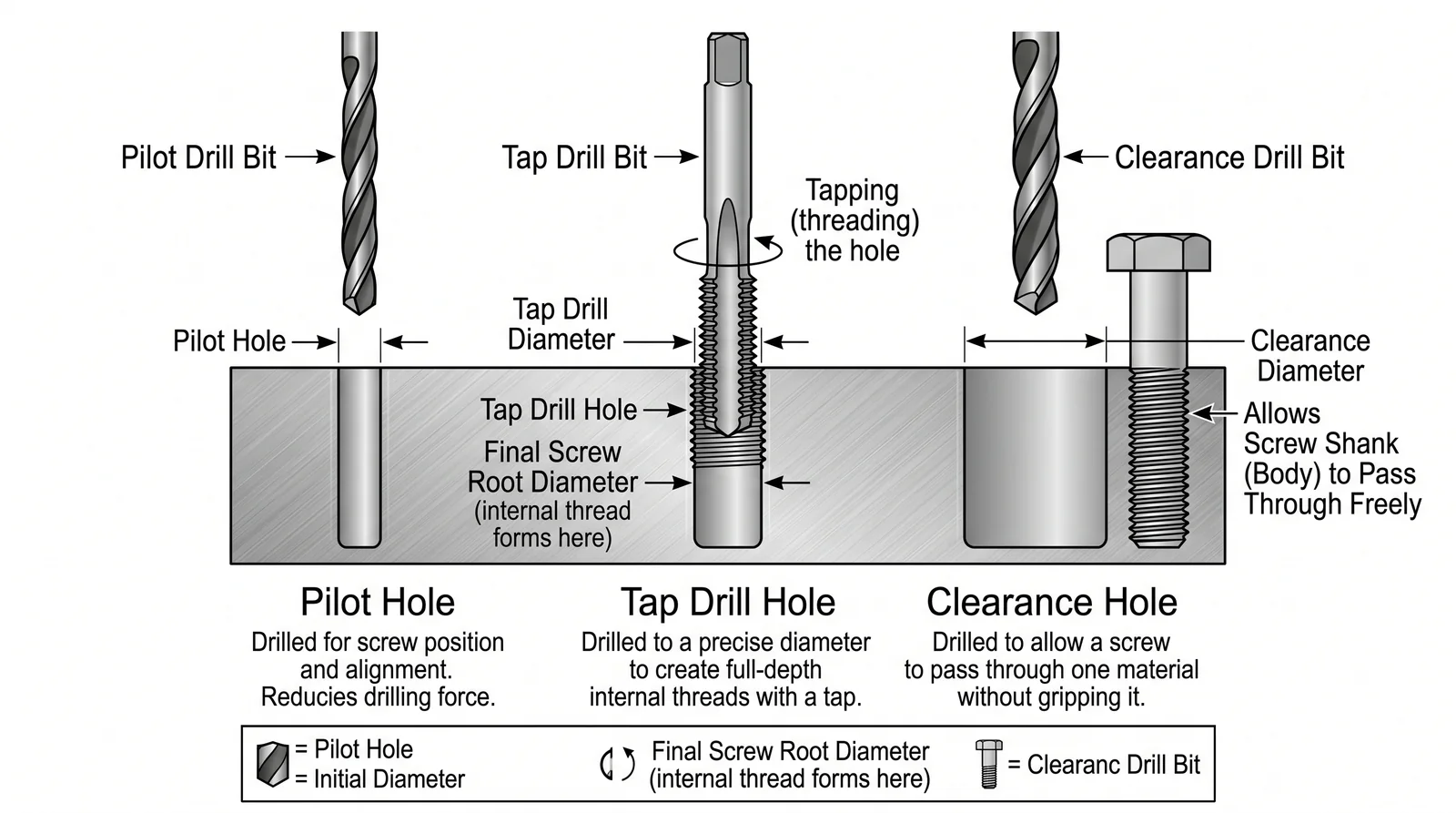
The Short Answer
A tap drill hole is drilled before making internal threads. It is smaller than the screw size because the tap needs material to cut.
A clearance hole is drilled when a bolt or screw must pass through a part freely. It is slightly larger than the screw or bolt diameter.
Example: M6 Screw
An M6 screw has a 6mm nominal diameter. If you want to tap threads into a metal part, the drill hole is usually around 5.0mm for standard M6 x 1.0 thread.
But if the M6 screw only passes through a cover plate, a 5.0mm hole will not work. You need a clearance hole, often around 6.5mm depending on fit requirement.
| Job | Hole Type | Typical Direction |
|---|---|---|
| Make internal thread | Tap drill hole | Smaller than screw size. |
| Let screw pass through | Clearance hole | Larger than screw size. |
| Start a larger drill accurately | Pilot hole | Small guide hole before final drilling. |
Why Buyers Get This Wrong
Catalogs often list “drill size” without saying whether it is for tapping or clearance. A buyer may order a drill bit set for tapping, then use the same size for bolt holes. The result is slow assembly or damaged screws.
This is also why a good supplier should ask about the application. Are you drilling before tapping? Are you drilling through a bracket? Are you making pilot holes for wood screws? Each case can need a different size.
How to Choose Quickly
- If you need to cut threads inside the hole, use the tap drill size.
- If the screw or bolt must pass through freely, use a clearance hole size.
- If the final drill is large or accuracy matters, drill a pilot hole first.
- If the material is thin sheet metal, check whether punching or step drilling is better.
For a complete table, use our drill bit size chart and tap hole drill size guide.
Buying Tip for Importers
If you sell drill bits to hardware stores or workshop users, do not only label the size. Add simple usage notes: pilot hole, tap drill, clearance hole, metal or wood. This reduces returns and helps customers choose faster.
For OEM drill bit sets, we can help arrange mixed sizes based on the most common tap and clearance requirements in your market. That is usually more useful than copying a generic set.