
Plywood, MDF and laminate panels look similar from a distance. On a saw blade, they behave very differently.
A blade that cuts plywood acceptably may chip laminate. A blade that gives a clean edge on MDF may dull faster than expected. Buyers who sell to furniture factories, cabinet makers or decoration contractors should not treat all panel materials as one category.
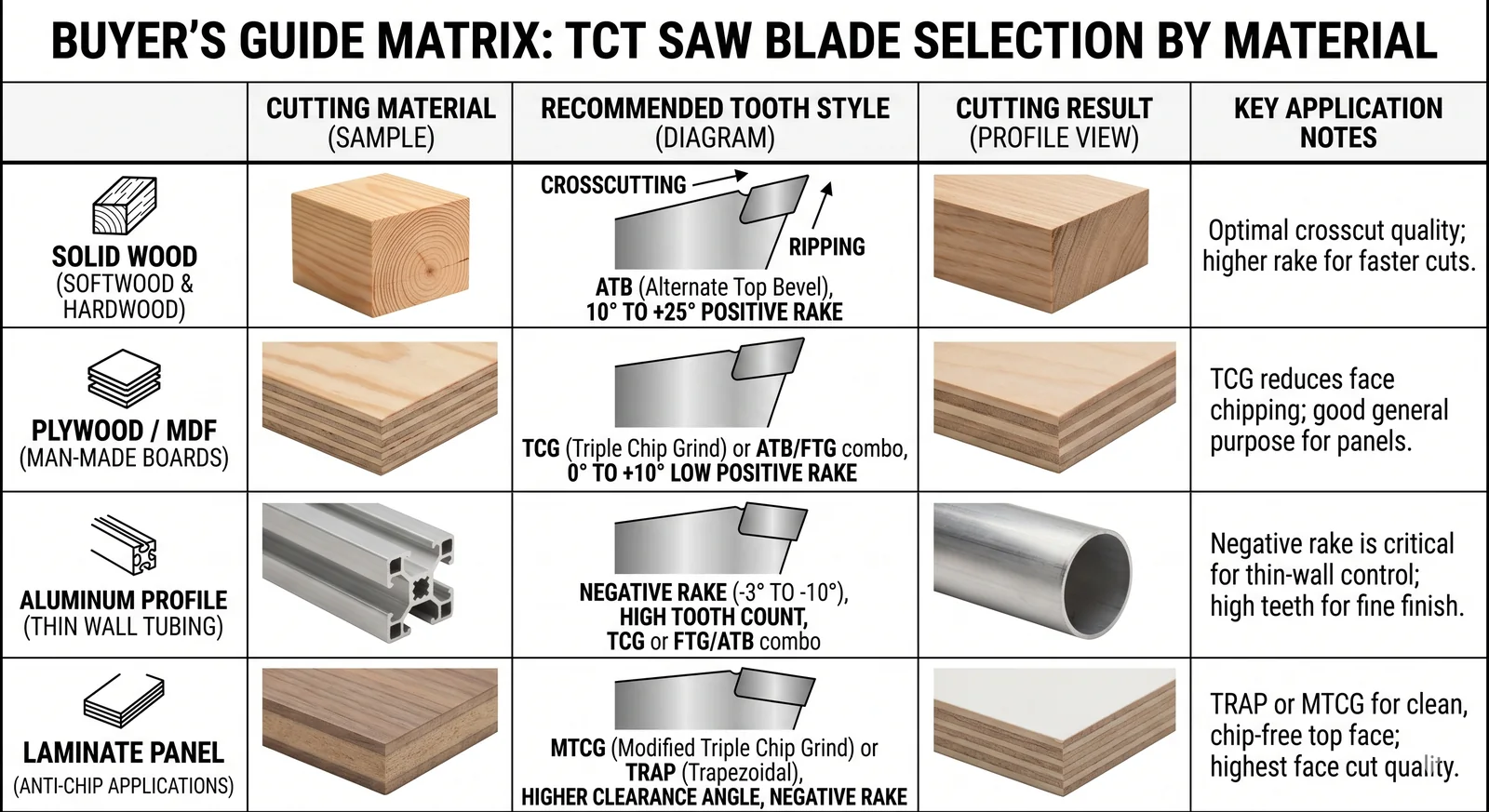
The Main Difference: The Surface Matters
For solid construction timber, a rougher edge may be acceptable. For plywood, MDF, laminate and melamine, the face quality is often the product. A chipped edge means rework, rejected panels or complaints from the end customer.
This is why panel cutting blades usually use more teeth and a cleaner tooth design than rough wood-cutting blades.
Plywood: Clean Face, Stable Core
Plywood has cross-laminated layers. The blade must cut alternating grain directions without lifting the top veneer. For most plywood work, buyers should start with a 60T to 80T blade depending on diameter.
For visible furniture parts, a sharper ATB design often helps reduce tear-out. For high-volume factory use, tooth durability and body flatness become just as important as sharpness.
MDF: Abrasive and Resin-Heavy
MDF does not have grain like solid wood, but it is abrasive. It also contains resin and fine fibers that generate dust and heat. A cheap blade may look fine in a short test, then lose edge quality quickly in production.
For MDF, ask the supplier about carbide grade, tooth grinding consistency and anti-friction coating. The goal is not only a clean first cut. The goal is stable performance across many boards.
Laminate and Melamine: Chipping Is the Enemy
Laminate and melamine panels are unforgiving. A small chip on the surface is easy to see. Buyers should not use a basic wood blade and hope for the best.
For these materials, the blade usually needs a higher tooth count, a stable plate, suitable tooth geometry and careful feed. In professional panel saw setups, a scoring blade may also be used to protect the lower surface.
Quick Selection Table
| Material | Common Problem | Blade Direction |
|---|---|---|
| Plywood | Veneer tear-out | Higher tooth count, sharp ATB or suitable clean-cut design. |
| MDF | Fast wear, dust, heat | Durable carbide, clean grinding, stable coating. |
| Laminate | Visible chipping | Fine tooth count, anti-chip geometry, stable machine feed. |
| Melamine | Edge breakout | High tooth count, TCG/MTCG style, scoring if needed. |
Questions to Ask Before Quoting
- What material is being cut: plywood, MDF, laminate or melamine?
- What is the panel thickness?
- Is the cut edge visible after assembly?
- What machine is used?
- Does the customer use a scoring blade?
- Is the priority clean edge, long life or lower price?
If the customer cannot answer every question, ask for a photo of the panel, machine and current blade. That is usually enough to make a safer first recommendation.
For general sizing and tooth-count logic, you can also read our TCT saw blade tooth count chart and complete TCT saw blade guide.