
When buyers ask for a circular saw blade, they often start with size: 7 inch, 10 inch, 12 inch, 40T, 60T, 80T.
That is normal. But tooth count only makes sense when it is connected to the material.
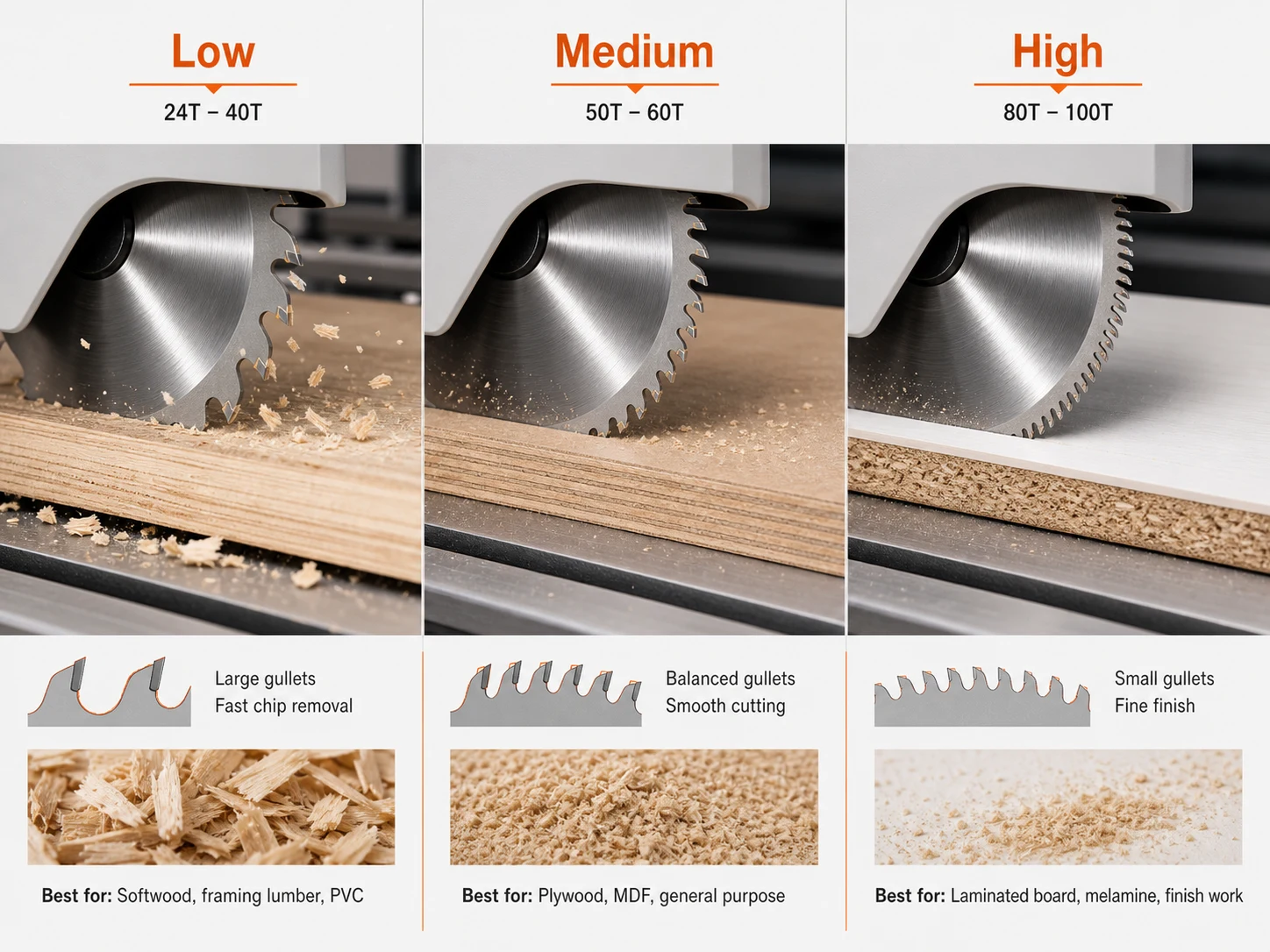
A 40T blade can be the right choice for one job and the wrong choice for another. The same is true for 60T or 80T. More teeth can improve finish, but they can also reduce chip space and increase heat.
The better question is not “Which tooth count is best?” The better question is “What material are you cutting, and what result do you need?”
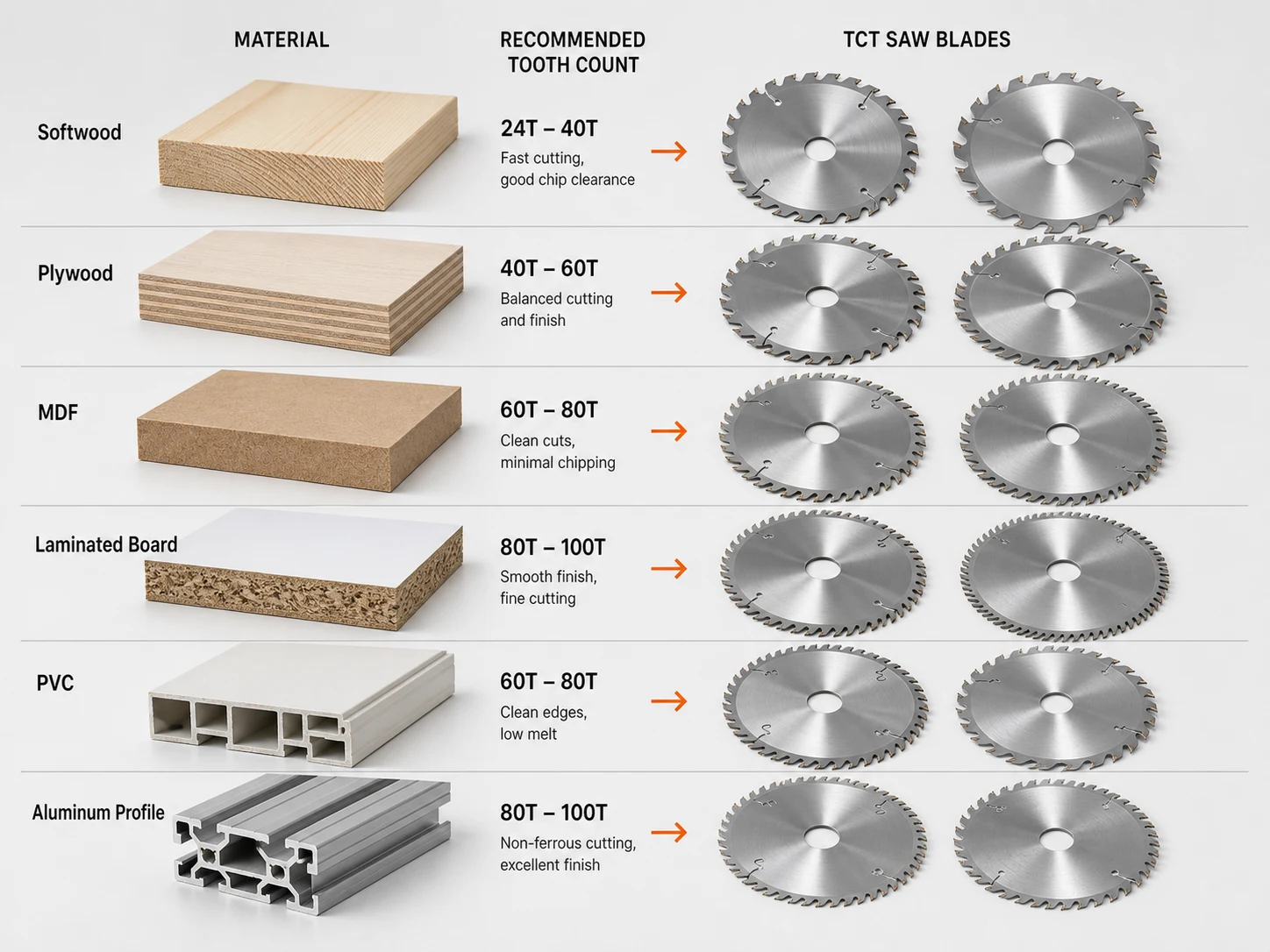
Softwood: Do Not Overdo the Tooth Count
Softwood usually does not need a very high tooth count unless the buyer needs a very clean surface.
For general softwood cutting, lower or medium tooth count can work well because the blade has more chip space. That helps the blade cut faster and reduces clogging.
For many 7 inch blades, 24T, 30T or 40T can be practical depending on the machine and cutting direction.
If the buyer uses too many teeth for thick softwood, the blade may cut slower and generate more heat without giving much extra value.
Plywood: Edge Quality Starts to Matter
Plywood is more sensitive than softwood because it has layers. The surface veneer can chip if the tooth form and tooth count are not suitable.
For rough plywood cutting, 40T may be enough. For cleaner edges, 60T is often safer. If the visible surface must be very clean, a finer tooth blade may help, but machine stability and feed speed become more important.
For plywood, ATB tooth form is commonly used because it slices the wood fibers and helps reduce tear-out.
MDF: Tooth Count Must Balance Dust and Heat
MDF creates fine dust and heat. It is dense, resin-heavy and more abrasive than many buyers expect.
A higher tooth count can give a smoother edge, but the blade still needs enough gullet space to remove dust. If the blade has too many teeth and poor chip evacuation, the cut can become hot and slow.
For MDF and furniture board, 60T is often a practical starting point for 7 inch blades. 80T can be used when the edge finish is more important, but it should not be chosen blindly.
The buyer should also confirm board thickness, feed speed and whether the edge is visible after cutting.
Laminated Board: Surface Finish Is the Main Problem
Laminated board is not only about cutting the core material. The surface layer can chip, burn or break out.
This is where tooth count and tooth geometry work together.
For laminated board, buyers often look at 60T or 80T on small blades. More teeth can help create a finer cut, but only if the tooth geometry, carbide quality, grinding accuracy and machine condition are suitable.
For high-quality furniture cutting, TCG or fine ATB designs may be considered depending on the board surface.
PVC and Plastic: Avoid Heat Build-Up
PVC and plastic can melt if the blade runs too hot.
A very high tooth count is not always better. The blade needs to cut cleanly while removing chips before they soften and stick to the blade body.
For plastic cutting, tooth geometry, side clearance and feed control can be as important as tooth count.
If the customer says PVC, ask whether it is sheet, profile, pipe or mixed material. The right blade may be different.
Aluminum: Tooth Design Is More Important Than Just Tooth Count
Aluminum needs a different approach from wood.
Buyers should not select an aluminum blade only by tooth count. The tooth geometry, rake angle, carbide grade, plate stability and lubrication condition are all important.
For aluminum profiles, a higher tooth count is common because the buyer usually needs a clean surface. But if the profile is thick or the machine is unstable, too many teeth can increase heat and loading.
Always confirm the aluminum type, profile wall thickness, machine and clamping condition before quoting.
Quick Reference Table
| Material | Common Direction | Practical Tooth Count Logic |
|---|---|---|
| Softwood | Fast cutting | Lower or medium tooth count, more chip space |
| Plywood | Cleaner edge | Medium tooth count, ATB is common |
| MDF | Dust and heat control | 60T often practical; 80T for finer finish |
| Laminated board | Surface finish | Fine tooth count plus suitable tooth geometry |
| PVC / plastic | Avoid melting | Do not choose too many teeth blindly |
| Aluminum | Clean profile cutting | Tooth geometry and machine condition are critical |
Buyer Takeaway
Tooth count should follow the material.
If the buyer cuts softwood, a lower tooth count may be more efficient. If the buyer cuts MDF or laminated board, a higher tooth count may improve finish, but it can also create heat if the design is wrong.
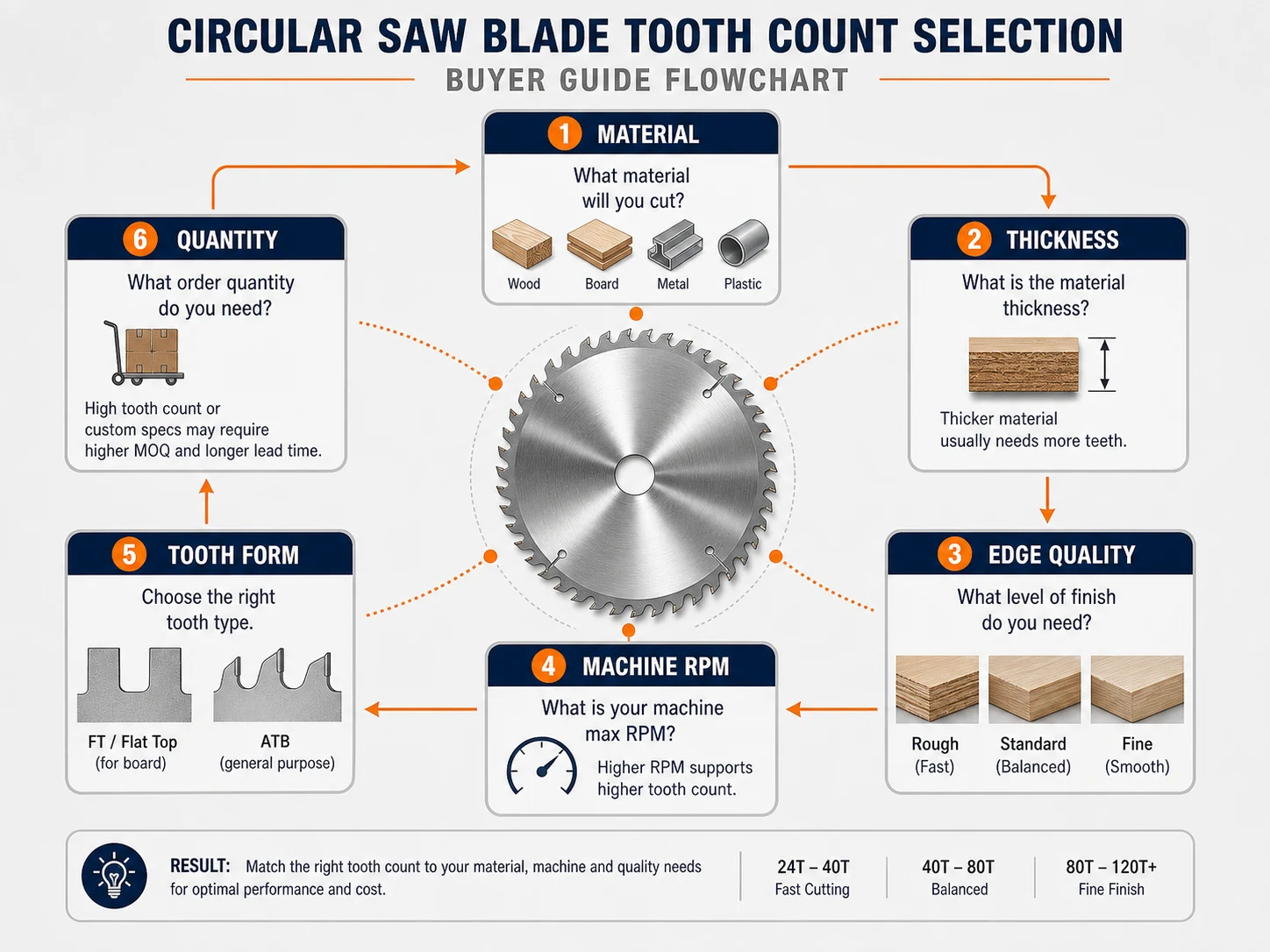
The safest way to choose is to confirm material, thickness, edge requirement, machine RPM and quantity before deciding 40T, 60T, 80T or higher.
A good saw blade supplier should not only quote the model. They should help the buyer avoid choosing a blade that looks correct on paper but fails in real cutting.
Related reading: 40t vs 60t vs 80t saw blade buyer guide. why more teeth saw blade higher moq custom production. tct saw blade for mdf lamination board. flat top vs atb saw blade teeth.