
Saw blade noise and vibration are common complaints in workshops.
Sometimes the operator says the blade is too loud. Sometimes the machine shakes. Sometimes the cutting surface shows vibration marks, even though the blade still looks sharp.
When this happens, many buyers immediately think the blade quality is poor. That can be true, but it is not always the full answer.
A saw blade is only one part of the cutting system. The machine, flange, spindle, material, feed speed, tooth count, plate design and mounting condition all affect noise and vibration. If we only replace the blade without checking the real cause, the same problem may return with the next blade.
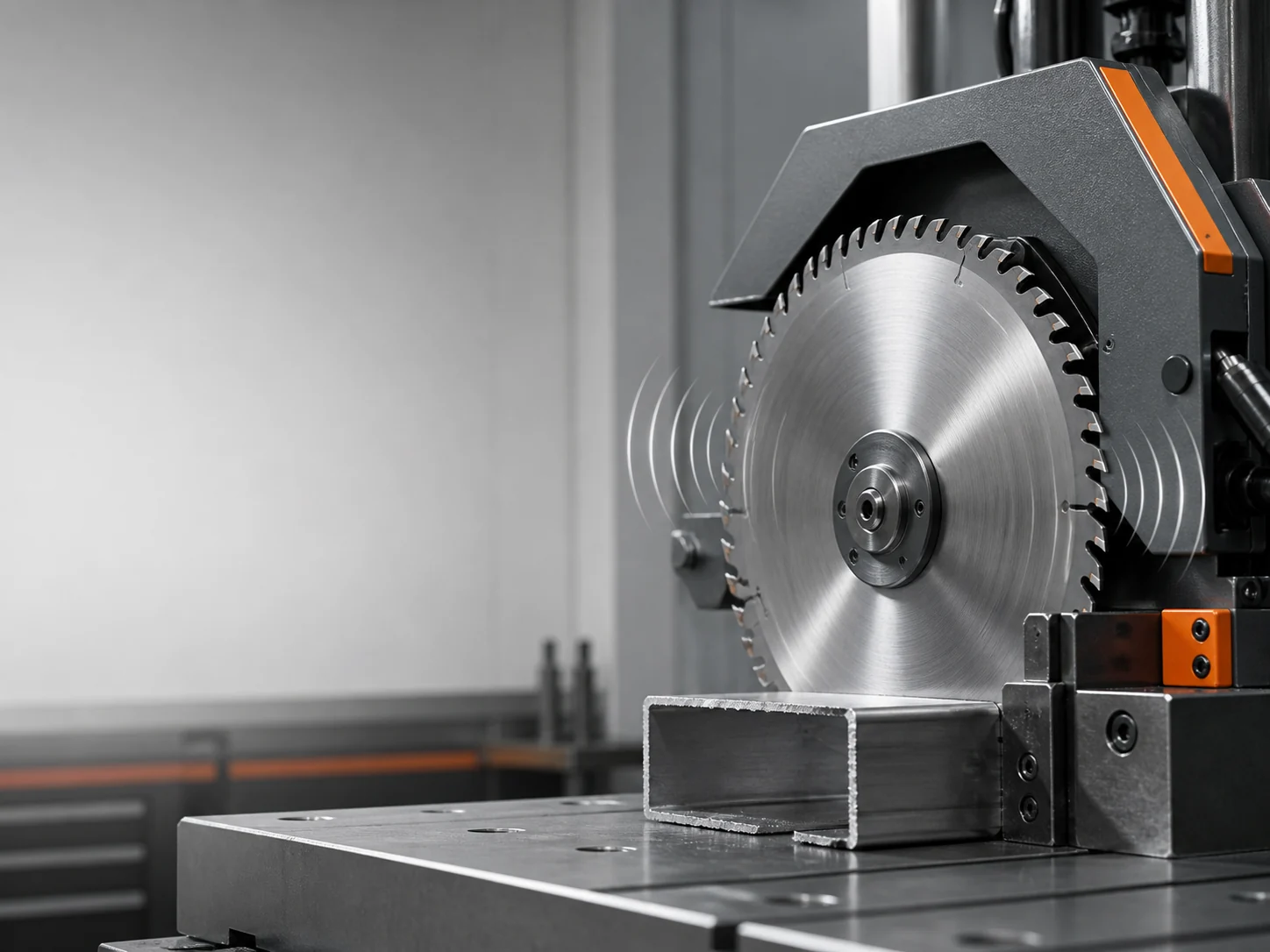
Noise and Vibration Are System Problems
A circular saw blade rotates at high speed while entering the material tooth by tooth. Every tooth creates cutting force. If the force is stable, the cut feels smooth. If the force becomes unstable, vibration starts.
Once vibration starts, it can create more noise, rougher cutting, faster tooth wear and lower operator confidence. In more serious cases, it can also damage the machine or reduce safety.
This is why noise and vibration should be checked carefully. They are not just comfort issues. They are signs that the cutting system may not be running smoothly.
Blade-Related Causes
1. Plate Runout or Poor Tension
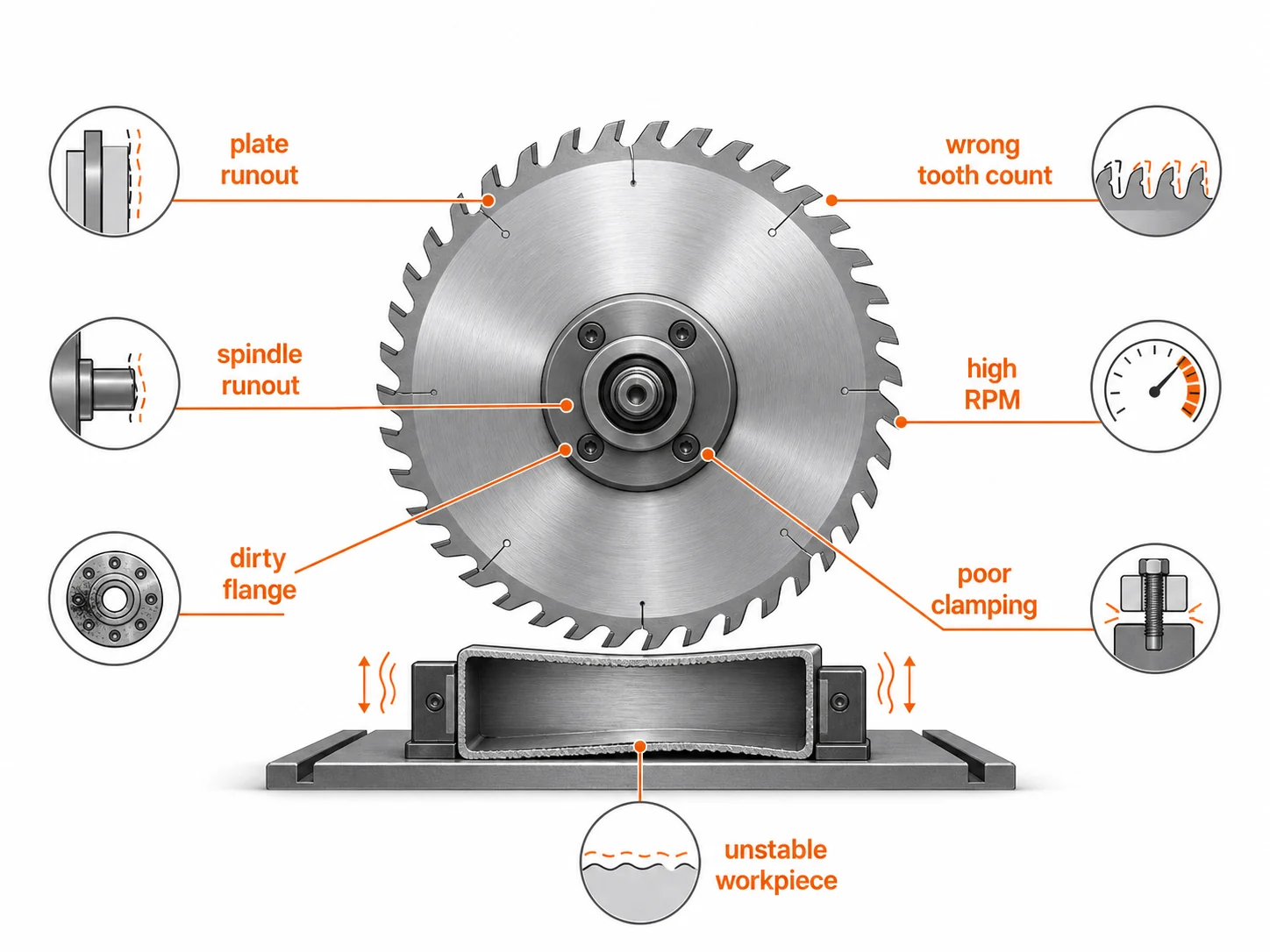
If the blade body is not flat enough, or if the plate tension is not suitable, the blade may not run smoothly at working speed.
This problem is more obvious on larger diameter blades, thinner bodies and high-speed machines. The blade may look normal on the table, but once mounted and rotating, it starts to wobble slightly.
Good blade manufacturing should control plate flatness, tension and runout. For high-quality cutting, buyers should ask for runout tolerance rather than only asking for steel grade.
2. Dynamic Balance Problems
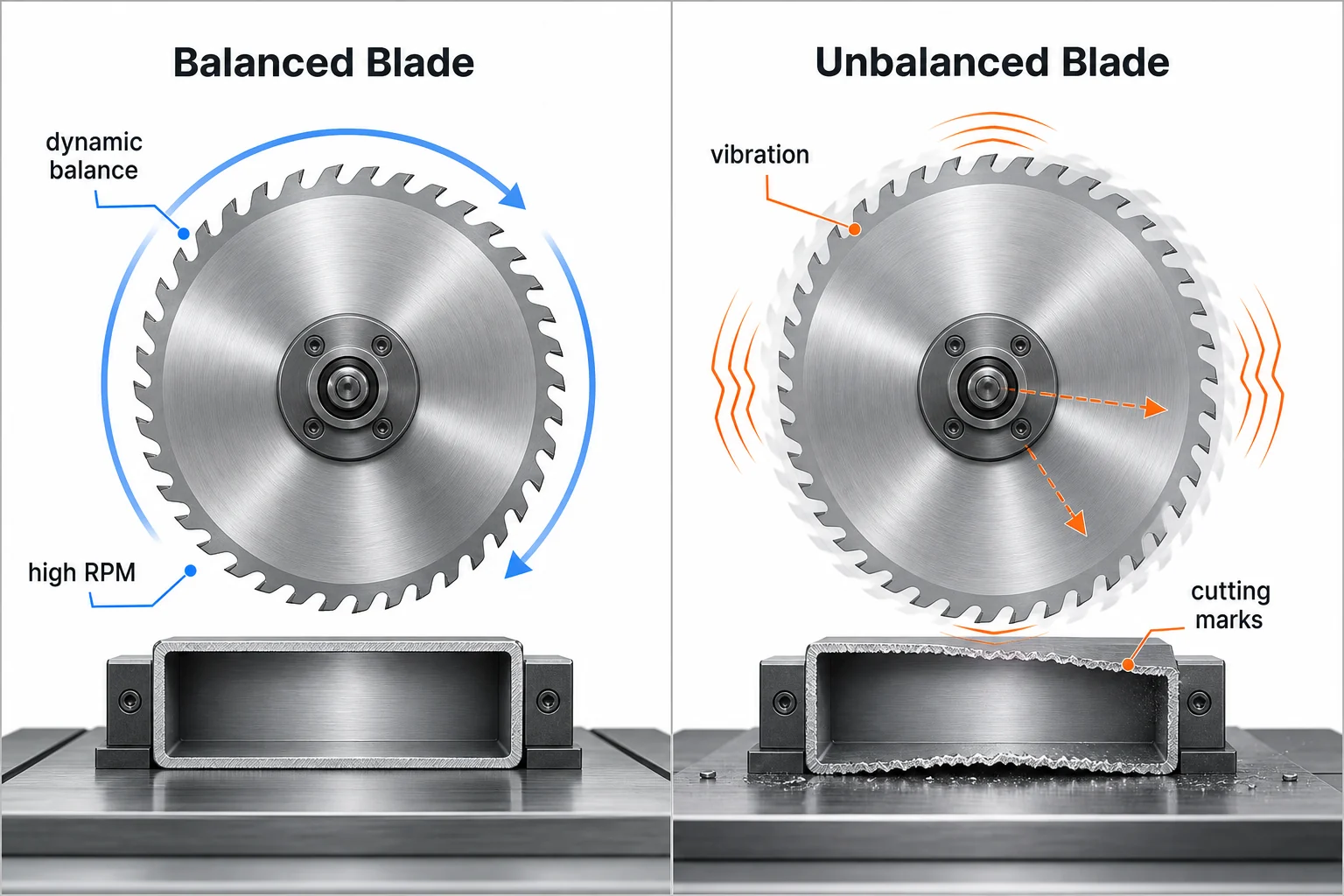
Dynamic balance is another possible cause.
For many standard applications, normal production control is enough. But on high RPM tools, light machines or precision cutting jobs, balance deviation can become more visible.
If vibration appears mainly at high speed before the blade even enters the material, dynamic balance should be checked together with the machine spindle and mounting condition.
We covered this in more detail in our saw blade dynamic balance guide.
3. Wrong Tooth Count
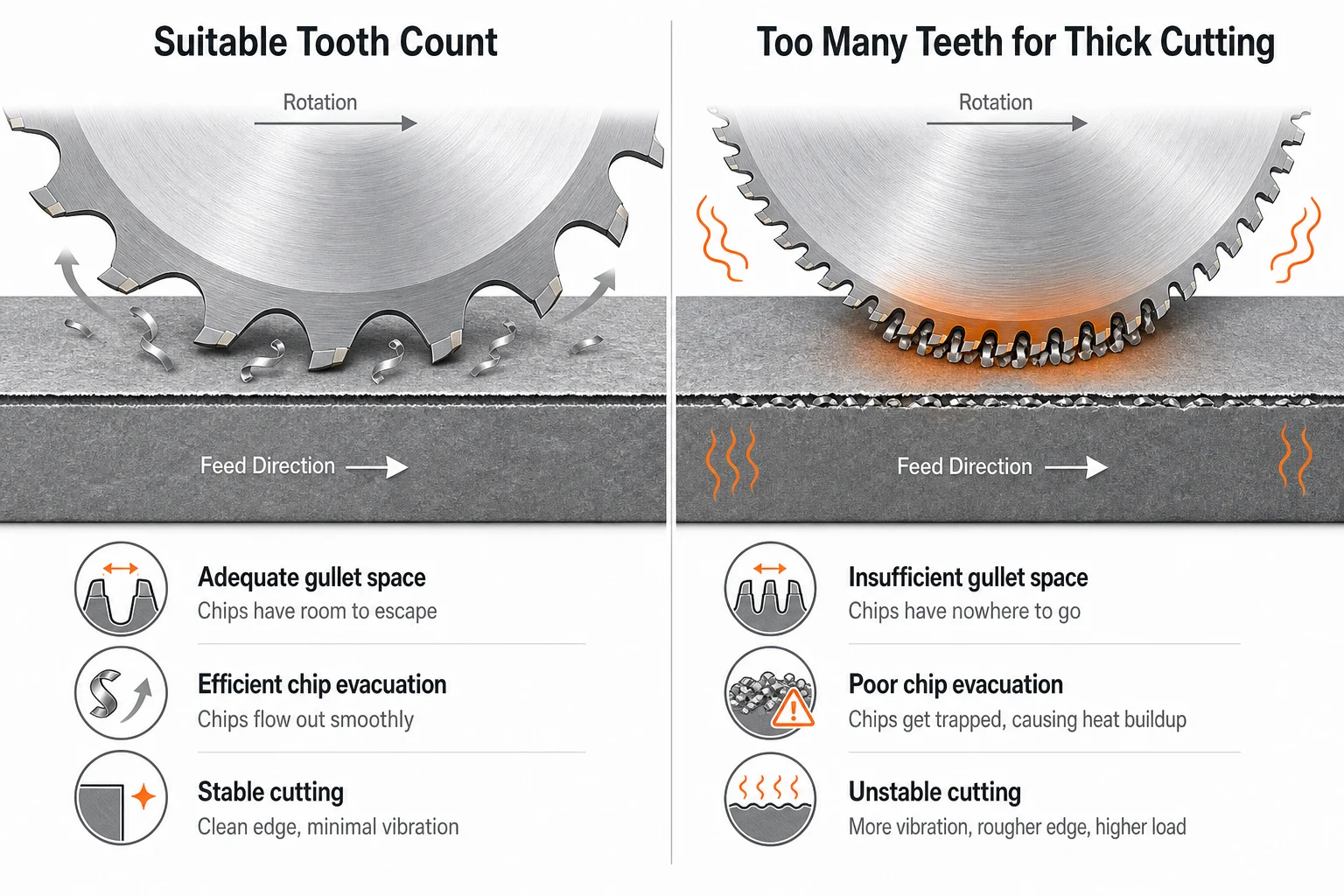
Too many teeth can increase cutting resistance if the material is thick or if chip evacuation is poor. Too few teeth can make the cut more aggressive and create stronger tooth impact.
Both situations can create vibration.
This is why tooth count should match material thickness, cutting direction, machine power and target finish. A cleaner-looking specification on paper is not always better in real production.
4. Unsuitable Tooth Geometry
Tooth geometry affects how the blade enters the material.
A tooth shape that is too aggressive may bite too hard and create impact. A tooth shape that is too weak for the material may rub, heat up and vibrate. For aluminum, steel, wood, laminate and MDF, the correct tooth design is not the same.
If the material changes but the blade does not, noise and vibration often become worse.
Machine and Setup Causes
1. Dirty or Uneven Flanges
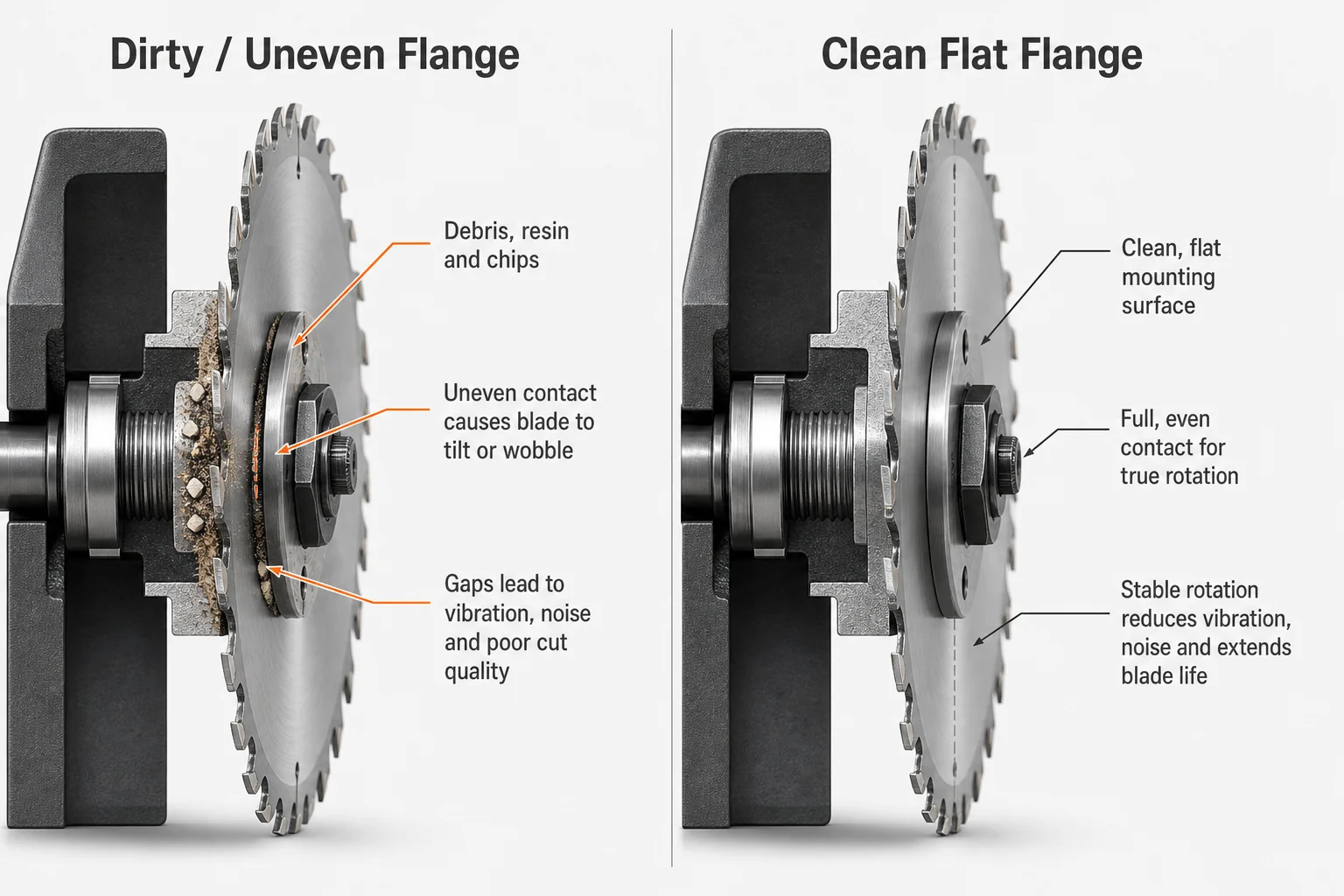
This is a simple problem, but it happens often.
If dust, resin, chips or burrs remain on the flange surface, the blade cannot sit flat. Even a good blade may run poorly if it is mounted against a dirty or uneven surface.
Before blaming the blade, always check the flange, arbor and contact surface.
2. Spindle Runout
If the spindle itself has runout, every blade will show vibration. Changing the blade may reduce the symptom slightly, but it will not solve the root cause.
This is especially important when the same vibration appears with different blades.
3. Weak Machine Rigidity
Some machines are more sensitive to vibration.
A heavy industrial saw can absorb more cutting force. A light electric tool, thin table saw or compact machine may transmit vibration more directly. The same blade may behave differently on two machines because the machine structure is different.
For light machines, blade selection should pay more attention to body thickness, tooth count, kerf, balance and cutting load.
4. Unstable Workpiece Clamping
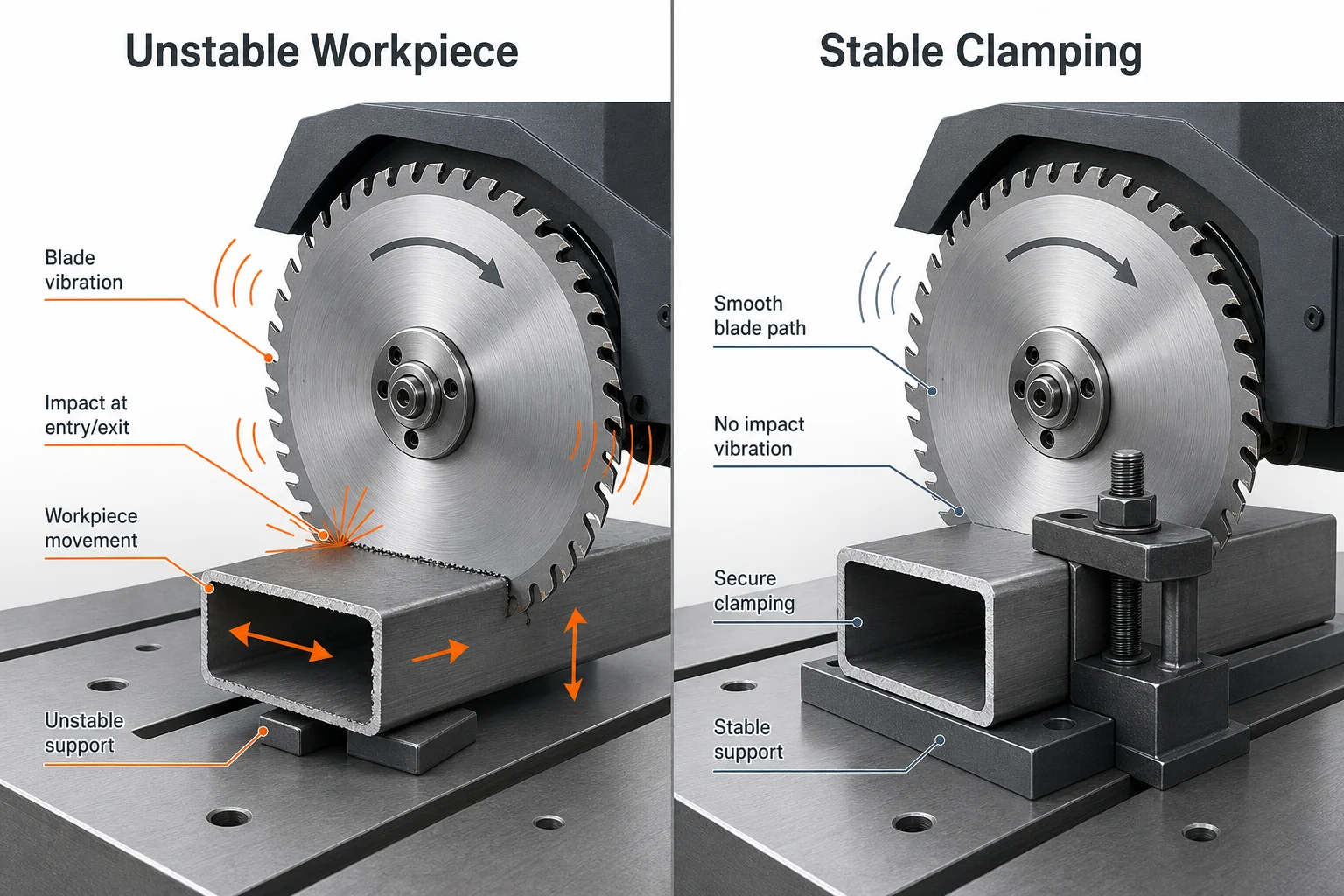
If the workpiece moves during cutting, the blade receives irregular impact. This can create loud noise, rough cutting and tooth damage.
Material movement is especially risky when cutting metal, long profiles, thin tubes, warped boards or recycled material.
Material and Cutting Condition Causes
1. Material Stress
Some boards or metal sections release stress after cutting. The kerf may close slightly and pinch the blade. Once the blade is squeezed, friction increases and vibration becomes stronger.
This can also lead to burning or gumming problems. For that topic, see our guide on why saw blades get gummed up and burn the board.
2. Feed Speed Too Fast or Too Slow
Fast feed can overload the tooth. Slow feed can cause rubbing and heat. Both can increase noise in different ways.
A good feed speed lets the tooth cut real chips, not dust and not oversized bites.
3. Wrong RPM
If RPM is too high for the blade or material, noise and heat may increase. If RPM is too low, the blade may cut roughly and create stronger impact.
The blade diameter, material, tooth geometry and machine all determine the suitable speed range.
How Buyers Can Diagnose the Problem
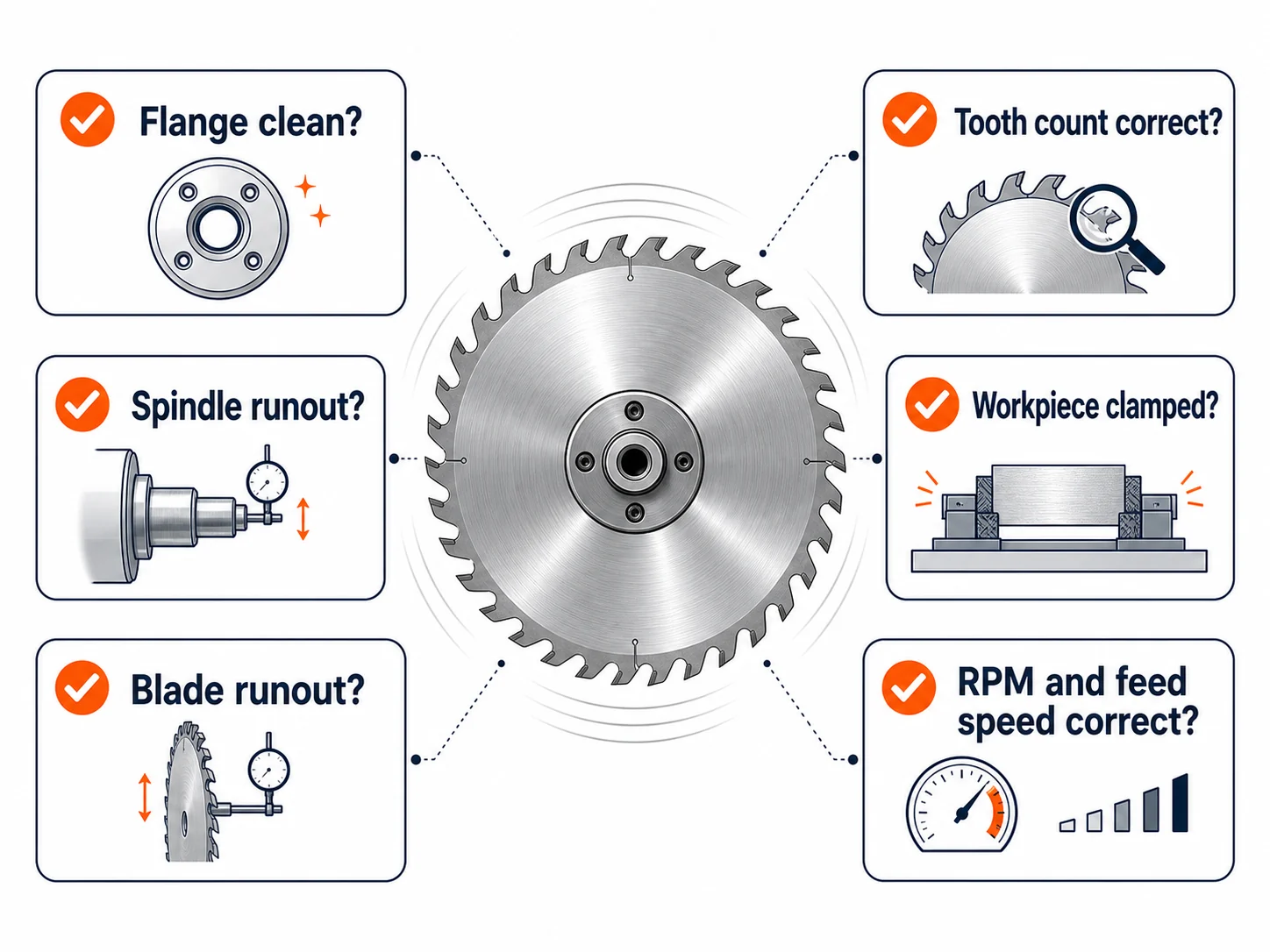
When a customer reports noise or vibration, do not ask only whether the blade is sharp. Ask practical questions:
- Does vibration happen before cutting or only during cutting?
- Does the same machine vibrate with other blades?
- Is the flange clean and flat?
- Is the workpiece clamped firmly?
- What material and thickness are being cut?
- What RPM and feed speed are used?
- What tooth count and tooth geometry does the blade have?
- Are there burn marks, gumming, burrs or chipped teeth?
These questions help separate blade problems from machine and process problems.
What to Ask Your Supplier
If noise and vibration control matters for your application, ask the supplier:
- What is the plate runout tolerance?
- Is the blade tensioned for this diameter and RPM?
- Does this design include anti-vibration slots or noise-reduction features?
- Is the tooth count suitable for my material thickness?
- Is the blade designed for my machine type?
- Can you recommend a stronger body or different tooth geometry if vibration appears?
A useful supplier should help you match the blade to the cutting condition, not only send a price list.
Before blaming a blade for vibration or poor finish, follow our saw blade runout measurement guide to isolate the blade, arbor and flange with a dial indicator.
Final Thought
Saw blade noise and vibration do not have one single cause.
Sometimes the blade body is not stable enough. Sometimes the tooth count is wrong. Sometimes the machine flange is dirty, the spindle has runout, or the material is moving during cutting.
The practical way is to check the system step by step. When the real cause is found, the solution is often clear: a better-matched blade, cleaner mounting, more stable clamping, corrected RPM or adjusted feed speed.
For buyers, this is where product knowledge creates value. A quiet and stable blade does more than reduce noise. It protects cutting quality, blade life and production confidence.