
Tooth count is one of the first numbers buyers notice on a TCT saw blade. It is also one of the easiest numbers to misunderstand.
A buyer may ask, “Is 80T better than 40T?” The honest answer is: not always. A higher tooth count can leave a cleaner edge, but it can also cut slower, make more heat and clog more easily if the material is wrong.
This guide gives you a simple way to use tooth count as a starting point, not as the only decision.
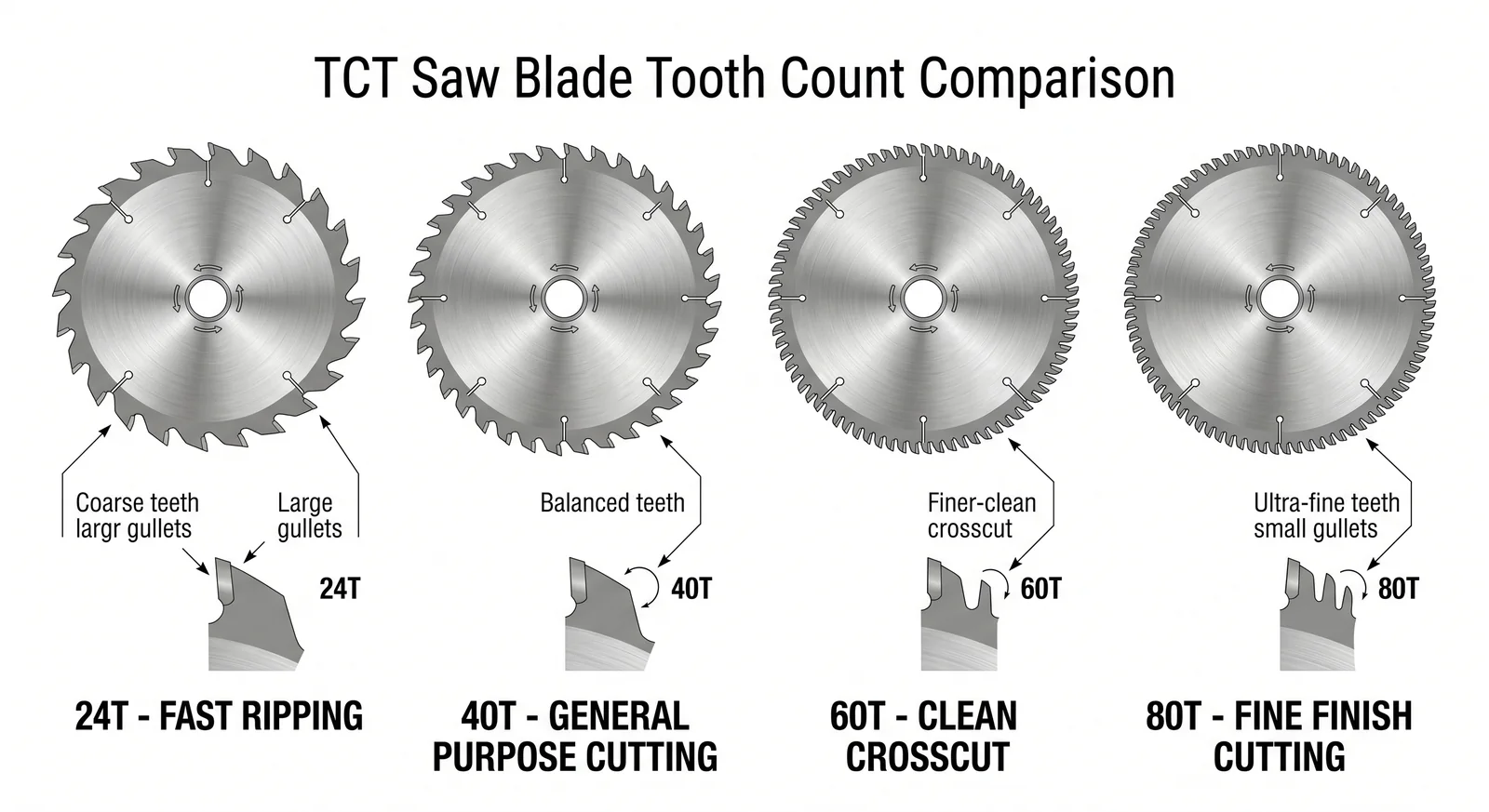
Quick Tooth Count Chart
| Tooth Count | Typical Use | What Buyers Should Expect |
|---|---|---|
| 24T | Fast ripping, rough construction timber | Fast cut, rougher edge, larger chips. |
| 40T | General wood cutting | Good balance between speed and finish. |
| 60T | Cleaner crosscutting and furniture work | Smoother finish, moderate feed speed. |
| 80T | Plywood, MDF, visible cuts | Cleaner edge, slower cut, more heat control needed. |
| 100T+ | Laminate, melamine, fine finish panels | Very clean edge, machine and feed must be stable. |
Why More Teeth Can Be a Problem
Each tooth removes a small chip. When a blade has more teeth, each tooth normally takes a smaller bite. That can improve finish. But it also means there is less chip space between teeth.
If the blade is used on thick solid wood or rough material, small gullets can fill quickly. The blade rubs instead of cutting cleanly. Heat rises, the edge dulls faster and the user may blame the carbide when the real problem was tooth count.
This is why a 100T blade is not a universal upgrade. It can be excellent on laminate panels, but poor for fast ripping.
Material Comes Before Tooth Count
Before choosing the number of teeth, confirm the material first:
- Solid wood: 24T to 60T, depending on rip or crosscut.
- Plywood: 60T to 80T for cleaner face quality.
- MDF: 80T or higher if the edge must be clean.
- Laminate / melamine: High tooth count plus suitable tooth geometry.
- Aluminum: Use an aluminum-specific blade, not only a high-tooth wood blade.
If you are not sure where to begin, read our broader TCT saw blade selection guide. It explains how material, tooth geometry and diameter work together.
Do Not Ignore Tooth Geometry
Two blades can both be 80T and still cut very differently. The tooth shape may be ATB, TCG, MTCG, flat top or a special anti-chip design. For laminate and aluminum, tooth geometry often matters more than the number alone.
For example, a general 80T wood blade may leave a clean cut on plywood, but it may grab aluminum or chip laminate. A professional supplier should ask what you cut before recommending the tooth style.
What to Send Before Ordering
For a reliable recommendation, send:
- Blade diameter and bore size.
- Material being cut.
- Material thickness.
- Machine type or photo.
- Required result: fast cutting, clean finish, long life or low burr.
- Current blade photo if replacing an old blade.
Tooth count is a useful shortcut, but it should not replace the application discussion. A good blade is not the one with the highest tooth number. It is the one that gives the buyer the result he needs at a price his market can accept.