
A saw blade is not used by itself. It works inside a cutting system.
That system includes the blade, material, machine RPM, feed speed, arbor, clamping and operator method. If one part does not match, even a good blade can perform badly.
This is why tooth count should not be chosen only by finish requirement.
A high-tooth-count blade may cut beautifully on a stable machine with proper feed speed. The same blade may heat up, vibrate or burn the material on another machine.
RPM Changes Cutting Behavior
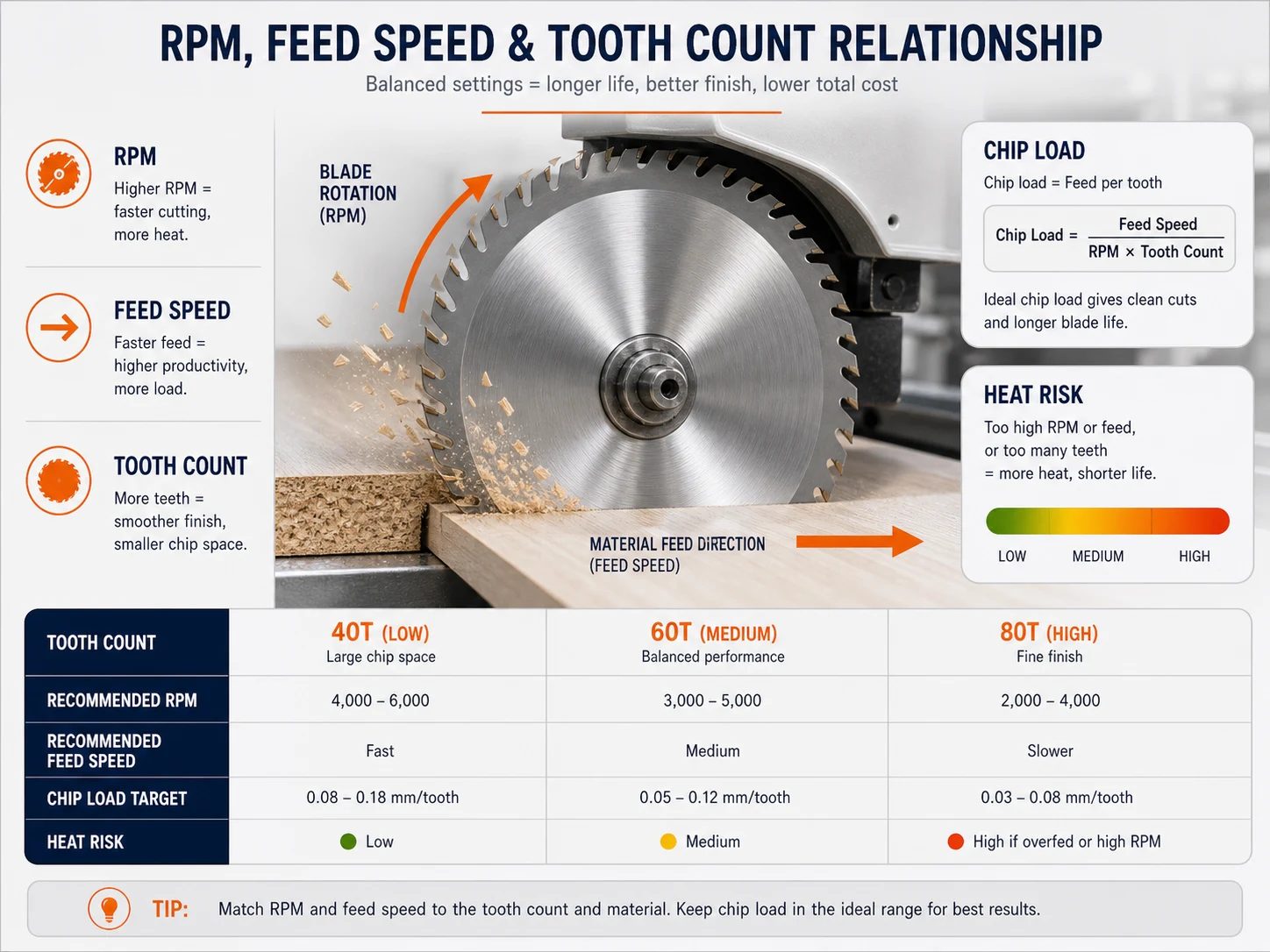
RPM means how many times the blade rotates per minute.
When RPM is high, each tooth contacts the material more often. If the feed speed is too slow, the teeth may rub instead of cutting properly. That creates heat.
If the feed speed is too fast, each tooth may be overloaded. That can create vibration, chipping, tooth damage or rough cutting.
The right RPM is not just about speed. It is about matching the blade, material and feed.
Feed Speed Controls Chip Load
Feed speed affects how much material each tooth removes.
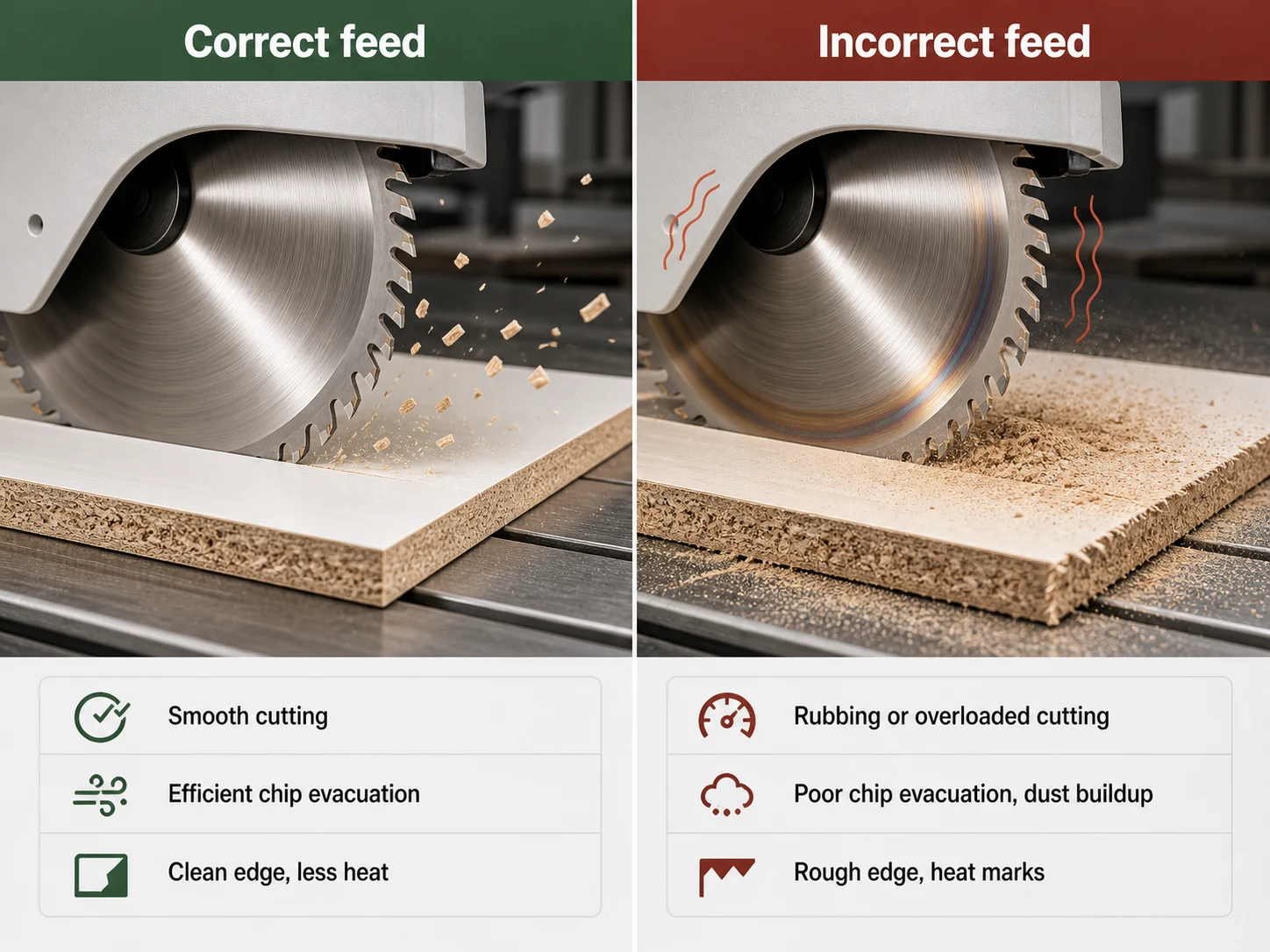
If the feed is too slow, the blade may polish or rub the material. This can happen in MDF, laminated board, plastic and aluminum.
If the feed is too fast, the blade may not have enough time to cut cleanly. This can lead to tear-out, noise, vibration or heavy load on the teeth.
For high-tooth-count blades, feed control becomes more important because each gullet is smaller and chip space is limited.
Why More Teeth Need Better Control
More teeth can improve edge finish, but they also make the blade more sensitive.
An 80T blade has smaller tooth spacing than a 40T blade. It may produce a cleaner edge on laminated board, but it also has less chip room.
If RPM is high and feed is not controlled, heat can build up quickly. The blade may still look sharp, but the cutting result becomes poor.
This is why buyers should not assume 80T is always better than 60T.
Machine Rigidity Matters
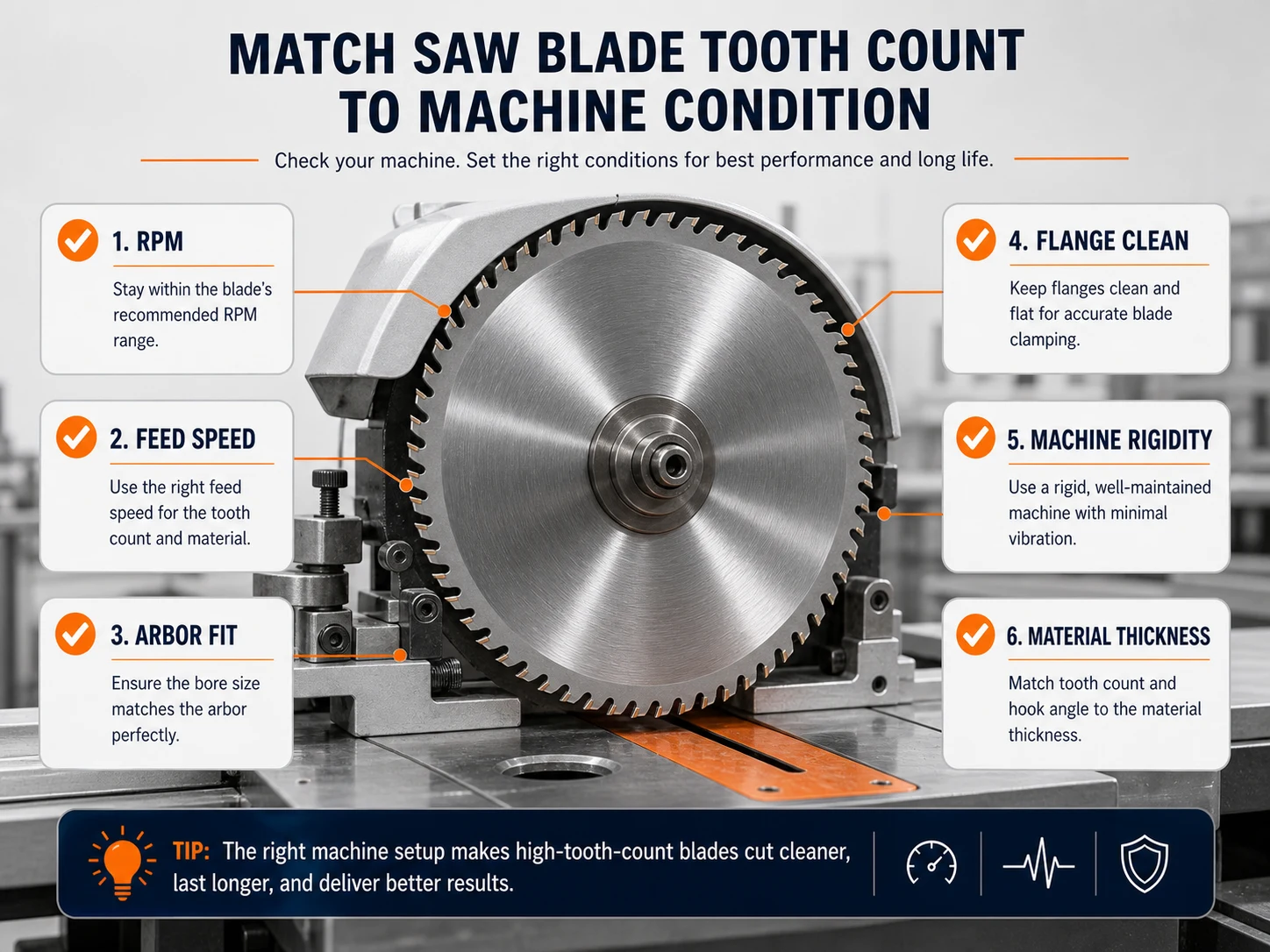
A fine-tooth blade needs stable rotation.
If the machine has poor spindle accuracy, dirty flanges, weak clamping or vibration, the blade cannot maintain a clean cutting path.
The higher the RPM and the finer the tooth count, the more visible these problems become.
For light-duty machines, a practical medium tooth count may work better than an aggressive high-tooth-count choice.
Material Also Changes the Answer
Different materials react differently to RPM and feed.
Softwood may tolerate faster cutting. MDF creates dust and heat. Laminated board needs surface control. PVC can melt. Aluminum needs chip control and proper tooth geometry.
So the same blade tooth count cannot be recommended for every material.
The buyer should confirm what is being cut before selecting tooth count.
Practical Questions Before Quoting
Before recommending 40T, 60T or 80T, ask:
- What material do you cut?
- What thickness is the material?
- What machine do you use?
- What is the RPM?
- Is the feed manual or automatic?
- Do you need fast cutting or clean edge finish?
- Is the blade for workshop use, resale or industrial production?
These questions make the quotation more professional and reduce wrong selection.
Buyer Takeaway
After setting RPM, feed and tooth count, verify heat and chip control with our coolant, MQL and nozzle setup guide.
Tooth count is only one part of blade selection.
RPM and feed speed decide how the teeth actually work in the material. If the machine and feed condition are not suitable, more teeth may create more heat instead of better cutting.
For many buyers, a balanced blade is safer than the highest tooth count. Choose the blade that fits the machine and material, not only the number printed on the blade.
Related reading: match tct saw blade to material rpm. why saw blades make noise and vibrate. 40t vs 60t vs 80t saw blade buyer guide. saw blade tooth count kerf plate thickness.