
Cold saw blade inquiries often start with a photo and a size.
For example:
“285 x 2.0 x 1.75 x 32 x 80T.”
That is useful, but it is not enough.
For metal cutting, the material shape matters a lot. A blade used for solid bar does not work under the same load as a blade used for tube. If the supplier quotes only by diameter and tooth count, the recommendation may be risky.
This guide explains what buyers should confirm before ordering a cold saw blade.
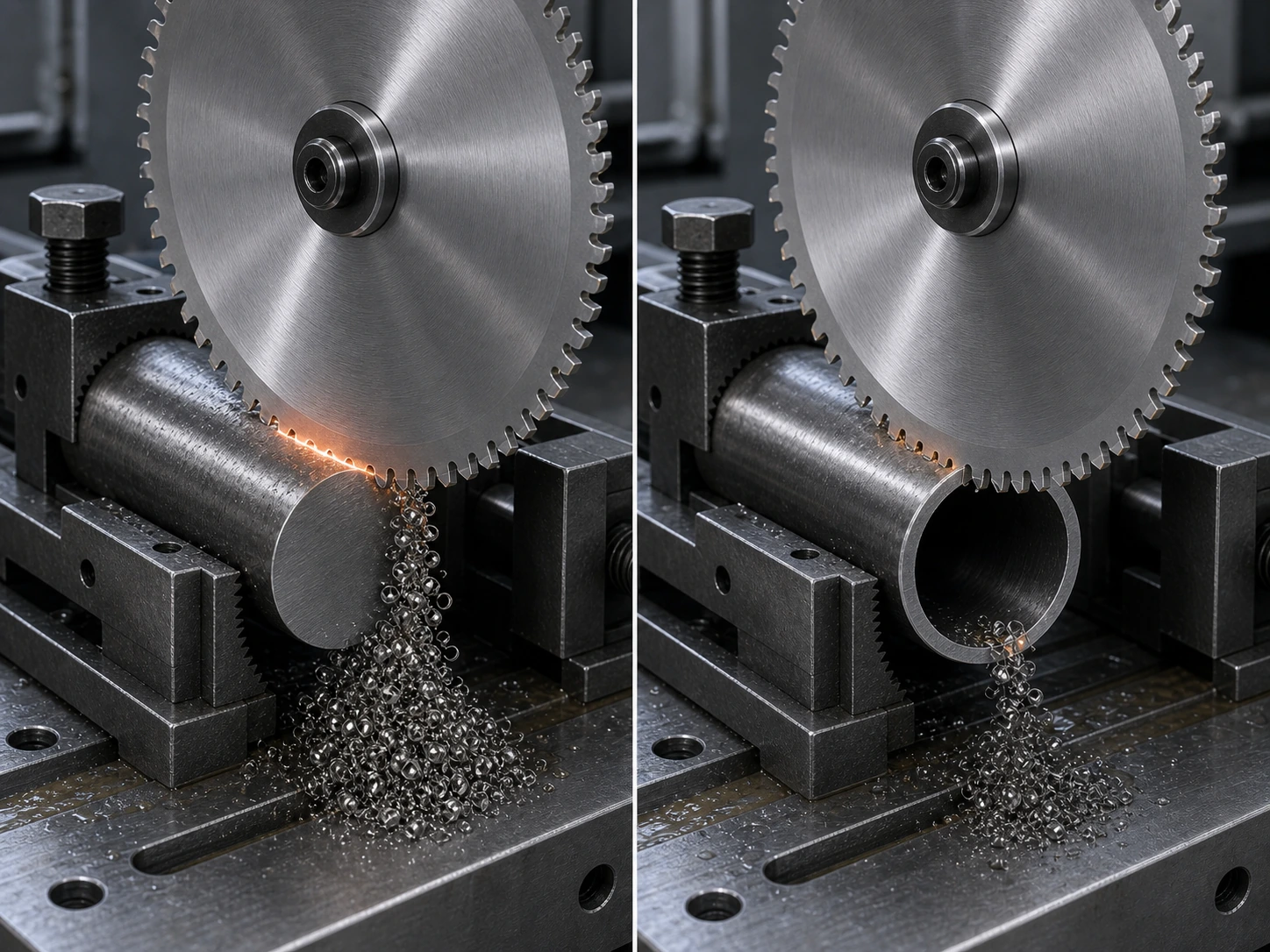
Solid Bar Cutting Has Continuous Tooth Load
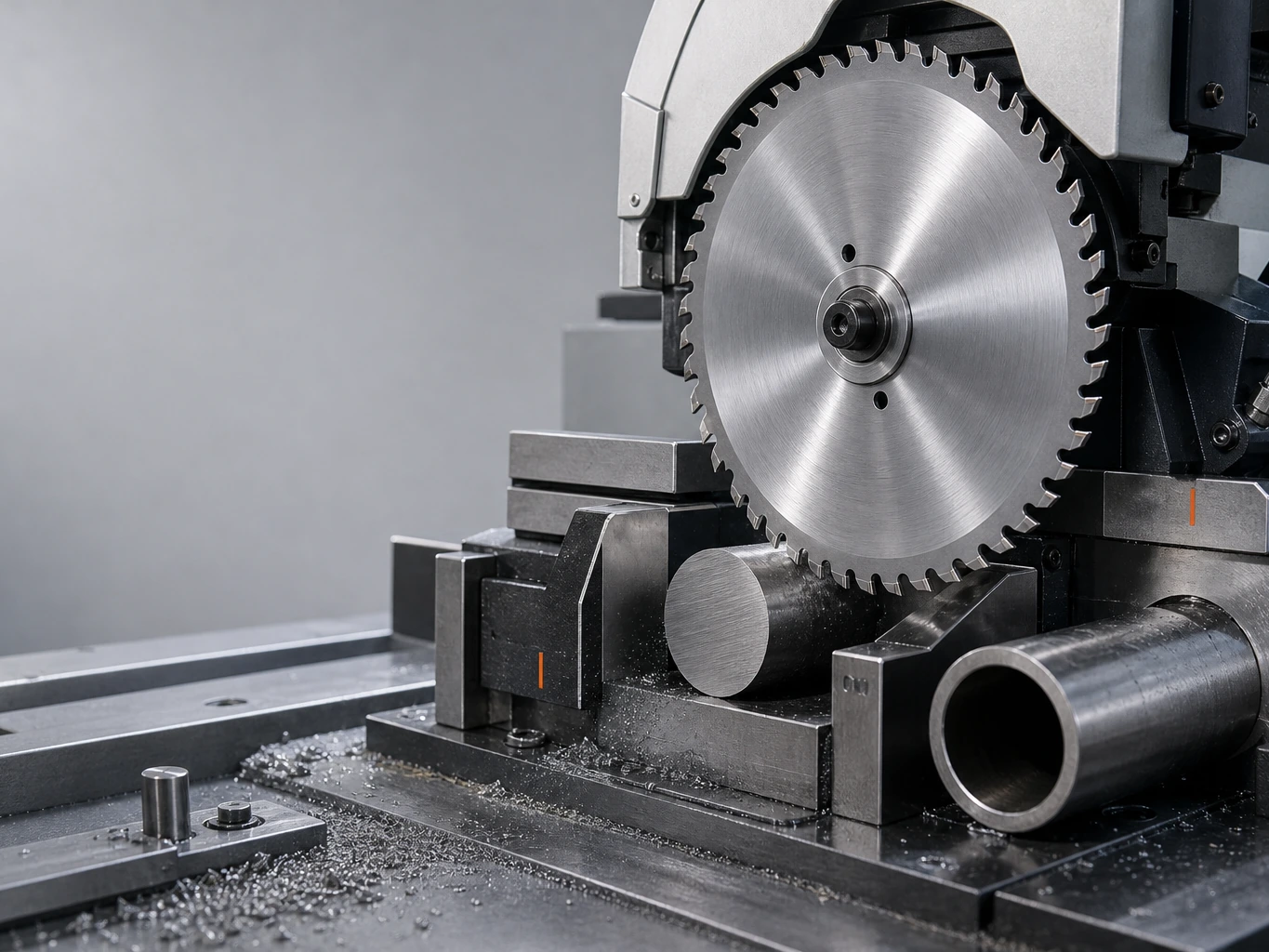
When cutting solid steel bar, the tooth stays engaged for a longer time.
There is no hollow space like a tube. The blade needs to remove metal continuously from entry to exit. This creates more heat, more cutting force and more demand on tooth strength.
For solid bar, the blade selection should focus on:
- Suitable tooth pitch
- Enough chip space
- Stable plate
- Correct carbide or cermet grade
- Proper feed control
- Strong machine clamping
If tooth pitch is too fine, chips may pack in the gullets. If feed is too aggressive, teeth may chip or break. If the grade is too brittle, the blade may fail early.
Tube Cutting Has Interrupted Cutting
Tube cutting looks easier because the material is hollow.
But it creates another problem: interrupted cutting.
The teeth enter and leave the material repeatedly. Thin wall tubes can also vibrate if clamping is poor. This can create impact load on the cutting edge.
For tube cutting, buyers should confirm:
- Tube outside diameter
- Wall thickness
- Material grade
- Bundle cutting or single tube
- Clamping method
- Required surface finish
A tube blade may use a different tooth count or geometry from a solid bar blade.
Why “Same Size” Does Not Mean Same Blade
Two cold saw blades may both be 285mm, 80T and 32mm bore.
But one may be safer for mild steel solid bar, while another may be designed for tube, profile or stainless steel.
The difference may include:
- Tooth geometry
- Tooth pitch
- Carbide or cermet grade
- Plate hardness and runout control
- Grinding accuracy
- Surface treatment
This is why buyers should not compare price only from the written size.
Carbide or Cermet?
For steel cutting, both carbide and cermet can be used depending on the job.
Carbide is often a safer starting choice when the buyer is unsure, especially for first samples or mixed conditions.
Cermet can give excellent performance in suitable steel cutting applications, but it may require better machine stability, correct parameters and cleaner working conditions.
If the buyer is not sure, a practical first step is to test a safe carbide grade, then adjust grade or tooth geometry after real feedback.
Machine Condition Is Critical
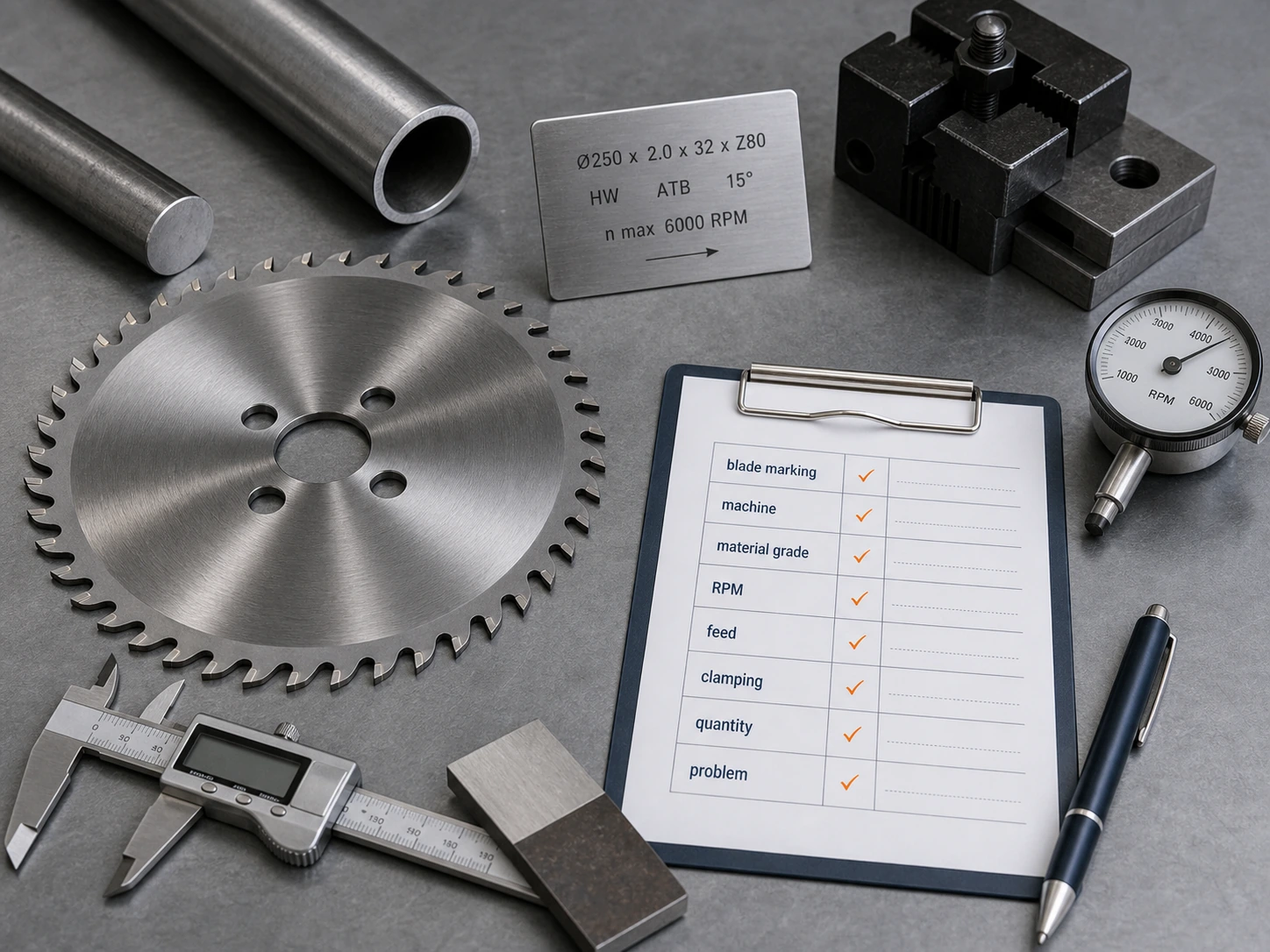
Cold saw blades are not only cutting tools. They are part of a system.
For solid bar and tube cutting, machine condition affects blade life directly.
Important points include:
- Spindle runout
- Flange condition
- Clamping force
- Feed stability
- Coolant or lubrication
- RPM
- Material support
If the machine is unstable, even a good blade may chip, vibrate or wear quickly.
What Buyers Should Send Before Quotation
To make the quotation useful, send:
- 1. Current blade marking
- 2. Machine photo
- 3. Material photo or video
- 4. Solid bar diameter or tube size
- 5. Material grade, if known
- 6. Cutting quantity per day
- 7. Current problem: short life, burr, noise, broken teeth, slow cutting
- 8. Target order quantity
If the buyer does not know all details, photos and videos are enough to start.
Sample Order Advice
For first samples, do not overpromise.
It is better to say:
“We can recommend a safe starting grade first. After your test result, we can adjust grade, tooth geometry or tooth count if needed.”
This sounds more professional than claiming one blade can solve every condition.
Final Thought
Tube and solid-bar cuts also need different cooling and chip-flushing capacity. See the saw blade coolant and lubrication guide.
Solid bar and tube cutting should not be quoted the same way.
The blade size is only the beginning. The real recommendation depends on how the tooth enters the material, how chips leave the cut, and how stable the machine is.
For buyers, the safest approach is to share more working details before asking for the lowest price.
For wholesalers, this also helps protect your customer relationship. A blade that works well brings repeat orders. A blade that only looks cheap brings complaints.