
A guard is essential, but a guarded bandsaw can still be dangerous when the exposed blade is excessive, the table insert is worn, a cracked blade is running, the work is unsupported or the operator’s hands enter the line of cut. Buyers and supervisors need a repeatable inspection and task-control system rather than a one-time machine check.
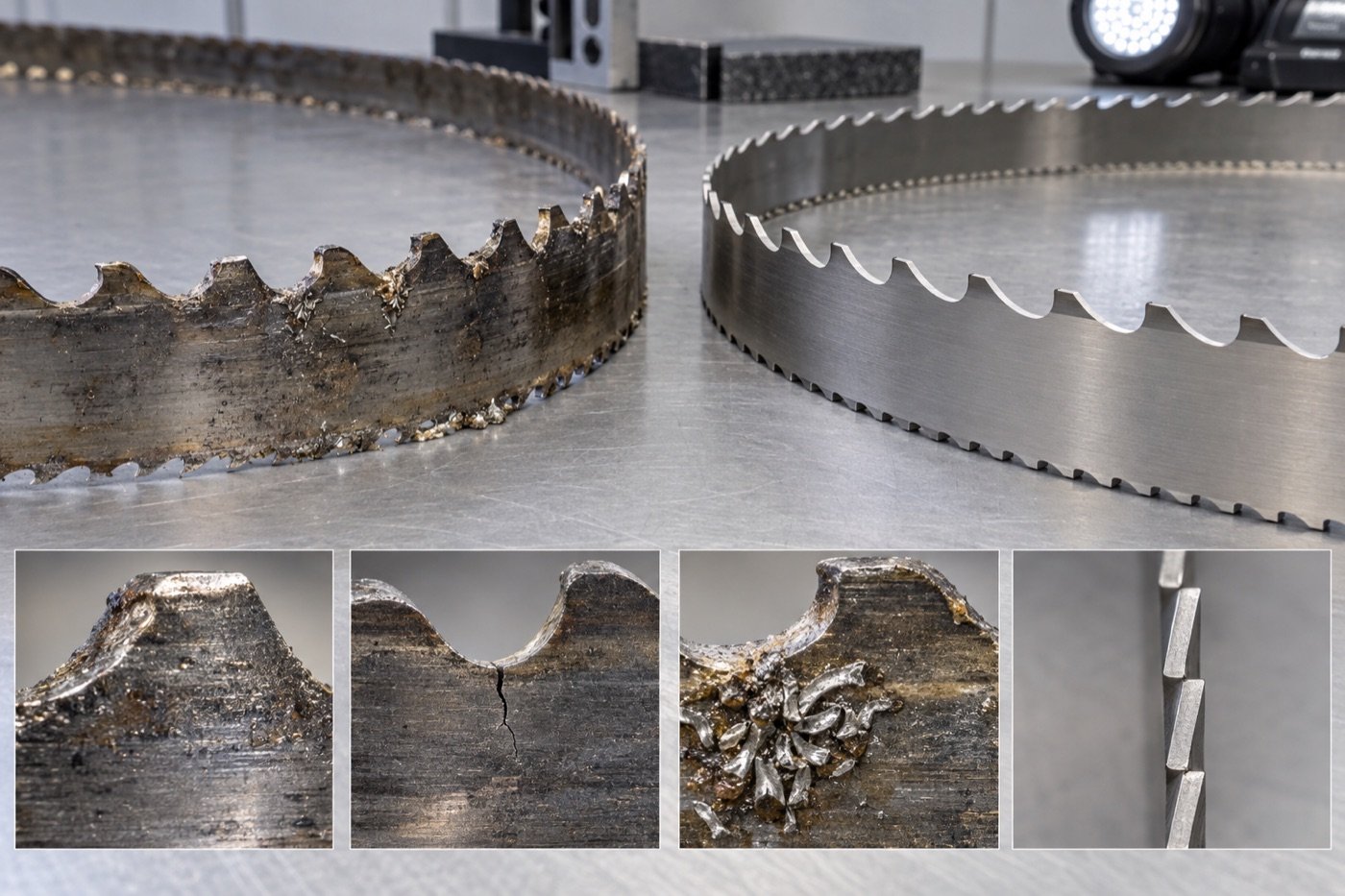
Pre-use checklist
| Check | Acceptable condition | Stop-use trigger |
|---|---|---|
| Blade | Correct type, sound weld, no crack, damage or missing section | Clicking, visible crack, damaged weld or unusual tracking |
| Guards | Wheel covers closed; blade guarded except required cutting zone | Missing, loose or defeated guard |
| Guide and insert | Adjusted close to work; opening limits access | Excessive exposure or worn/damaged insert |
| Table and fence | Secure, aligned and appropriate to task | Loose table, unsuitable fence or unstable stock |
| Controls and brake | Stop, isolation and braking function as specified | Delayed, inconsistent or failed operation |
Official guidance emphasises more than a front guard
The UK HSE’s narrow bandsaw guidance highlights back guarding, a close-fitting table mouthpiece, guarding below the table, fences, guides and push sticks. Its WIS31 information sheet also frames risk assessment around foreseeable tasks and suitable jigs. Local legal requirements and the machine manual remain controlling.
Blade condition and the sound of failure
A change in sound can be an early warning. Stop and isolate the machine before investigation. Cracks commonly begin around the weld, tooth gullet or damaged area. Replacing a blade is not enough if wheel condition, tension, tracking, guide setting or a trapped workpiece caused the damage.
Minimise exposed blade
Set the adjustable guard and guide assembly as close to the work as the task allows. Excess exposure increases the reachable hazard and reduces blade support. The table insert or mouthpiece should limit finger access and support small work without becoming a catch point.
Control the work, not only the operator
Use a fence, guide, jig, holder or push device suited to the cut. Large or long stock needs support so its weight cannot twist the blade. Small or irregular parts may need a purpose-made fixture. If the task requires fingers close to the cutting line, redesign the method before proceeding.
Braking and blade breakage
Stopping time matters, but excessive or incorrectly adjusted braking can also load the blade. Ask the machine supplier for the approved inspection method and stopping-time limits. Covers and below-table guards should contain the blade as far as the machine design provides if it snaps.
Daily, weekly and periodic controls
- Every use: blade, guards, insert, guide height, fence, controls, housekeeping and work support.
- Weekly or by use: tracking, guide wear, wheel cleanliness, extraction and unusual vibration.
- Periodic competent inspection: brake, interlocks where fitted, electrical isolation, wheels, bearings, tension system and structural condition.
Procurement questions
Before buying, ask for blade range, maximum/minimum width, wheel diameter, tension indication, guide adjustment, stopping performance, extraction connection, jigs, training, spare inserts, tyres, guides and local service. A low machine price can become expensive if consumables or competent support are unavailable.