
Concrete drilling looks simple until the wrong SDS bit meets hard aggregate or rebar. Then the difference between a cheap bit and a stable bit becomes obvious.
This guide is for buyers and importers who need to choose SDS drill bits for hardware stores, contractor markets or private-label tool ranges.
SDS Plus or SDS Max?
The first decision is the shank system. SDS Plus and SDS Max do not fit the same machine.
| Type | Typical Use | Buyer Note |
|---|---|---|
| SDS Plus | Light to medium holes, common construction use | Most common retail and contractor range. |
| SDS Max | Larger diameter, deeper holes, heavier hammer drills | Industrial and heavy construction use. |
If the customer only says “concrete drill bit,” ask for the machine or shank photo. A wrong shank means the product cannot be used.
Concrete Is Not One Material
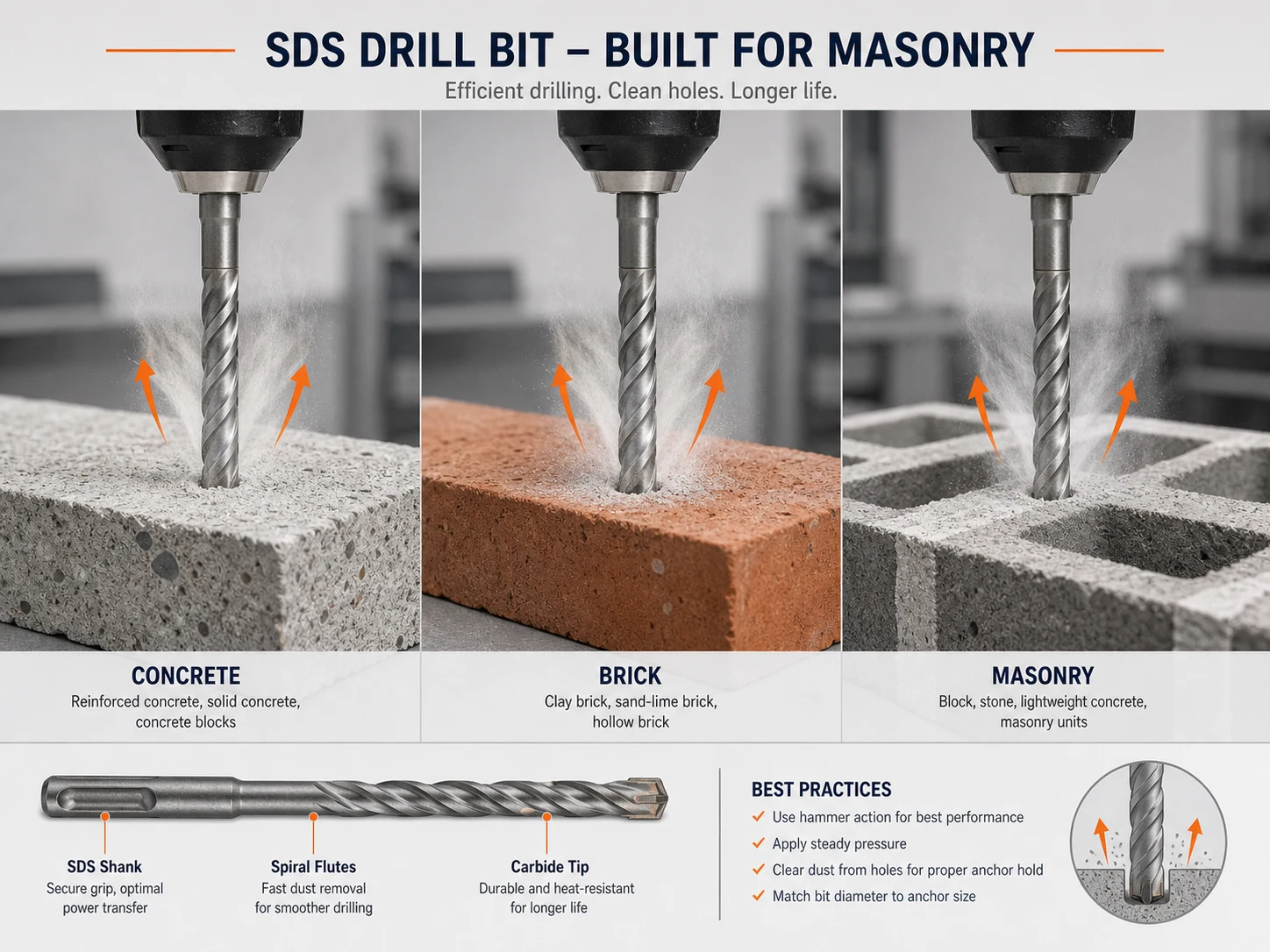
Soft brick, block, old concrete, hard aggregate and reinforced concrete all behave differently. A bit that drills brick quickly may struggle in reinforced concrete.
For general contractors, SDS Plus sets usually cover common sizes. For heavy users, the tip design, brazing quality and flute strength become more important than a low unit price.
Carbide Tip Design
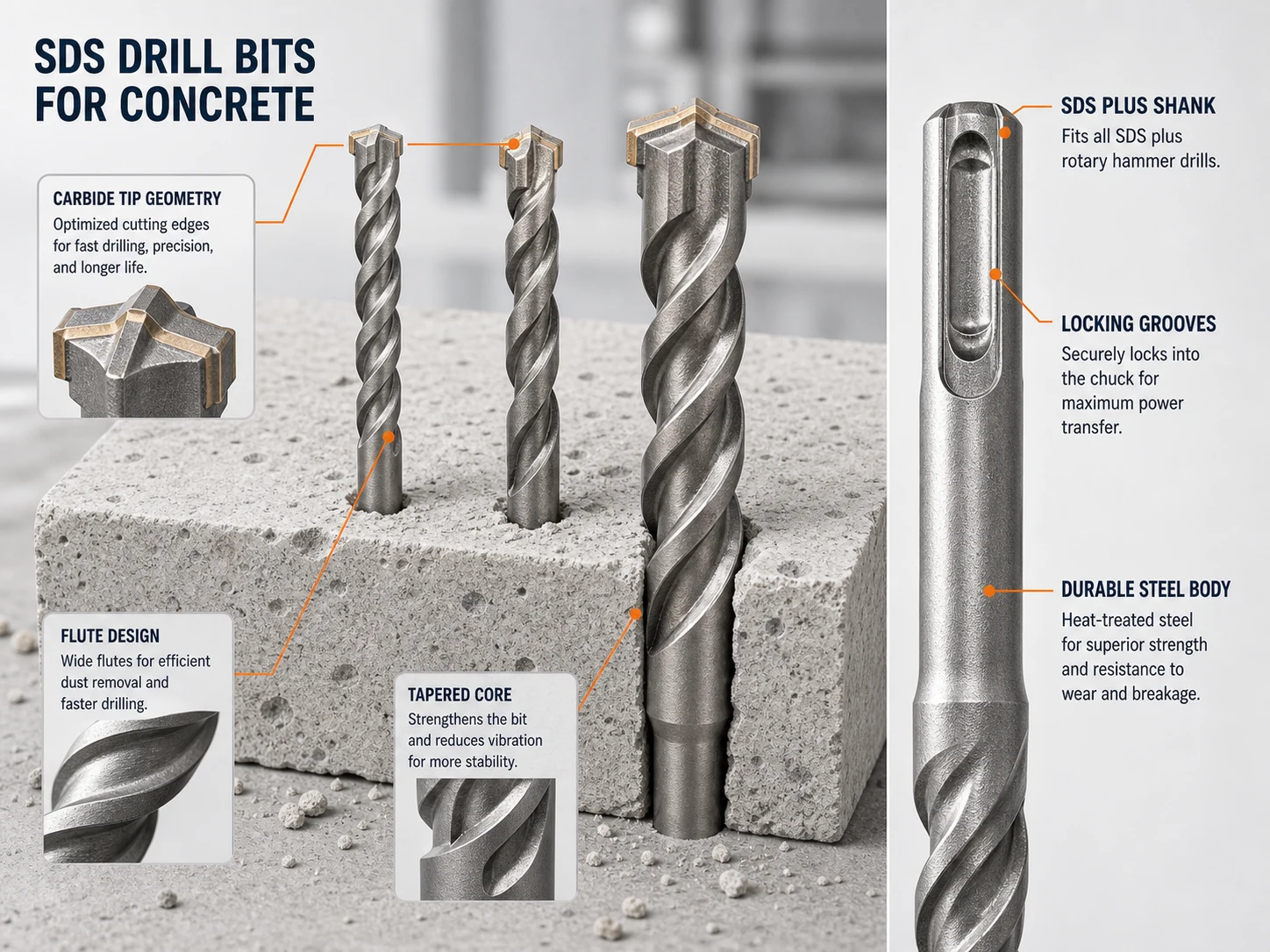
The carbide tip is where the bit meets the concrete. Look for stable brazing, clean tip grinding and enough carbide support. For reinforced concrete, the tip must survive impact when it touches rebar or hard aggregate.
Some markets prefer economical two-cutter designs. Professional users may prefer four-cutter or more stable tip designs for accuracy and durability.
Flute Design and Dust Removal
Concrete drilling creates dust, not clean chips. The flute must remove dust fast enough to keep the tip working. If dust packs inside the hole, drilling slows and heat increases.
For deep holes, flute strength and dust evacuation matter more. Ask suppliers whether the bit is designed for ordinary anchor holes or deeper structural drilling.
What Sizes Should Importers Stock?
For SDS Plus retail, common ranges often include 5mm, 6mm, 8mm, 10mm, 12mm and 14mm. For SDS Max, larger diameters and longer working lengths are more common.
But the right range depends on the market. Anchor size, construction style and local tool brands all influence demand.
Supplier Checklist
- Confirm SDS Plus or SDS Max.
- Confirm diameter and working length.
- Check carbide tip type and brazing.
- Ask for packaging options.
- Test samples in real concrete, not only soft brick.
- Check whether the product is for retail, contractor or industrial users.
For basic shank comparison, read SDS vs SDS Plus vs SDS Max. For a broader concrete-drilling guide, see best drill bit for concrete.