
Saw blade burning and gumming is a common complaint in real production, especially when the blade still looks sharp but no longer cuts smoothly.
Sometimes a customer says the blade is already bad after only a short time of use.
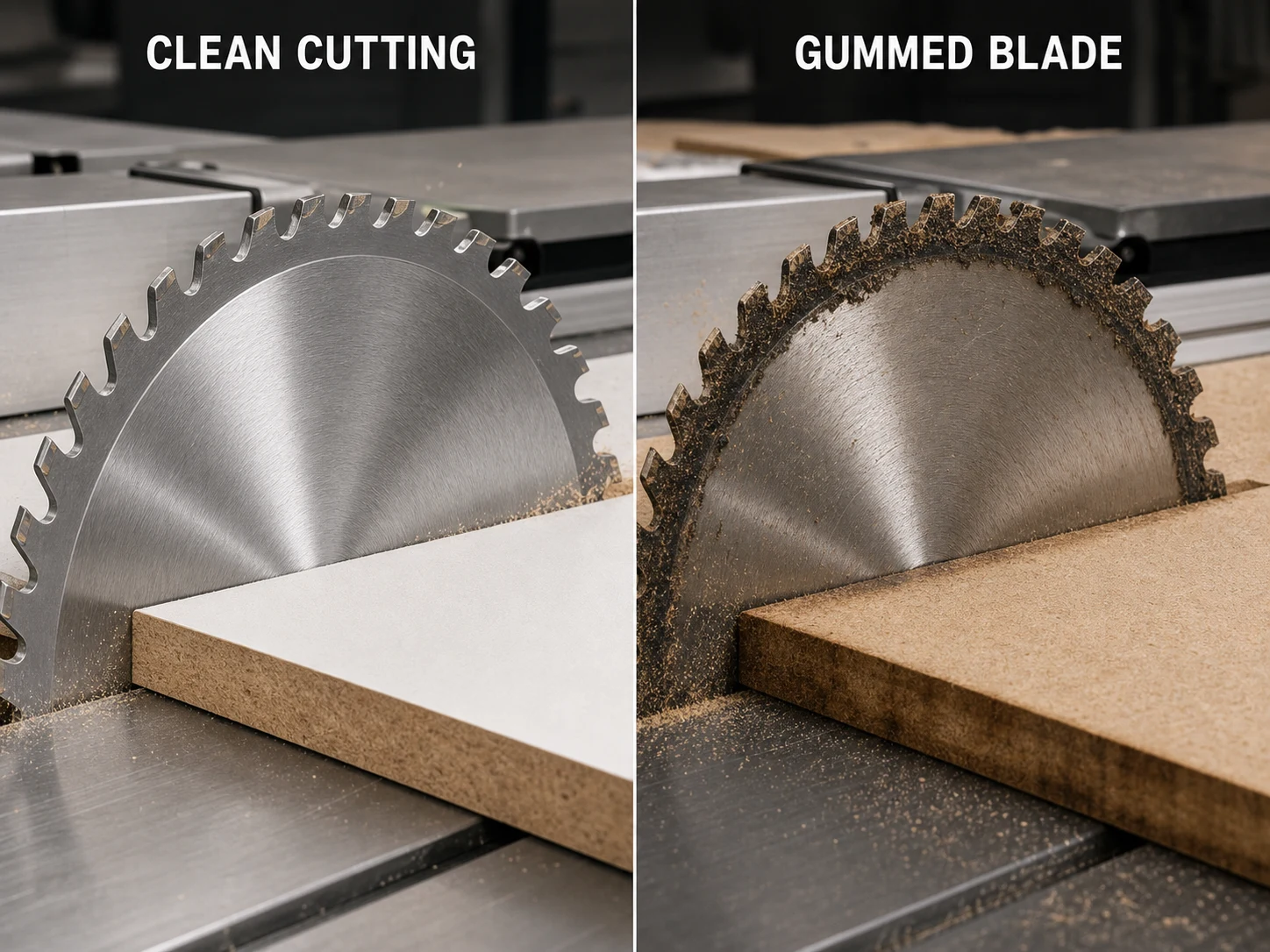
The two sides of the cut turn black, the blade starts to feel heavy in the material, and the operator says it no longer cuts freely. But when you check the teeth, the cutting edge still looks fine. It is not obviously chipped, and it is not completely dull.
This is a very typical gumming and burning situation.
As cutting materials become more varied and real production conditions become more complicated, this problem appears more often than many buyers expect. The severity may differ from one factory to another, but the root logic is usually similar: heat goes up, chips do not leave smoothly, material starts sticking to the blade body, and cutting resistance rises quickly.
Once gumming starts, blade life can drop sharply. If the cause is not identified early, the same problem often repeats even after resharpening or replacement.
What “Gumming” Really Means
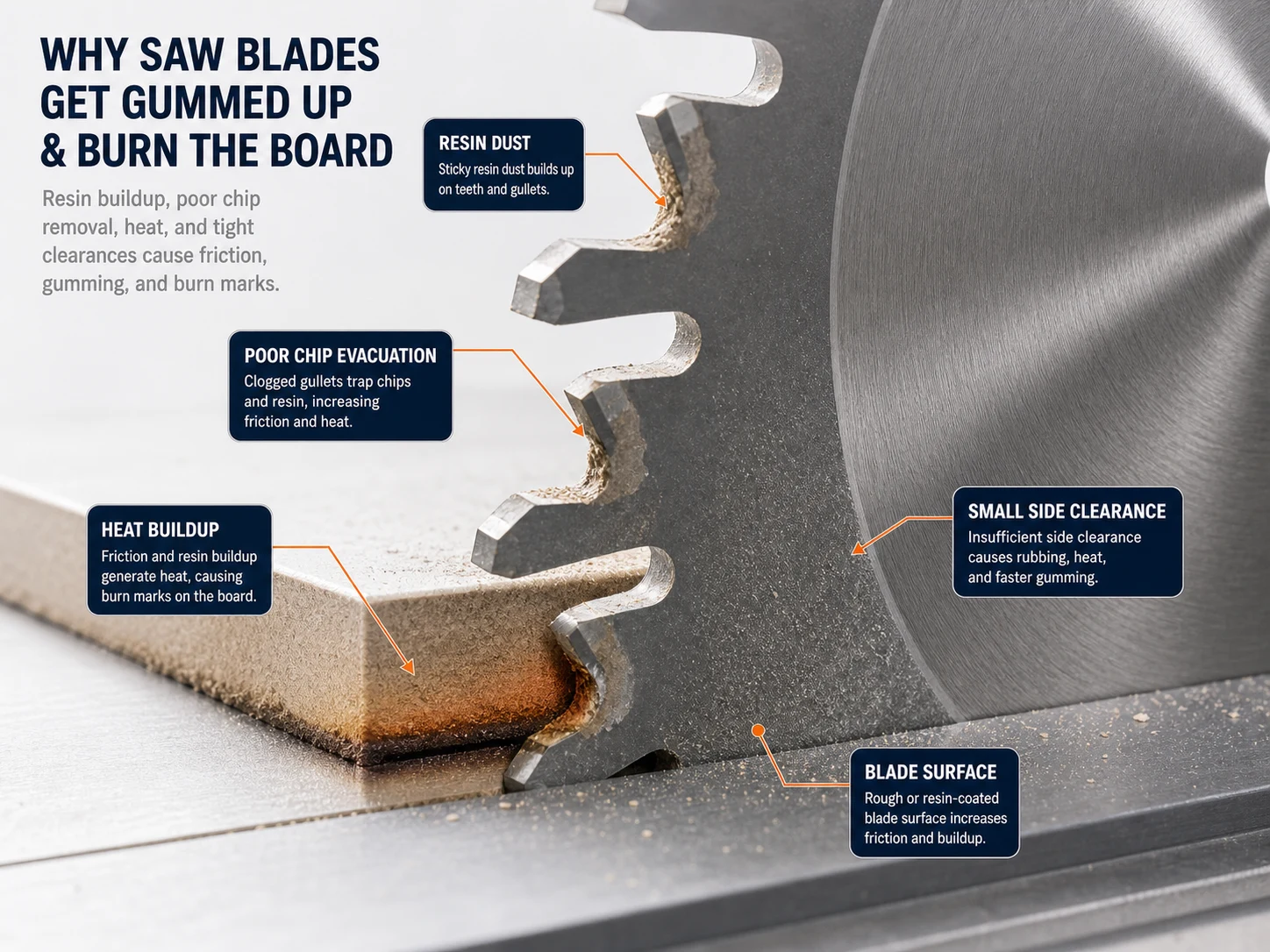
In practical cutting, “gumming” usually means softened chips, resin, glue-heavy dust or fine powder start sticking to the plate body and around the teeth.
As this buildup grows, the blade creates more friction in the kerf. More friction creates more heat. More heat softens more material. Then the sticking becomes worse. That is why a blade may still look sharp but already cut badly.
Burn marks on both sides of the board are often a warning sign that the blade is rubbing too much instead of clearing the cut cleanly.
Start With the Blade Itself
1. Plate Too Thick for the Job
A blade plate that is too thick increases friction inside the cut. If the application does not need that much body strength, the extra thickness only adds cutting resistance.
On some materials, especially boards that generate a lot of dust or sticky chips, a thicker plate can make chip flow worse and heat rise faster.
2. Side Clearance Too Small
This is one of the most important causes.
If the side clearance created by the tooth is too small, the kerf does not have enough space for chips and dust to move out smoothly. The blade body starts rubbing the cut wall more easily. When that happens, chip evacuation becomes poor and heat builds quickly.
On paper the specification may still look normal, but in real cutting the blade feels heavy and starts blackening the cut surface.
3. Rough Blade Surface
Some blades have a rougher plate surface finish. That roughness can make fine dust, resin or softened particles stick more easily to the blade body.
Once residue starts attaching to the plate, friction rises further. This is why surface finish is not only cosmetic. In some cutting jobs, it affects whether the blade stays clean during production.
4. Wrong Tooth Count or Tooth Geometry
If the tooth count is too high for the cutting thickness, each gullet becomes smaller and chip space becomes limited. If the tooth geometry is not suitable for the material, cutting resistance also rises.
In both cases, the chips cannot leave efficiently. The blade generates more heat, and the chance of gumming increases.
A blade should not be selected only by “more teeth means cleaner cut.” If the tooth count and tooth shape do not match the job, the finish may actually become worse after heat and residue start building up.
Then Check the Material and the Way It Is Used
1. High-Resin or Glue-Heavy Materials
Some board materials naturally create this problem more easily.
Panels with high glue content, resin-rich materials, laminated boards, MDF and similar products can produce softened powder at high temperature. That powder sticks easily to the plate body and around the teeth.
In these jobs, the blade may not be “bad” in the usual sense. The real issue is that heat and sticky chips are overwhelming the design margin of the blade.
2. Material Stress After Cutting
Some materials close slightly after being cut.
This stress release causes the kerf to tighten around the blade body. Once the blade gets pinched, friction rises immediately. The operator may describe this as the blade feeling stuck, slow or heavy.
In reality, the blade is no longer moving through an open kerf. It is being squeezed while rotating, which makes burning and gumming much more likely.
3. Cutting Section Too Thick
If the cutting thickness is too large, chip volume rises sharply. More chips mean more heat and more difficulty removing waste from the kerf.
When cooling is poor and chip flow is poor at the same time, residue builds quickly. This is especially obvious when the machine feed is not adjusted for the thicker section.
Why the Blade Still Looks Sharp
Many users get confused because the edge still looks good.
But gumming is not always a simple sharpness problem. The blade may fail in performance before it fails visually. If heat, friction and sticking become the main problem, the operator experiences poor cutting even though the tip itself is not yet badly worn.
This is why replacing the blade with the same model often leads to the same complaint again.
How to Judge the Main Cause
To solve the problem, do not start by blaming only the blade or only the machine. Check the situation in order:
- What material is being cut, and does it contain a lot of glue or resin?
- What is the cutting thickness?
- Are burn marks appearing on both sides of the cut?
- Does the blade body show residue buildup?
- Is the tooth count too high for this job?
- Is the side clearance large enough?
- Does the material close after cutting?
- Has feed speed changed recently?
Once these details are clear, the main reason is usually not difficult to identify.
What Buyers and Factories Can Do
If the problem comes from the blade design, a better specification is usually needed: more suitable side clearance, a more appropriate plate thickness, better surface finish, or a different tooth count and tooth geometry.
If the problem comes mainly from the material or cutting condition, then process adjustment also matters: reduce the cutting thickness, improve feed control, check clamping stability, or use a blade designed for resin-heavy board materials.
For related selection logic, our TCT saw blade selection guide and tooth count guide can help buyers compare specifications more rationally.
Final Thought
Once a blade starts gumming up, the working life often drops fast. In many factories, it feels like the blade life is cut in half.
But this problem is usually solvable. The key is to look at the situation objectively: blade plate, side clearance, surface finish, tooth design, material properties and cutting thickness all matter.
When the main cause is judged correctly, the solution is often straightforward. A better-matched blade creates value not because it looks sharper, but because it keeps the cut cooler, cleaner and more stable.